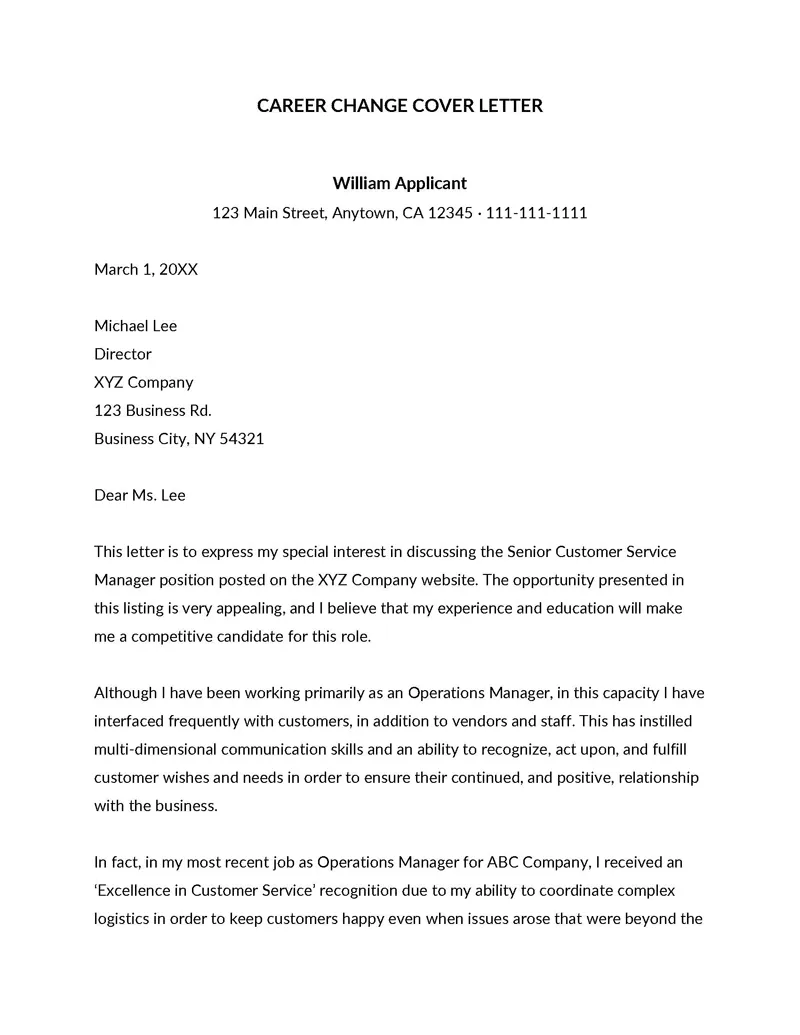
Understanding the Purpose of a Career Change Cover Letter
A career change cover letter is a crucial document in your job search arsenal, specifically designed to address the unique challenges of transitioning from one career path to another. It serves as a bridge between your past experiences and the requirements of the new role, illustrating how your transferable skills are relevant. This type of letter is a persuasive tool, showing potential employers why you are a viable candidate despite the career shift. It is your opportunity to articulate your motivations, showcase your relevant skills, and express your genuine interest in the new opportunity, persuading the employer to look beyond your non-traditional background. It is about selling yourself as an adaptable, enthusiastic, and capable individual ready for a new career.
Highlighting Transferable Skills for Career Changes
The ability to highlight transferable skills is essential in a career change cover letter. These are skills acquired in previous roles that can be applied in the target field or position. Identifying and showcasing these skills forms the foundation for demonstrating your capability to succeed despite a shift in your career trajectory. You need to analyze your previous experiences and identify the skills that are directly applicable to the new role’s requirements. Examples include communication, problem-solving, leadership, project management, adaptability, and technical expertise. Don’t assume the hiring manager will automatically recognize the connections; make a direct link. Support your claims with specific instances, providing details about how you used these skills in your previous roles and the positive outcomes you achieved to demonstrate the relevance of your existing experience to the new opportunity.
Identifying Your Target Audience and Tailoring Your Letter

Before you start writing, know your audience. Identify the specific person or department that will receive your letter and tailor your content to their needs. Research the company’s culture, values, and any recent projects or initiatives to show your genuine interest. Tailoring your cover letter to match the job description is crucial. Review the job posting carefully, highlighting the key skills, experiences, and qualifications the employer is seeking. Use these keywords naturally throughout your letter to demonstrate that you meet the requirements. Personalize your letter by addressing the hiring manager by name, if possible, and referencing specific aspects of the company or role that resonate with you. This shows that you understand their needs and are truly interested.
Researching the Company and Job Position
Thorough research forms the foundation of a successful career change cover letter. Start by exploring the company’s website, social media profiles, and recent news articles. This provides insights into their mission, values, and current projects. This research helps you tailor your letter and show how your skills align with their needs and culture. Understanding the job position is equally important. Carefully analyze the job description, paying close attention to the required skills, responsibilities, and qualifications. Use this information strategically to highlight your relevant experiences and demonstrate how you can contribute to the company’s goals. If possible, research the hiring manager or the team you’d be working with. Knowing their background can help you personalize your letter. This research helps you decide if the role and company align with your career aspirations.
Structuring Your Career Change Cover Letter for Impact
A well-structured cover letter maximizes your chances of making a positive first impression. It should consist of a clear opening, a body, and a concise closing. The opening paragraph should grab the reader’s attention, state the position you’re applying for, and how you found the opportunity. The body is where you highlight your transferable skills, explain your career change, and show your suitability for the role. Organize the content logically, using clear language, and break it into well-defined paragraphs, each addressing a specific point. The closing should summarize your key qualifications, reiterate your enthusiasm, and include a clear call to action, like expressing your availability for an interview. Keep it to one page. A well-structured cover letter displays your organization, professionalism, and communication skills.
Crafting a Compelling Opening Statement

Your opening statement is a prime opportunity to make a strong first impression. Instead of using generic phrases, use a more engaging approach. State the position you’re applying for and how you found the opportunity. If you were referred, mention the referral. Consider immediately highlighting a key skill or achievement related to the job requirements. For a career change cover letter, address your career transition positively. Express your enthusiasm for the new field, setting the tone for the letter. It should convince the reader you are a strong candidate despite your career change.
Showcasing Relevant Skills and Experience
Showcase relevant skills and experience, even if acquired in a different industry. Focus on transferable skills that align with the job requirements. Provide specific examples of how you have used these skills in the past and the outcomes you achieved. If the job needs communication skills, highlight your experience in public speaking. Use quantifiable results when possible. Instead of saying you managed social media campaigns, state how you increased engagement by a certain percentage. Tailor examples to match the job and highlight the skills most relevant to the new role. This section bridges the gap between your past and present, showing the employer how your skills translate to the new position.
Addressing the Career Change Directly
Address your career change with honesty and confidence. Explain why you’re changing careers and express your enthusiasm. Frame the transition positively. For instance, “I am excited to transition into [new field], where my [skill] will help me excel.” Avoid negative language about your previous career; instead, focus on the new opportunities and your interest in the new field. Demonstrate that you’ve carefully considered your decision and are committed. This transparency will reassure the employer.
Explaining Your Motivations for the Switch
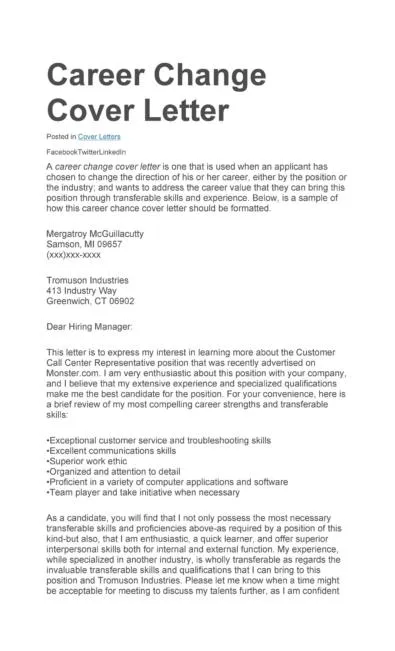
Provide a clear explanation of your motivations. Be honest and concise about why you’re transitioning. Common motivations include seeking new challenges or pursuing a passion. Frame your explanation positively, focusing on the benefits you bring to the new position. For example, you might be drawn to the new field because of your passion and desire to contribute. Avoid overly personal reasons and instead highlight your enthusiasm and commitment. This should convince the employer that your change is a considered decision based on genuine interest.
Quantifying Achievements and Results
Quantify your achievements and results to add credibility and demonstrate your value. Provide specific numbers and data to illustrate your successes. Instead of saying you managed projects, specify how many and the results. Use metrics to showcase your skills and contributions. For example, specify the percentage increase in sales. Quantifiable results provide concrete evidence of your capabilities and distinguish you from other candidates. Ensure the results are relevant to the new role.
Demonstrating Your Enthusiasm and Fit
Show enthusiasm and demonstrate your fit. Research the company’s mission and values to understand their goals. Then, articulate how you see yourself contributing and fitting in. Mentioning specific aspects of the company or role that appeal to you shows you’re interested. Highlight how your values align with the company’s. This increases the employer’s belief in your commitment.
Writing a Strong Closing Statement

Your closing statement is your final opportunity to leave a positive impression. Briefly summarize your qualifications and reiterate your enthusiasm. Express interest in discussing your qualifications further. Thank the hiring manager for their time. Keep the closing concise and professional. A strong closing should be memorable and encourage the next step, such as an interview.
Including a Call to Action
Include a clear call to action to direct the hiring manager. The most common call to action is expressing your availability for an interview. State you are available at their convenience. Provide contact information. Making it easy for them to contact you shows your proactive approach.
Proofreading and Editing Your Cover Letter
Proofread and edit your letter carefully. Errors in grammar, spelling, and punctuation can be damaging. Review your letter for any mistakes. Read the letter aloud. Ask someone to review your cover letter. Ensure your letter is organized and professional. A polished, error-free letter shows attention to detail.
Formatting Your Cover Letter for Readability

Format your cover letter for readability. Use a professional font. Keep the font size between 10 and 12 points. Use standard margins and single-spacing. Use clear paragraph breaks. Avoid complex formatting. Keep it to one page. A well-formatted letter shows professionalism.
Using Keywords and Action Verbs Effectively
Use keywords and action verbs effectively. Review the job description to identify key skills. Incorporate keywords naturally. Use strong action verbs to describe your accomplishments. Tailor your language to match the industry. Make sure your use of keywords is natural. This will help your application get through the ATS.
Avoiding Common Mistakes in Career Change Cover Letters
Avoid common mistakes, such as being overly negative. Focus on what you can bring to the new role. Tailor your letter to each application. Avoid clichés and jargon. Proofread and edit your letter carefully. Be honest about your career change. Include a call to action. Avoiding these mistakes will improve your chances of getting the job.
Template Options and Customization Tips

Use templates as a starting point, but customize them. Many online resources offer templates. Personalize the template by adding your information. Make the template your own by adapting the language to reflect your personality.
Additional Resources and Examples for Inspiration
Several resources can help you. Job boards offer cover letter examples. Seek advice from career counselors. Explore articles and books. Tailor your cover letter and use the resources available.