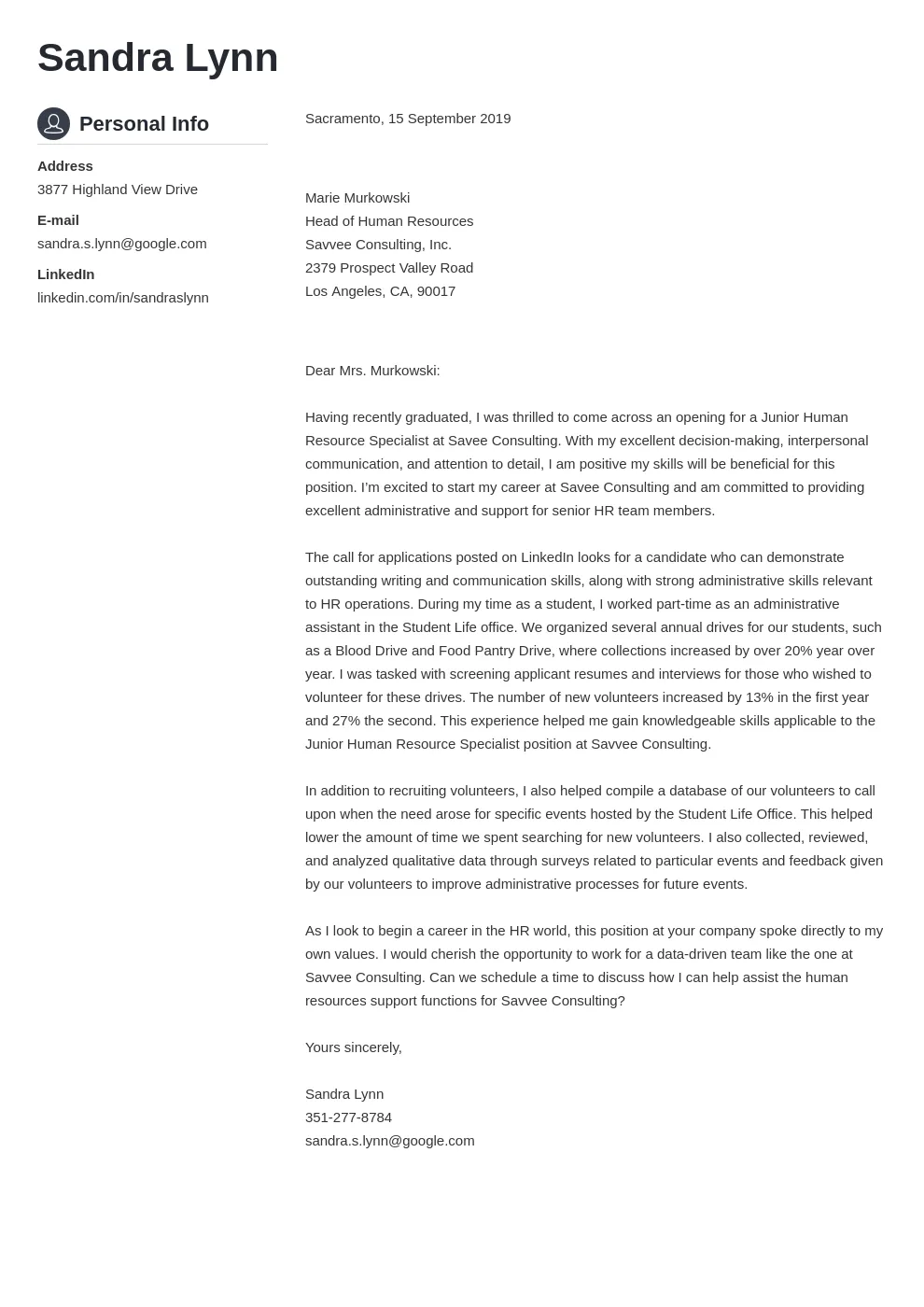
Crafting a Compelling HR Cover Letter
Your HR cover letter is your first opportunity to make a positive impression on a potential employer. It’s more than just a formality; it’s a powerful tool that can showcase your skills, experience, and enthusiasm for the role. A well-crafted cover letter complements your resume, providing context and personality that a list of qualifications alone cannot. It should be concise, engaging, and tailored to the specific HR position you’re applying for. Think of it as your personal introduction, setting the stage for why you are the ideal candidate. The goal is to immediately grab the hiring manager’s attention and compel them to delve deeper into your qualifications, ultimately leading to an interview. By focusing on your key strengths and aligning them with the company’s needs, you can significantly increase your chances of landing your dream HR job. Remember to keep the tone professional yet personable to create a lasting impact.
Highlighting Relevant Skills and Experience
To effectively highlight your skills and experience, review the job description meticulously. Identify the key requirements and desired qualifications the employer is seeking. Then, tailor your cover letter to directly address these needs. Don’t just list your skills; provide concrete examples of how you’ve utilized them in previous roles. For example, if the job description emphasizes employee relations, share a specific instance where you successfully mediated a conflict or implemented a positive change in workplace culture. Quantify your achievements whenever possible. Instead of saying you ‘improved employee satisfaction,’ state that you ‘increased employee satisfaction scores by 15% through the implementation of a new wellness program.’ This level of detail demonstrates your ability to deliver results and your understanding of the HR function. Focus on accomplishments and show how your past experiences align with the current job requirements. Make sure that you include keywords from the job description to help with Applicant Tracking Systems (ATS).
Tailoring Your Cover Letter for the HR Position

Generic cover letters are easily recognized and often discarded. Tailoring your cover letter shows that you’ve taken the time to understand the specific HR position and the company itself. Start by thoroughly researching the company’s mission, values, and culture. Visit their website, review their social media presence, and look for news articles or press releases. Use this information to personalize your letter, demonstrating your genuine interest and understanding of their needs. Mention specific projects or initiatives the company is involved in and explain how your skills and experience align with their goals. Reference the specific responsibilities outlined in the job description, and provide examples of how you’ve handled similar tasks in the past. This level of personalization proves that you’re not just sending out a mass application but are genuinely interested in the opportunity and are a good fit for the company. Customize each letter to demonstrate your dedication and attention to detail.
Understanding the HR Role and Responsibilities
Demonstrate your understanding of the HR role by highlighting your knowledge of key responsibilities. This includes experience in recruitment, onboarding, employee relations, compensation and benefits, training and development, and performance management. Show that you’re familiar with HR best practices, employment laws, and industry trends. If the job description emphasizes a specific area of HR, such as talent acquisition or compliance, be sure to showcase your expertise in that area. Provide specific examples of how you’ve handled complex situations, such as navigating employee disciplinary actions, managing performance reviews, or ensuring compliance with labor laws. Show you possess the necessary skills to manage sensitive information, handle confidential matters with discretion, and communicate effectively with employees at all levels. Highlighting your understanding of the HR function shows that you can quickly adapt to the role.
Researching the Company Culture
Company culture is a crucial element that applicants must consider. Researching a company’s culture is essential for demonstrating your fit. Before you begin writing your cover letter, spend time exploring the company’s website, social media profiles, and any available online reviews. Look for information about their values, mission, and work environment. Do they emphasize teamwork, innovation, or work-life balance? Use this knowledge to tailor your cover letter and highlight how your personal values align with the company’s culture. For example, if the company values teamwork, share an example of how you collaborated with colleagues to achieve a common goal. If they prioritize innovation, discuss your experience with implementing new strategies or technologies. This demonstrates that you have a genuine interest in the company and that you will be a good fit for their team. This research will also help you determine if the company’s culture matches your preferences.
Showcasing Achievements with Numbers

Quantifying your achievements is crucial for making a strong impression. Instead of simply stating your responsibilities, use numbers to demonstrate the impact you’ve made in previous roles. For example, rather than saying you ‘improved the recruitment process,’ state that you ‘reduced time-to-hire by 20% and increased the quality of hires by 15%.’ If you managed employee benefits, quantify your achievements by mentioning how you ‘reduced benefit costs by a certain percentage or improved employee satisfaction with benefits.’ This level of detail provides concrete evidence of your capabilities and demonstrates your ability to deliver results. Use metrics to show that you not only understand the HR function but also have the skills to make a significant impact. Numbers show that you can solve problems and improve different HR functions.
Using Action Verbs to Demonstrate Impact
Action verbs are powerful tools to showcase your accomplishments and make your cover letter more engaging. Start each bullet point or paragraph with a strong action verb that clearly defines your role and contribution. Avoid using passive language; instead, use verbs that demonstrate initiative, leadership, and problem-solving skills. Examples include ’led,’ ‘managed,’ ‘developed,’ ‘implemented,’ ‘achieved,’ ‘improved,’ ‘streamlined,’ ’negotiated,’ and ’trained.’ For instance, instead of writing ‘responsible for managing employee relations,’ write ‘managed employee relations, resolving conflicts and fostering a positive work environment.’ Using strong action verbs helps the hiring manager quickly understand your skills and achievements. Make sure your actions are always results-oriented to help highlight your effectiveness and dedication.
Formatting Your Cover Letter for HR
Proper formatting is essential to ensure your cover letter is easy to read and professional. Use a clear and readable font, such as Arial or Times New Roman, with a font size between 11 and 12 points. Keep the letter concise, aiming for no more than one page. Use clear headings and subheadings to break up the text and make it easier to scan. Use bullet points to highlight your key skills and achievements. Ensure your letter has consistent margins and spacing. Proofread your letter carefully to eliminate any grammatical errors or typos. Submit your cover letter in PDF format to preserve the formatting and ensure it can be viewed correctly on any device. Correct formatting shows that you understand the importance of presenting a polished and professional image.
Making a Strong First Impression

Your cover letter is your first opportunity to make a lasting impression, so make it count. Begin with a strong opening that grabs the reader’s attention. Address the hiring manager by name if possible; if not, use a professional greeting such as ‘Dear Hiring Manager.’ In the first paragraph, clearly state the position you are applying for and briefly mention why you are interested in the role and the company. Highlight your most relevant skills and experiences in the following paragraphs. Keep the tone professional and enthusiastic throughout the letter. Show your personality, but remain focused on your qualifications. Make sure the tone is consistent, and end with a call to action, such as expressing your enthusiasm for an interview. A well-crafted introduction makes a strong first impression and sets the tone for the rest of your application.
Emphasizing Your Passion for HR
Demonstrate your passion for human resources throughout your cover letter. Express your genuine interest in the HR field and explain why you are drawn to this career path. Share your enthusiasm for helping employees, fostering positive work environments, and contributing to the success of the organization. Highlight your commitment to continuous learning and professional development. Mention any relevant certifications, training programs, or industry events you’ve attended. Share your knowledge of industry trends, and explain how your passion for HR aligns with the company’s values and mission. Show your desire to contribute to the company’s HR goals and your dedication to making a positive impact. Mentioning your passion will make the hiring manager understand your interest for the position.
Addressing the Hiring Manager Directly
Always address the hiring manager by name, if possible. Research the company’s website or LinkedIn profile to find the name of the person responsible for reviewing applications. Addressing your cover letter to a specific individual shows that you’ve taken the time to research the company and that you’re serious about the opportunity. If you’re unable to find the hiring manager’s name, use a professional greeting such as ‘Dear Hiring Manager’ or ‘Dear [Department Name] Team.’ Avoid generic greetings, such as ‘To Whom It May Concern,’ as they create a sense of detachment. Personalizing the greeting makes a strong first impression and sets the tone for your application. If you know someone who works at the company, consider mentioning their name in your cover letter as a referral.
Proofreading and Editing Your Cover Letter
Before submitting your cover letter, carefully proofread and edit it for any errors. Typos, grammatical errors, and inconsistencies can undermine your credibility and make a negative impression. Check for spelling mistakes, incorrect punctuation, and awkward phrasing. Read the letter aloud to catch any errors that you might miss when reading silently. Ask a friend or colleague to review your cover letter as a fresh set of eyes can often spot mistakes that you might overlook. Ensure the letter is well-organized, easy to read, and free of jargon. Make sure the tone is professional and consistent throughout. Proofreading and editing are essential steps in ensuring your cover letter represents you in the best possible light and that your application is polished and error-free.
Including a Call to Action
End your cover letter with a clear call to action to encourage the hiring manager to take the next step. Express your enthusiasm for the opportunity and reiterate your interest in the role. State that you are eager to discuss your qualifications further in an interview. Provide your contact information again, including your phone number and email address. Thank the hiring manager for their time and consideration. Make sure to tailor your call to action to the specific job and the company. The final paragraph should leave a lasting impression and encourage the hiring manager to reach out to you. A strong call to action shows that you are confident in your abilities and are eager to take the next step in the hiring process.
Finalizing and Submitting Your Cover Letter
Once you have written and edited your cover letter, it’s time to finalize and submit it. Ensure your cover letter is saved as a PDF file to maintain its formatting. Double-check all contact information to make sure it is up-to-date and accurate. Carefully follow the application instructions provided by the employer. If the job posting asks you to submit your cover letter and resume through an online portal, ensure you upload the correct files in the required format. If you’re emailing your cover letter, write a brief and professional email message to introduce yourself and attach your cover letter and resume. Before sending, review the entire application to make sure everything is complete and error-free. Submitting a polished and well-prepared application will significantly increase your chances of landing an interview and securing your dream HR job.