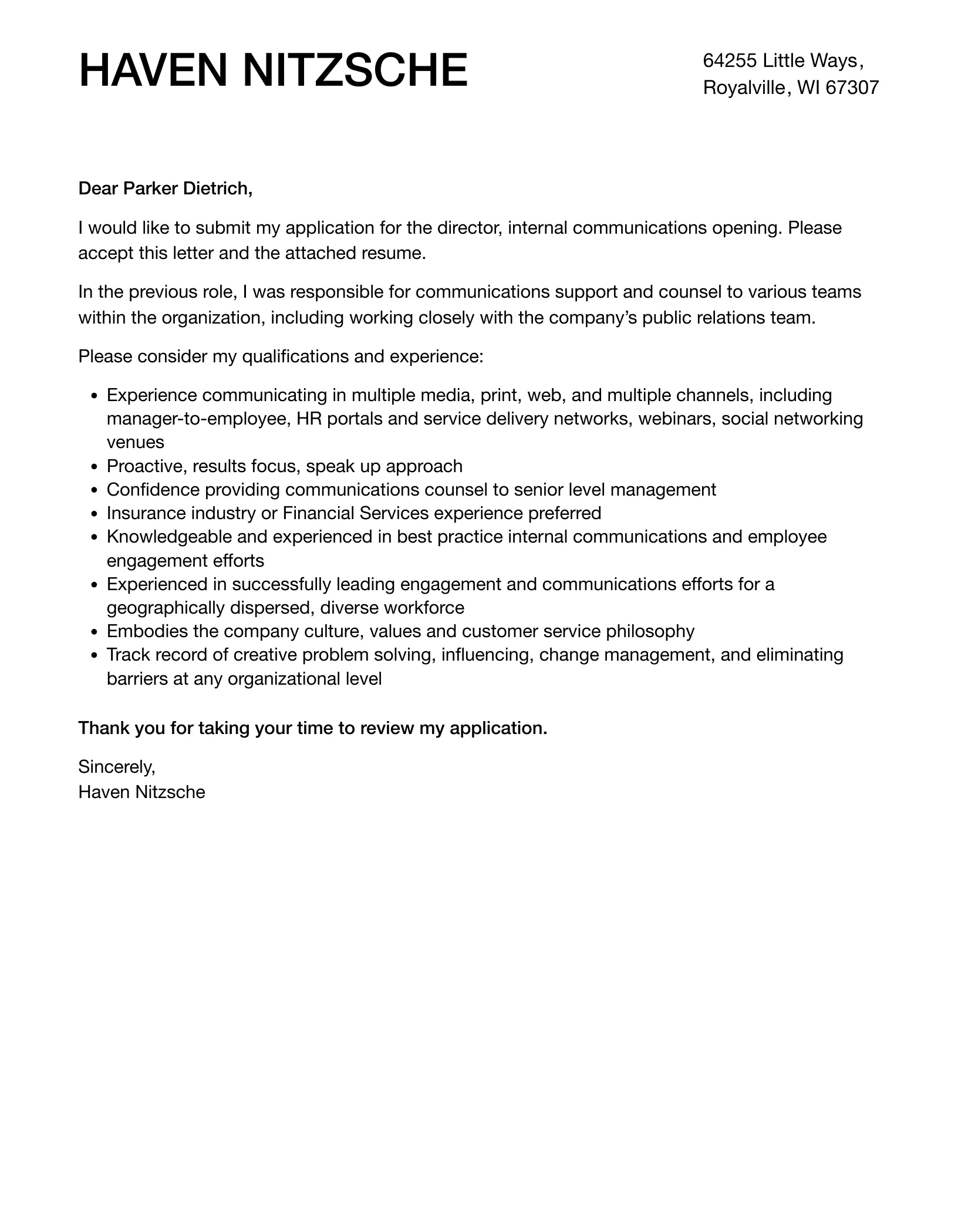
Understanding the Internal Communication Cover Letter
Navigating the internal job market requires a strategic approach, and a well-crafted internal communication cover letter is your key to unlocking new opportunities. Unlike external job applications, internal applications offer a unique advantage – you already have a foot in the door. However, this doesn’t mean you can be complacent. Your internal cover letter is your chance to showcase your value, reiterate your interest, and demonstrate why you’re the ideal candidate for the role. This guide provides you with the essential tips and strategies to create a compelling internal cover letter that gets you noticed, secures an interview, and ultimately, lands you your dream job within the company. Whether you’re aiming for a promotion, a lateral move, or a chance to explore a different department, mastering the art of the internal cover letter is crucial.
What Is an Internal Cover Letter?
An internal cover letter is a formal document submitted when applying for a job within your current organization. It serves as an introduction to your application, highlighting your qualifications, experiences, and enthusiasm for the specific role. It’s a tool to persuade the hiring manager that you are the best fit for the position. This letter should complement your internal resume, providing context and elaborating on your suitability for the opportunity. It’s a personalized narrative that showcases your skills, achievements, and aspirations, making you stand out from other internal candidates. Tailoring your letter to reflect your understanding of the company’s mission, values, and goals is crucial. It’s more than just a formality; it’s your opportunity to make a strong first impression and create a lasting impact on the hiring team.
Why Is an Internal Cover Letter Important?

An internal cover letter serves several critical purposes in your career progression. First, it provides a targeted platform to showcase your relevant skills and experiences in a manner that directly aligns with the job requirements. Second, it provides you with a chance to articulate your understanding of the new role and how your unique skills and experiences can address company needs and contribute to organizational success. It goes beyond a simple resume by allowing you to provide context, explain career transitions, and highlight achievements that demonstrate your commitment to the company and the specific role. Third, it serves as a tool for you to express your genuine enthusiasm for the new role, which can significantly enhance your chances of being selected for an interview. Finally, an internal cover letter demonstrates professionalism, initiative, and a proactive approach to your career, reflecting well on your overall commitment and ambition.
Key Components of an Effective Internal Cover Letter
Creating an effective internal cover letter requires a strategic approach that effectively highlights your value proposition. Your letter should be concise, focused, and tailored to the specific requirements of the job. It should also demonstrate a clear understanding of the company’s needs and how your skills and experiences align with those needs. The most effective cover letters start with a professional header and salutation, followed by a compelling opening that grabs the reader’s attention. The body of your letter should highlight your relevant skills, quantify your achievements, and demonstrate your understanding of the company. Finally, your letter should close with a strong call to action, expressing your enthusiasm for the opportunity and your readiness to discuss your qualifications further. By focusing on these key components, you can create a cover letter that not only showcases your qualifications but also sets you apart from other internal candidates.
Header and Contact Information
The header of your internal cover letter is the first thing the hiring manager sees, so it’s important to make a professional impression. Include your full name, contact information (phone number and professional email address), and the date. Ensure your contact information is current and easy to read. Consider including the department or position you are applying for to give context immediately. This information should be left-aligned, clean, and concise. Using a professional font and maintaining a consistent format with your resume creates a sense of cohesion and attention to detail. The goal is to present a polished and professional image from the outset, demonstrating your ability to communicate effectively and your respect for the application process. A well-formatted header immediately signals professionalism and helps ensure the hiring manager can easily contact you if they want to move forward with your application.
Salutation and Professional Tone

Your salutation sets the tone for your entire letter, so choose it carefully. If you know the hiring manager’s name, address them directly with “Dear Mr./Ms./Mx. [Last Name].” This personalized approach demonstrates that you’ve taken the time to research and tailor your application. If the hiring manager’s name is unavailable, a general salutation like “Dear Hiring Manager” or “Dear [Department Name] Team” is acceptable. Maintain a professional tone throughout the letter. Avoid informal language, slang, and overly casual expressions. Your writing should be clear, concise, and respectful. Use proper grammar and punctuation to show your attention to detail and your ability to communicate effectively. The salutation and overall tone should reflect your respect for the company and the opportunity, making a positive first impression.
Highlighting Relevant Skills and Experiences
This is where you showcase your value. Focus on skills and experiences that align with the job description. Don’t just list your responsibilities; explain how your skills and experiences translate to the role’s requirements. Use action verbs to describe your accomplishments. For example, instead of writing “Managed social media accounts,” write “Increased social media engagement by 30% by implementing targeted content strategies.” Use the STAR method (Situation, Task, Action, Result) to structure your examples and provide specific, quantifiable results. Demonstrate how your past experiences make you a strong candidate for the position. The goal is to convince the hiring manager that you possess the skills and qualifications needed to excel in the new role and contribute to the company’s success. The internal cover letter should act as a sales pitch for your internal skillset.
Tailoring Your Letter to the Specific Role
Generic cover letters rarely make a positive impression. Customize each letter to the specific job and company. Carefully review the job description and identify the key requirements. Then, explain how your skills and experiences directly address those requirements. This shows that you’ve thoroughly researched the role and are genuinely interested in it. Research the company culture and values. Demonstrate your understanding of the company’s mission, goals, and challenges. This shows that you are not just looking for a job but are invested in the company’s success. Address the specific needs of the team or department. Tailoring your letter demonstrates your commitment to the position and your ability to adapt and contribute to the company’s objectives. Tailoring will make a great first impression.
Quantifying Your Achievements

Numbers speak louder than words. Whenever possible, quantify your achievements to demonstrate your impact. Instead of saying “Improved customer satisfaction,” say “Increased customer satisfaction scores by 15% through the implementation of a new feedback system.” Use data and metrics to showcase your accomplishments. This provides concrete evidence of your skills and abilities. Quantifying your achievements makes your letter more compelling and memorable. It helps the hiring manager understand the value you brought to your previous roles and the potential value you can bring to the new position. Providing quantifiable results proves your skills. It differentiates your application and underscores your ability to drive results and contribute to the company’s success.
Demonstrating Your Understanding of the Company
Demonstrate that you’re not just looking for a job but are genuinely interested in the company. Show your understanding of the company’s mission, values, and goals. Research the company’s recent projects, initiatives, and achievements. Mention any recent news or developments that relate to the role or department. This demonstrates that you’ve done your homework and are invested in the company’s success. Demonstrate your commitment to the company’s success, showing that you are invested in the long-term growth of the organization. Showcasing your understanding of the company sets you apart from other candidates and emphasizes your commitment to the company.
Expressing Your Enthusiasm and Interest
Convey your genuine enthusiasm for the role and the opportunity to contribute to the company’s success. State why you are excited about the position and what you hope to achieve. Show your eagerness to learn and grow within the company. This shows you are invested in the position. The closing paragraph should reiterate your interest and make a strong call to action. Express your willingness to discuss your qualifications further and thank the hiring manager for their time and consideration. Enthusiasm and interest can be key factors in the hiring decision. Expressing these things can make a memorable impression on the hiring manager. Your passion may be the deciding factor.
Formatting and Proofreading Tips

The appearance of your cover letter is just as important as its content. Proper formatting and thorough proofreading show attention to detail and professionalism. A well-formatted letter is easy to read and makes a positive impression. Your cover letter should be free of errors, both grammatical and spelling mistakes. Sloppy writing can undermine your qualifications and create a negative impression on the hiring manager. It is important to get the formatting correct to show professionalism and to also be free of any errors.
Formatting Your Cover Letter for Readability
Use a professional font like Times New Roman, Arial, or Calibri. Ensure the font size is easy to read, typically 11 or 12 points. Use single-spaced lines with a space between each paragraph. Use left-aligned text with a clear margin. This creates a clean and organized look. Break up long paragraphs into shorter, more digestible chunks of text. Use bullet points to highlight key achievements or skills. Readability is key. A well-formatted cover letter is easy on the eyes and helps the hiring manager quickly grasp your key qualifications. It will make your letter more engaging and improves the overall impression of your application.
Proofreading and Editing for Clarity
Proofread your cover letter carefully for any errors in grammar, spelling, and punctuation. Run a spell check and grammar check, but don’t rely solely on these tools. Read your letter aloud to catch any awkward phrasing or sentence structure. Ask a friend or colleague to review your letter for feedback. They may catch errors or offer suggestions for improvement that you missed. Ensure your language is clear, concise, and professional. Eliminate jargon and overly complex sentences. A well-written and error-free cover letter demonstrates your attention to detail and professionalism. It reflects well on your communication skills and increases your chances of making a positive impression.
Finalizing and Submitting Your Cover Letter

Before submitting your cover letter, double-check all the details. Ensure your contact information is accurate. Confirm that you’ve addressed the letter to the correct person and that the job title is correct. Save your cover letter in a professional format, such as a PDF, to preserve the formatting. Follow any specific instructions provided by the company regarding the application process. Once you’ve finalized your cover letter, submit it with confidence. Following these steps will make a great impression. Ensure that your application is as professional as possible to provide you with the best chance of getting the job.