Understanding the Importance of Internal Cover Letters
In the competitive landscape of internal job applications, a well-crafted cover letter can be the key to unlocking your next career move. It’s often underestimated, but an internal cover letter serves a crucial function; it’s your opportunity to distinguish yourself from other internal candidates and make a compelling case for your suitability. Unlike a resume that provides a summary of your experience, a cover letter lets you showcase your personality, enthusiasm, and specific reasons for why you’re the perfect fit for the role. By investing time in crafting a strong cover letter, you demonstrate to hiring managers that you are serious about the opportunity and committed to the company’s success. This proactive approach can significantly boost your chances of landing an interview and ultimately securing the position.
Why Internal Cover Letters Matter
An internal cover letter allows you to connect your past experiences with the requirements of the new role, and also showcase your internal knowledge. This is particularly important in internal applications. You already understand the company culture, values, and sometimes the specific challenges faced by the team or department. This unique perspective gives you a significant advantage, which you must emphasize. It allows you to highlight your existing network within the company, demonstrating that you’re not just a new face, but a known quantity who can seamlessly integrate into the team. Internal cover letters give you the space to address any potential concerns that a hiring manager might have regarding your transition, such as a lack of experience in a particular area. It is a crucial tool for highlighting your value and setting yourself apart from other internal candidates.
Highlighting Your Internal Cover Letter Strengths

The primary strength of an internal cover letter lies in its ability to demonstrate a deep understanding of the company and its specific needs. Unlike external candidates, you possess an inherent advantage; you are already familiar with the company’s mission, values, and goals. Begin by showcasing this knowledge. Mention specific projects you’ve been involved in, the departments you’ve collaborated with, and your understanding of the company’s current challenges and future aspirations. Furthermore, highlight how your skills and experiences align with the new role’s requirements, using concrete examples of your contributions. Focus on the value you’ve brought to the company in the past and explain how you intend to replicate that success in the new role. This will demonstrate your commitment and your capacity to contribute from day one. This focused approach is critical.
Focusing on Achievements Not Just Duties
One of the most effective strategies for writing a compelling internal cover letter is shifting the focus from your routine job duties to your key achievements. Instead of merely listing your responsibilities, delve into the tangible results you’ve delivered in your current or previous roles. Think about projects you’ve successfully completed, goals you’ve exceeded, and problems you’ve effectively resolved. This is where you differentiate yourself. Explain the impact of your actions. This might involve improved efficiency, cost savings, increased revenue, or enhanced customer satisfaction. These metrics provide concrete proof of your capabilities and your value to the company. Always use examples and provide specific details about how you achieved these results, the strategies you employed, and the skills you utilized. Focus on the positive results.
Quantifying Your Accomplishments
Quantifying your accomplishments is a powerful way to make your internal cover letter more impactful and memorable. Numbers provide concrete evidence of your achievements and their positive impact on the organization. Instead of simply stating that you ‘improved customer service,’ provide specific metrics. For instance, ‘Increased customer satisfaction scores by 15% through implementing a new feedback system.’ Similarly, when discussing project management, quantify the results by stating, ‘Successfully managed projects within a budget of $X and completed them X% ahead of schedule.’ Use data, percentages, and financial figures to showcase your contributions and the value you bring. This turns abstract claims into compelling evidence. Use the STAR method (Situation, Task, Action, Result) to frame your examples, providing context, describing your role, outlining your actions, and highlighting the measurable results. This approach makes your cover letter a highly effective advocacy.
Using Action Verbs to Describe Your Contributions

The choice of verbs is a critical element. Using strong action verbs will give your cover letter the impact it needs. Start each bullet point or sentence describing your accomplishments with impactful action verbs. Verbs like ‘Spearheaded,’ ‘Developed,’ ‘Implemented,’ ‘Managed,’ ‘Optimized,’ ‘Increased,’ ‘Reduced,’ and ‘Streamlined’ are far more compelling than passive verbs. They vividly portray your active role and the tangible results you achieved. For instance, instead of writing, ‘Was responsible for managing social media,’ write, ‘Managed social media campaigns, resulting in a 20% increase in follower engagement.’ By choosing dynamic verbs, you transform your descriptions from merely recounting your job duties to highlighting your achievements and capabilities. This enhances your cover letter’s overall impact and helps the hiring manager quickly grasp your value. Keep in mind, the goal is to create a narrative that sells your abilities.
Tailoring Your Cover Letter to the New Role
A generic cover letter rarely impresses; therefore, it is critical to customize your internal cover letter for each specific role you’re applying for. This shows that you’re genuinely interested in the opportunity and have taken the time to understand the specific requirements. Start by carefully reviewing the job description and identifying the key skills, experiences, and qualifications the company is seeking. Then, structure your cover letter to directly address these requirements. Provide specific examples from your professional background that demonstrate how you possess these skills and how you have successfully applied them in the past. Avoid using a one-size-fits-all approach. Tailoring your cover letter to the new role will show that you not only possess the required skills, but that you have the aptitude to understand the specific challenges.
Analyzing the Job Description
Analyzing the job description is the first step in crafting a tailored cover letter. Carefully review the job posting, noting the keywords, skills, and qualifications that the hiring manager has emphasized. This will provide insights into what the company values most in an ideal candidate. Take note of any specific responsibilities, required software proficiencies, or desired soft skills. Understanding the nuances of the job description will help you tailor your cover letter to directly address the company’s needs. Organize your cover letter to mirror the structure of the job description, addressing each key requirement and providing relevant examples from your experience. This makes it easy for the hiring manager to see that you possess the necessary qualifications. By systematically analyzing the job description, you can effectively highlight your strengths and increase your chances of landing an interview.
Matching Skills and Experiences

Once you’ve analyzed the job description, the next step is to match your skills and experiences to the requirements. This is where you highlight the value you bring to the table. Review your resume and identify instances where you’ve demonstrated the skills and experiences mentioned in the job description. Don’t just list these skills; provide context and examples. Describe specific situations where you successfully applied those skills and the positive outcomes you achieved. This could involve completing a project, solving a problem, or exceeding a performance goal. When possible, use quantifiable data to support your claims. For instance, if the job description requires project management skills, provide examples of projects you’ve successfully managed, including their scope, budget, and outcomes. Ensure that you’re communicating your value in a way that resonates with the company’s needs, using clear examples that illustrate your capabilities.
Demonstrating Your Knowledge of the Company
Demonstrating your knowledge of the company is crucial for an internal cover letter because it immediately demonstrates that you’re invested in the company. This can be as simple as mentioning recent company initiatives, specific projects, or company values. Mentioning a team you admire or a specific project you are excited about can give you a personal advantage. Research recent news, announcements, or changes. Familiarize yourself with the company’s mission and vision. Reference any internal memos, newsletters, or training programs you have participated in. Show how you’ve stayed connected and invested in the company. By showing that you’re engaged and aware of what’s happening within the organization, you signal to the hiring manager that you’re serious about the opportunity and understand the company’s goals. This can also provide the opportunity to highlight how you can contribute to those goals.
Researching the Department and Team
Take the time to research the department and team you’re applying to join. Understanding the department’s goals, recent projects, and team dynamics can help you tailor your cover letter. If possible, connect with current team members or former colleagues. This will provide you with valuable insights into the work environment, team culture, and any specific challenges the team is facing. You can use this information to tailor your cover letter. For example, if you know the team is focused on a particular project, you can highlight your relevant experience and how you can contribute. This type of research demonstrates that you have a genuine interest in the role and the department. Always be respectful and professional, and use this knowledge to create a connection. It can also give you the opportunity to show your passion and willingness to learn.
Showing Your Enthusiasm and Interest

Your enthusiasm and interest in the role should be clearly evident throughout your cover letter. Go beyond simply stating that you are interested; show your excitement through your tone and language. Explain why you are drawn to this particular position. Discuss the specific aspects of the role that excite you. Highlight the opportunities for growth, the projects that align with your interests, and the potential contributions you can make. You might mention a recent achievement of the team or a project you are particularly interested in. Tailor your letter to show that you are excited about the opportunity. This enthusiasm should be genuine and sincere. By clearly articulating your interest and passion, you will grab the hiring manager’s attention and make your application more memorable.
Formatting Your Internal Cover Letter
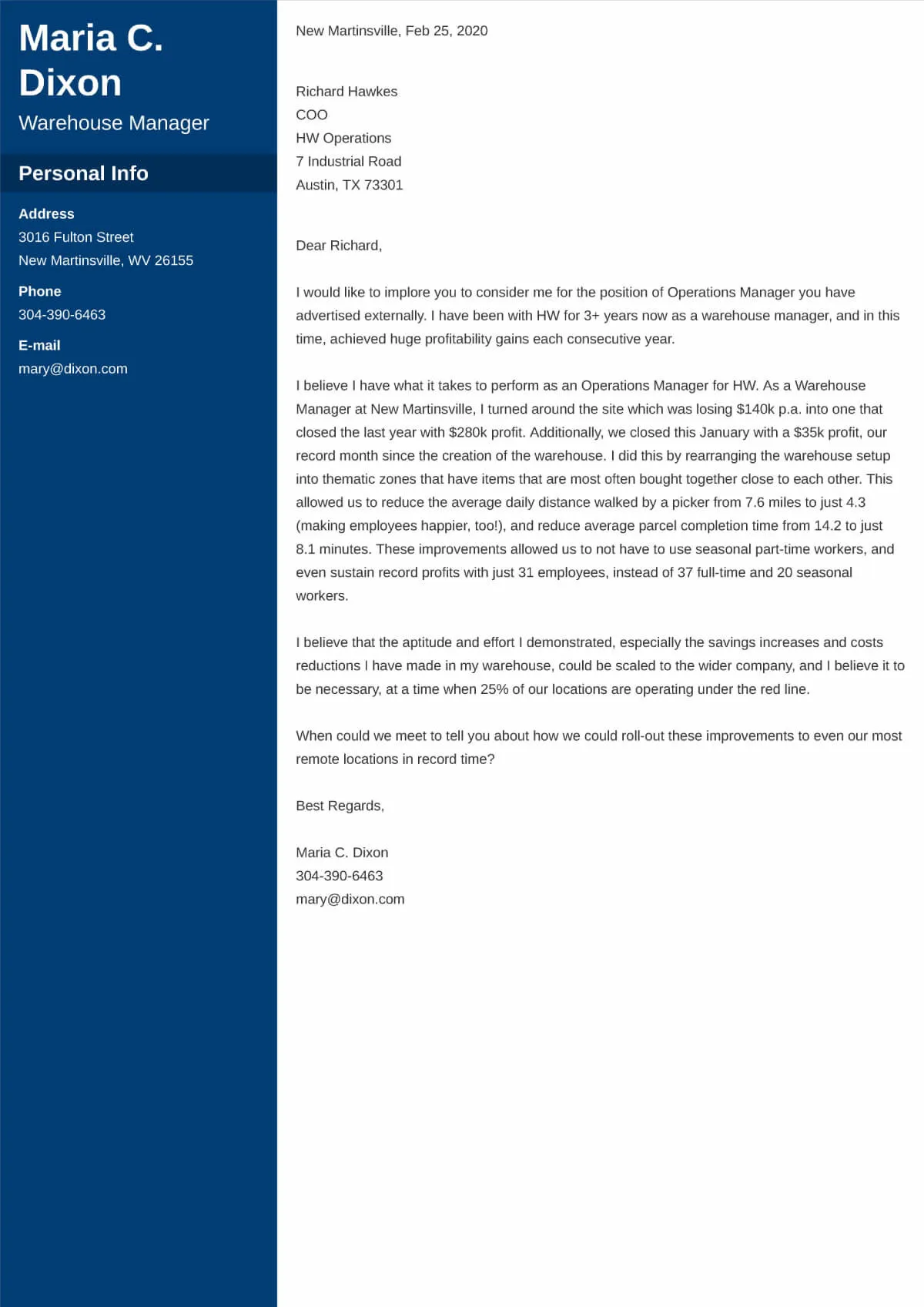
The format of your internal cover letter contributes significantly to its overall impact. Start with a professional header that includes your name, contact information, and the date. Address the hiring manager directly by name, if possible. Use a standard business letter format, with clear paragraphs and appropriate spacing. Keep your letter concise and to the point. Aim for one page, as hiring managers often have limited time to review applications. Use a readable font, such as Arial or Times New Roman, and maintain a consistent font size. Break up long blocks of text with bullet points or subheadings to improve readability. Make sure to proofread your cover letter carefully for any typos or grammatical errors. Consider using a professional template to give your letter a polished look. Always format your cover letter to give a lasting impression.
Using a Professional Tone
Maintain a professional tone throughout your internal cover letter. This demonstrates your commitment to the company and your understanding of workplace etiquette. Avoid using casual language, slang, or overly informal expressions. Write in a clear, concise, and respectful manner. Focus on highlighting your skills, experiences, and accomplishments, rather than making personal statements or excessive praise. Be enthusiastic and professional in your approach. Use appropriate language and grammar. Avoid negative comments about your current role or colleagues. Instead, focus on the positive aspects of the new opportunity and how you can contribute to the organization’s success. By adhering to a professional tone, you convey maturity and seriousness, enhancing your chances of making a positive impression.
Keeping It Concise and Clear

In the world of job applications, brevity is key. Hiring managers have limited time to review applications. Keep your cover letter concise and to the point. Avoid using unnecessary jargon or complex sentences. Stick to the relevant details and avoid rambling or repeating information that’s already in your resume. Use clear and direct language. Each paragraph should have a clear purpose, and your points should be easy to understand. Get straight to the point. Use active verbs, and keep your sentences short and focused. Ensure that every sentence contributes to the overall message and highlights your qualifications for the role. This will make your cover letter easier to read, and the hiring manager can quickly understand your qualifications and why you are the ideal candidate for the job.
Proofreading and Editing
Before submitting your internal cover letter, proofread and edit it meticulously. Errors can undermine your credibility and make you appear careless. Read your letter multiple times, checking for typos, grammatical errors, and formatting inconsistencies. If possible, ask a colleague, friend, or mentor to review it. A fresh pair of eyes can often catch errors that you might have missed. Pay attention to the overall flow and clarity of your writing. Ensure that your arguments are well-organized and easy to follow. Proofreading should be a non-negotiable step. Correct any inconsistencies in font styles, spacing, and punctuation. This careful attention to detail shows your professionalism and reinforces your commitment to excellence, increasing your chances of making a positive impression on the hiring manager.
Including a Call to Action
Concluding your internal cover letter with a clear call to action is essential for guiding the hiring manager to the next step. Clearly state your desire for an interview and express your enthusiasm for the opportunity. Make it easy for the hiring manager to contact you. Provide your email address and phone number. Thank the hiring manager for their time and consideration. Keep your call to action simple, direct, and professional. For instance, you might write, ‘I am eager to discuss my qualifications further and would welcome the opportunity for an interview. Thank you for your time and consideration.’ A well-crafted call to action encourages the hiring manager to take the next step and can significantly increase your chances of getting an interview.
Expressing Your Interest in an Interview

Expressing your interest in an interview is the final step. Reiterate your enthusiasm. Indicate your availability for an interview. Thank the hiring manager for considering your application. A strong closing statement reinforces your desire for the position and leaves a lasting positive impression. Expressing your interest demonstrates confidence and eagerness. It encourages the hiring manager to take the next step. Close with a professional sign-off. It is a final opportunity to reiterate your interest. Make sure to check the contact information. The goal is to end your letter on a positive note, increasing your chances of securing an interview and ultimately landing the internal job. This final step is crucial.