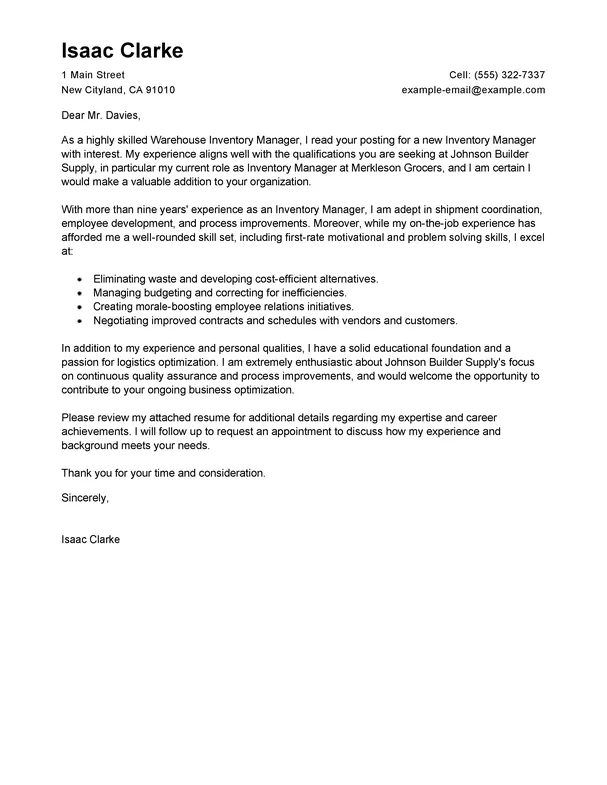
Unveiling Inventory Controller Cover Letter Secrets
Securing an Inventory Controller position requires more than just a strong resume. A well-crafted cover letter is your opportunity to showcase your personality, passion, and the specific skills that make you the ideal candidate. This guide unveils the secrets to writing a cover letter that not only gets noticed but also secures you an interview. We’ll delve into the essential components, best practices, and actionable tips to help you stand out from the competition and land your dream job. Learn how to transform your application into a compelling narrative, highlighting your unique value proposition and demonstrating why you’re the perfect fit for the role.
Understanding the Role of an Inventory Controller
Before crafting your cover letter, it’s crucial to understand the core responsibilities of an Inventory Controller. This understanding will enable you to tailor your letter to the specific needs of the role and demonstrate your familiarity with the industry. By showcasing this understanding in your cover letter, you immediately establish yourself as a knowledgeable and informed candidate, increasing your chances of making a positive impression on the hiring manager. A clear grasp of these responsibilities allows you to align your skills and experiences with the employer’s expectations, making your application more relevant and compelling. Inventory controllers play a vital role in maintaining efficient supply chain operations.
Key Responsibilities of an Inventory Controller

Inventory controllers are responsible for managing and overseeing the flow of goods, from procurement to distribution. They ensure accurate inventory levels, minimize waste, and optimize storage and handling. These responsibilities directly impact a company’s profitability and operational efficiency. Key tasks include performing regular stock checks, managing inventory databases, analyzing data to identify trends, and collaborating with other departments to coordinate logistics. By highlighting your experience in these areas, you can demonstrate your ability to contribute to the success of the company. This section outlines the essential tasks an Inventory Controller should perform.
Why a Strong Cover Letter Matters
In a competitive job market, a strong cover letter can be the deciding factor in whether you get an interview. It allows you to go beyond the bullet points of your resume and tell a story. This story highlights your accomplishments, illustrates your understanding of the role, and showcases your passion for the industry. Your cover letter provides context, demonstrating how your skills and experiences align with the job requirements and the company’s values. It’s an opportunity to make a personal connection with the hiring manager and present yourself as a well-rounded, highly motivated individual ready to contribute to the organization’s success. It sets the tone of your application.
Highlighting Relevant Skills in Your Cover Letter
Your cover letter is the perfect place to showcase your relevant skills. However, it’s not enough to list them; you need to demonstrate how you’ve applied those skills and achieved positive results. This approach, known as the STAR method (Situation, Task, Action, Result), helps you provide specific examples that illustrate your capabilities. When crafting your cover letter, always prioritize the skills mentioned in the job description. This targeted approach shows that you’ve carefully read the requirements and are a strong match for the position. Using clear, concise language and providing quantifiable achievements will strengthen your cover letter and make it more impactful.
Essential Skills to Showcase

Inventory controllers require a blend of technical and soft skills to excel in their roles. Highlighting these skills in your cover letter is essential for demonstrating your suitability for the position. By showcasing these specific abilities, you can prove to potential employers that you have the expertise and soft skills necessary to ensure that inventory is properly managed, efficiently utilized, and readily available when needed. A well-rounded skill set shows your ability to handle various responsibilities and adapt to changes. Here’s a list of important skills to showcase in your cover letter.
Technical Skills for Inventory Control
Technical skills form the foundation of an inventory controller’s expertise. These skills enable efficient tracking, analysis, and management of inventory levels. Strong proficiency in inventory management software, such as SAP, Oracle, or NetSuite, is a must-have skill for modern Inventory Controller positions. Experience with data entry, inventory audits, and warehouse management systems further enhances your technical profile. Highlighting your proficiency in these areas, along with other related tools, illustrates that you’re capable of managing complex inventory processes effectively. Include knowledge of these key technical areas.
- Inventory Management Software (SAP, Oracle, NetSuite)
- Data Entry and Analysis
- Inventory Auditing
- Warehouse Management Systems (WMS)
Soft Skills for Effective Communication
Soft skills play a crucial role in the success of an inventory controller. Inventory controllers are frequently working with other departments and should always communicate clearly and concisely. Strong communication skills are vital for collaborating with cross-functional teams, vendors, and stakeholders. The ability to resolve conflicts, negotiate, and present information effectively is critical. Leadership, teamwork, and problem-solving abilities will demonstrate your capability to manage and mitigate issues. Showcasing these qualities in your cover letter will highlight your ability to thrive in collaborative environments and drive success.
- Communication (Written and Verbal)
- Problem-solving
- Teamwork and Collaboration
- Negotiation Skills
Quantifying Achievements for Impact

One of the most effective ways to make your cover letter stand out is by quantifying your achievements. Rather than simply stating your responsibilities, you should provide specific examples of how you’ve made a positive impact in previous roles. This approach provides tangible evidence of your skills and capabilities, making your claims more credible and memorable. Quantifying your accomplishments showcases your value to potential employers. Be as precise as possible when presenting your achievements.
Using Numbers to Demonstrate Success
Numbers speak volumes in a cover letter. They provide concrete evidence of your successes and demonstrate your ability to achieve results. This is how you illustrate your impact on previous employers. Instead of saying you “improved inventory accuracy,” state that you “improved inventory accuracy by 15% through the implementation of a new cycle counting system.” The latter statement provides specific details and highlights the value you bring to the table. Using data to support your claims makes your cover letter significantly more persuasive. This type of information is highly valuable.
Examples of Quantifiable Achievements
Here are some examples of how to quantify your achievements. Think about your previous experiences and identify areas where you can demonstrate your impact. By quantifying your achievements, you transform your cover letter from a generic summary of your responsibilities to a compelling narrative of your successes. Including these examples will set you apart from your competition. Aim to make sure that you provide detailed information to highlight your impact.
- Reduced inventory costs by 10% within one year.
- Improved inventory accuracy from 85% to 98% through implementation of new procedures.
- Managed inventory for over 500 SKUs, ensuring a 99% fulfillment rate.
Structuring Your Inventory Controller Cover Letter

The structure of your cover letter is as important as its content. A well-structured cover letter is easy to read, logically organized, and clearly conveys your message. The recommended structure will help you to create a cover letter that engages the reader and highlights your most relevant skills and experiences. You should always aim to make sure that you are being clear with the hiring manager. A well-organized structure shows professionalism and attention to detail, making a positive impression on the hiring manager. Here’s an outline to follow.
The Perfect Cover Letter Structure
A perfect cover letter structure typically includes an introduction, body paragraphs, and a conclusion. It provides a clear roadmap for the reader, guiding them through your qualifications and experiences. The body should elaborate on your skills, achievements, and experiences that directly relate to the job requirements. The structure of your cover letter is essential to maintain the attention of the hiring manager.
Crafting a Compelling Opening
Your introduction should immediately grab the reader’s attention. It should state the position you’re applying for and briefly explain why you are a strong candidate. Start with a compelling sentence that highlights your enthusiasm for the role or mentions a key achievement that aligns with the job requirements. Avoid generic opening lines, such as “I am writing to express my interest.” Instead, aim for a more impactful and engaging beginning. This opening sets the tone for the rest of your letter, making it crucial to leave a positive impression from the start.
Highlighting Your Qualifications

The body paragraphs are where you showcase your qualifications and experiences. Use the STAR method to describe your achievements, providing specific examples that demonstrate your skills. Match your experiences with the key requirements listed in the job description. Include quantifiable results to back up your claims. The more specific you are, the more impactful your letter will be. Each paragraph should be focused on a particular skill or accomplishment, and your writing should be clear and concise.
Closing with Confidence and a Call to Action
Your closing should reiterate your interest in the position and express your enthusiasm for the opportunity. Thank the hiring manager for their time and consideration. Include a call to action, such as requesting an interview or offering to provide more information. This section should be brief, confident, and professional. A strong closing leaves a lasting positive impression.
Tailoring Your Cover Letter to the Job
Customizing your cover letter for each job is essential. Generic cover letters often fail to resonate with hiring managers. Researching the company and understanding the role is crucial for demonstrating genuine interest. By tailoring your letter, you showcase your attention to detail and your understanding of the company’s needs. Your cover letter will be more impactful. Avoid using a template without making significant changes.
Researching the Company and Role

Before writing your cover letter, research the company, its mission, and its values. Understand the specific responsibilities of the Inventory Controller position. Review the job description carefully, noting the key skills and requirements. This research will help you tailor your letter to align with the company’s needs. Demonstrate your understanding of the role and the company’s environment to the hiring manager. It will also help you highlight your qualifications.
Using Keywords from the Job Description
Carefully review the job description and identify the keywords. Incorporate these keywords into your cover letter naturally and strategically. This demonstrates that you meet the requirements. Use the same language as the job description. This makes your application more relevant. This will also help the hiring manager see that you are a strong match for the role.
Proofreading and Editing for Perfection
Proofreading and editing are crucial steps in ensuring your cover letter is polished and professional. Review your letter multiple times, checking for grammatical errors, spelling mistakes, and typos. A single error can undermine your credibility and make a negative impression on the hiring manager. Ensure your cover letter is free of errors and professional. Ask a friend to proofread your cover letter.
Common Mistakes to Avoid
Several common mistakes can hurt your cover letter. Avoid generic statements, overly long paragraphs, and a lack of quantifiable achievements. Do not include information that is not directly relevant to the job. Making these mistakes will decrease your chances of success. These common mistakes should always be avoided when you write your cover letter.
Ensuring Your Cover Letter is Error-Free
To ensure your cover letter is error-free, use spell-check and grammar-check tools. Have someone else review your letter for a fresh perspective. Pay attention to formatting, ensuring consistency in fonts, spacing, and margins. Taking these steps will help you create a polished and professional cover letter that accurately represents your skills and qualifications. Following these tips will greatly help your application.