What is a Cover Letter and Why is it Important?
A cover letter is a crucial document that accompanies your resume when applying for a job. It serves as an introduction, a personalized message that allows you to highlight your skills, experience, and enthusiasm for the specific role and company. Unlike a resume, which provides a factual overview of your qualifications, a cover letter gives you the opportunity to explain why you’re the ideal candidate, connecting your experiences to the job requirements. It’s a chance to demonstrate your writing skills, personality, and genuine interest in the opportunity. A well-crafted cover letter can significantly increase your chances of getting an interview, making it an indispensable part of any job application.
Cover Letter vs. Resume Understand the Difference
Understanding the difference between a cover letter and a resume is key to a successful job application. The resume is a concise summary of your skills, experience, education, and accomplishments, presented in a factual and organized manner. It provides a snapshot of your professional history. The cover letter, on the other hand, is a more personalized document. It expands on your resume, allowing you to tell a story about why you’re a great fit for the job. It’s where you connect your skills and experiences to the specific requirements of the role and express your interest in the company. While the resume is a must-have, the cover letter is the opportunity to showcase your communication skills, personality, and how your unique background aligns with the job.
Key Components of a Compelling Cover Letter

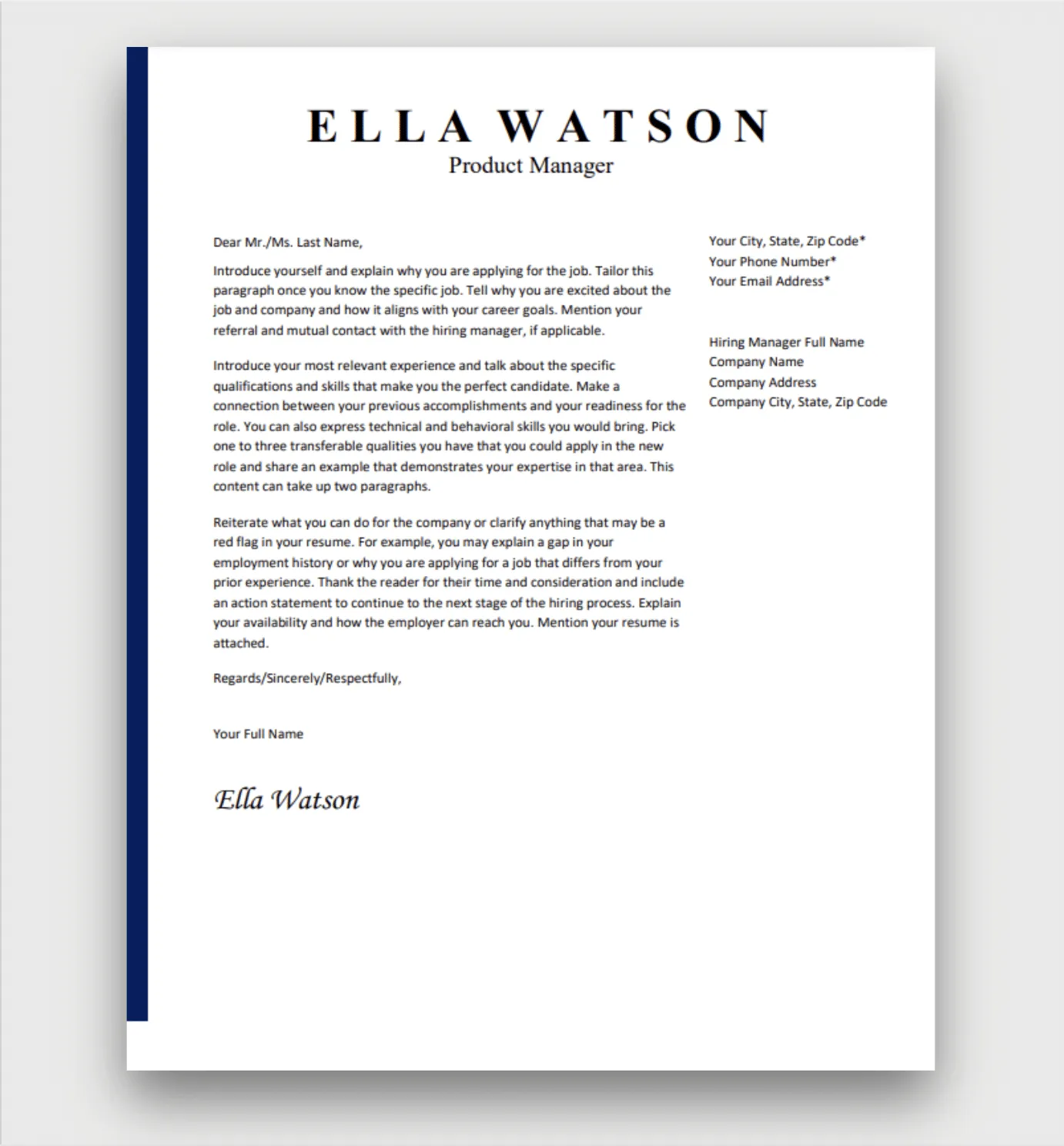
A compelling cover letter is well-structured and contains key elements that capture the reader’s attention and make you stand out. A cover letter has key components starting with your contact information and the hiring manager’s details. Follow this with a professional salutation, immediately followed by an engaging opening paragraph, highlighting relevant skills and experiences, and showcasing your achievements. Tailor your letter to the job description, expressing your enthusiasm for the company, before concluding with a strong closing paragraph and a clear call to action. Each element plays a vital role in building a persuasive case for why you’re the right candidate.
Your Contact Information
At the top of your cover letter, provide your contact information. This includes your name, address, phone number, and professional email address. Ensure your email address is professional and suitable for a job application. Using a simple and clear format makes it easy for the hiring manager to contact you.
The Hiring Manager’s Information
If possible, address your cover letter to a specific person, such as the hiring manager or the recruiter. Researching the hiring manager’s name demonstrates your initiative and attention to detail. If you can’t find a specific name, you can use a general salutation such as “Dear Hiring Manager” or “Dear [Department] Team.”
A Professional Salutation

Always start your cover letter with a professional salutation. If you know the hiring manager’s name, use “Dear Mr./Ms./Mx. [Last Name].” If you’re unsure of the name, a general salutation like “Dear Hiring Manager” or “Dear [Department] Team” is acceptable. Avoid casual greetings like “Hi” or “Hello.”
The Opening Paragraph Grab Their Attention
The opening paragraph is your chance to make a strong first impression. Briefly state the position you’re applying for and where you found the job posting. Then, immediately grab their attention by highlighting your most relevant skill or achievement. Show your enthusiasm for the role and the company. Make it clear why you are interested in the position and what makes you a strong candidate from the very beginning.
Highlighting Your Relevant Skills and Experience
In the body of your cover letter, elaborate on your skills and experience, connecting them to the job requirements. Carefully review the job description and identify the key skills and qualifications the employer is seeking. Use specific examples from your past experiences to demonstrate how you’ve successfully used those skills. Use action verbs to describe your accomplishments and quantify your results whenever possible. Tailor the content to align directly with what the employer is looking for.
Showcasing Your Achievements

Don’t just list your responsibilities; showcase your achievements. Use the STAR method (Situation, Task, Action, Result) to provide specific examples of how you’ve made a positive impact in previous roles. For each example, describe the situation, the task you were assigned, the action you took, and the measurable result you achieved. Quantify your achievements whenever possible using numbers and data to demonstrate the impact of your contributions.
Tailoring Your Letter to the Job Description
Each cover letter should be tailored to the specific job you’re applying for. Avoid using a generic cover letter for multiple applications. Read the job description carefully and identify the key requirements and skills. Then, in your cover letter, address each requirement directly and explain how your experience aligns with those needs. Use keywords from the job description to show that you understand what the employer is looking for.
Expressing Your Enthusiasm for the Company
Show that you’ve done your research and genuinely want to work for the company. Mention something specific that excites you about the company’s mission, values, products, or culture. Explain why you’re drawn to their work and how your skills and experience can contribute to their success. Demonstrating your enthusiasm for the company can make a significant positive impression.
The Closing Paragraph and Call to Action

Conclude your cover letter with a strong closing paragraph. Reiterate your interest in the position and summarize why you’re a good fit. Include a clear call to action, such as requesting an interview or expressing your eagerness to discuss your qualifications further. Thank the hiring manager for their time and consideration, and include a professional closing such as “Sincerely” or “Best regards.”
Formatting and Proofreading Tips
Formatting and proofreading are crucial steps in writing a cover letter that makes a positive impression. Proper formatting and flawless grammar and spelling demonstrate professionalism and attention to detail. Sloppy formatting and errors can create a negative impression, even if your qualifications are excellent. Make sure that you have both formatting and proofreading your cover letter before submitting.
Choosing the Right Font and Style
Choose a professional and easy-to-read font, such as Times New Roman, Arial, or Calibri. Use a font size between 10 and 12 points. Keep your letter well-spaced with consistent margins (typically 1 inch on all sides). Use clear headings and bullet points to break up large blocks of text and make it easy for the reader to scan. Ensure the overall formatting is clean, organized, and visually appealing.
Proofreading for Errors

Thoroughly proofread your cover letter for any grammatical errors, spelling mistakes, and typos. Read it aloud to catch any awkward phrasing or sentence structure. Use spell-check and grammar-check tools, but also manually review the document. Ask a friend, family member, or career advisor to proofread it for you, as a fresh pair of eyes can often catch errors you might miss. Make sure to check the company and hiring manager’s details as well.
Cover Letter Examples and Templates
Using cover letter examples and templates can be a great way to get started, but it’s crucial to customize them to fit your specific situation. You can find many cover letter templates online. However, make sure to tailor the template to match the job description and highlight your relevant skills and experiences. Adapt the language to reflect your personality and write in your own voice to make it authentic.
General Cover Letter Example
A general cover letter is suitable when you don’t have a specific job in mind but want to express your interest in working for a company. In this type of letter, focus on your skills, experiences, and how they align with the company’s values and goals. Highlight your enthusiasm for the company and explain what you can offer them. Customize each letter to the company to make it more effective.
Cover Letter for Specific Industries

Some industries may have specific formatting or content requirements for cover letters. For example, in the creative industries, it is often acceptable to showcase creativity through design or a unique writing style. Research the industry standards and expectations before you start writing. Tailor your cover letter to align with these norms and showcase your understanding of the industry.
Common Mistakes to Avoid in Cover Letters
Several common mistakes can hurt your chances of getting hired. Being aware of these pitfalls and avoiding them is essential to creating a cover letter that impresses. Avoid using generic language and focusing on yourself too much. Also, be sure to follow up on any applications, unless instructed otherwise.
Using Generic Language
Avoid using generic phrases or clichés that don’t provide any specific information about your skills or experience. Phrases like “hard worker,” “team player,” and “results-oriented” are overused and don’t tell the employer anything unique about you. Instead, provide concrete examples that demonstrate these qualities. Use specific examples that showcase your value and align with the job requirements.
Focusing on Yourself Too Much
While it’s important to highlight your skills and experience, don’t make the cover letter all about you. Focus on how you can benefit the company and contribute to their success. Explain how your skills and experiences can address their needs and help them achieve their goals. Tailor your cover letter to the company and the specific job description. Doing so will show your understanding of the company and increase your chances of standing out.
The Importance of Following Up
After submitting your cover letter and resume, it’s often a good idea to follow up with the hiring manager or recruiter. A follow-up shows your continued interest in the position and can help you stay top of mind. Send a brief, polite email or make a phone call a week or two after submitting your application, unless the job posting explicitly states not to. This demonstrates your initiative and eagerness, reinforcing your interest in the job.