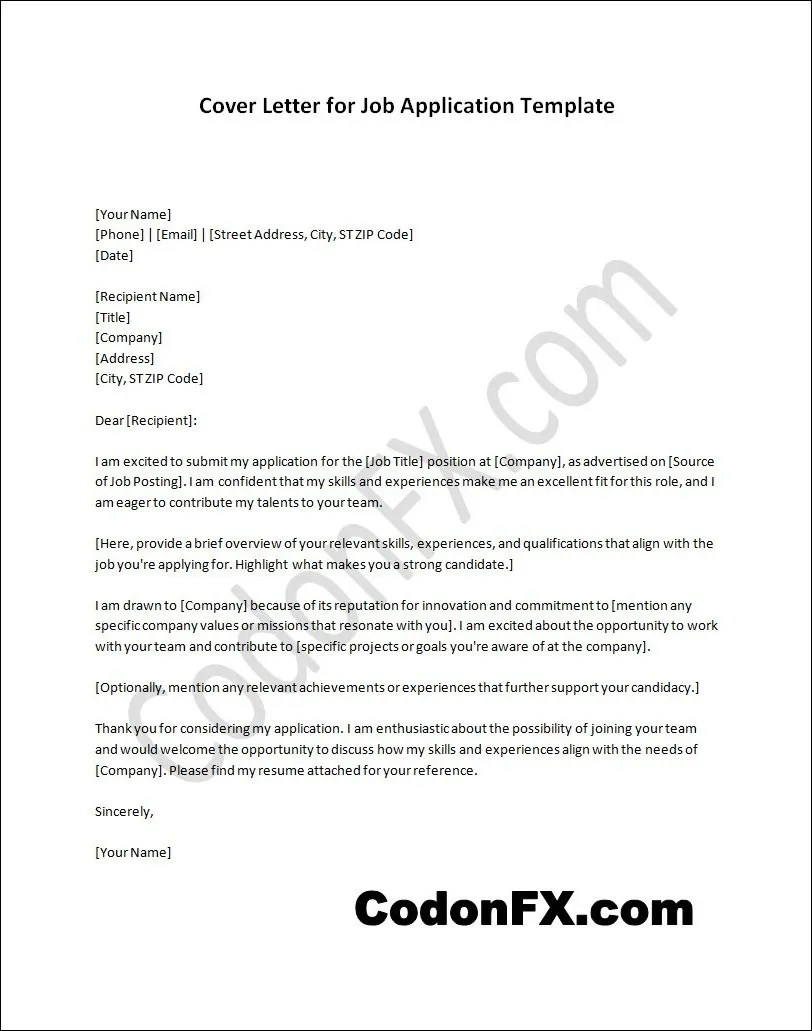
What is a Job Application Cover Letter
A job application cover letter is a crucial document that accompanies your resume when applying for a job. It serves as your first impression, providing an opportunity to introduce yourself to the hiring manager and highlight your qualifications, skills, and experiences. Unlike a resume, which offers a concise overview of your professional history, a cover letter allows you to elaborate on specific achievements and explain why you’re the perfect fit for the role. It also demonstrates your personality, communication skills, and genuine interest in the position and the company. A well-written cover letter significantly increases your chances of landing an interview, making it a vital component of any successful job application. It’s your chance to make a compelling case for why you should be considered for the job, going beyond the facts presented in your resume.
Why You Need a Cover Letter
In today’s competitive job market, a cover letter is not just an optional extra; it’s a necessity. It allows you to personalize your application, demonstrating your unique value proposition and differentiating yourself from other candidates. The cover letter provides context for your resume, enabling you to explain any gaps in your employment history or highlight specific experiences that align with the job requirements. It also showcases your writing skills, attention to detail, and ability to communicate effectively. Many employers view the cover letter as an essential tool for assessing a candidate’s suitability for a role, as it reveals their personality, motivation, and understanding of the job and the company’s needs. Without a cover letter, you risk appearing less prepared or less interested, which can significantly impact your chances of getting noticed.
Importance of a Cover Letter

The importance of a cover letter extends beyond simply fulfilling application requirements; it’s an investment in your career prospects. It provides a platform to address the specific needs of the employer and demonstrate your understanding of their business and the role. By tailoring your cover letter to each job, you convey a genuine interest in the company and the position. This shows that you have invested time and effort into the application process. Furthermore, a well-crafted cover letter can compensate for a less-than-perfect resume. It allows you to highlight transferable skills, elaborate on your accomplishments, and provide context for your career journey. A cover letter also enables you to showcase your personality and communication style, helping the hiring manager get a sense of who you are beyond your qualifications. It is a vital tool in setting yourself apart from the crowd.
Key Elements of a Cover Letter
Your Contact Information and Date
Begin your cover letter with your contact information, including your name, address, phone number, and email address. Place this information at the top of the document, usually left-aligned. Directly below your contact details, include the date you are sending the letter. This ensures that the hiring manager can easily reach you and also provides a clear record of when the application was submitted. Make sure that all the contact information is current and accurate. Ensure the email address is professional. Use a clean and easily readable font for this section.
Addressing the Hiring Manager

Addressing the hiring manager by name is a critical step in personalizing your cover letter. Research the company to find the hiring manager’s name and title. If you can’t find a specific name, use a professional greeting such as “Dear Hiring Manager” or “Dear [Department] Hiring Team.” Addressing the letter to a specific person demonstrates that you have taken the initiative to learn about the company and the job posting. It shows attention to detail and a genuine interest in the role. Avoid generic greetings like “To Whom It May Concern.” If you are unsure of the name, LinkedIn is a great place to look, or you can call the company’s human resources department. Proper salutations immediately make a positive impression.
Opening Paragraph — Grab Their Attention
The opening paragraph is your first opportunity to make a strong impression. Start by stating the position you are applying for and where you found the job posting. Immediately capture the reader’s interest by mentioning something specific about the company or the role that appeals to you. You can also open with a brief overview of your key qualifications or a compelling statement about your passion for the field. The goal is to make the hiring manager want to read more. Avoid generic openings. Be direct, concise, and enthusiastic. This paragraph sets the tone for the rest of your letter. It is the hook that encourages the reader to continue.
Body Paragraphs: Highlight Skills and Experience
The body paragraphs are where you highlight your skills, experience, and accomplishments that are relevant to the job. Provide specific examples of how you have demonstrated these skills in previous roles. Use the job description as a guide to identify the key requirements and tailor your examples to match them. Focus on quantifiable achievements whenever possible, using data to show the impact you have made. The body paragraphs should clearly demonstrate your value to the company. Tailor your content to match the job requirements. The goal is to show, not just tell, the hiring manager that you are a good fit for the role. Connect your past experiences to the current job.
Tailoring Your Cover Letter to the Job

Tailoring your cover letter to each job application is essential for success. Carefully review the job description and identify the key skills, experiences, and qualifications the employer is seeking. Then, use your cover letter to highlight the relevant aspects of your background. This shows that you have taken the time to understand the job and the company’s needs. When tailoring, use keywords from the job description. This helps you meet the applicant tracking system (ATS) requirements. If you’ve had similar roles in the past, mention how your skills and experiences align with the current job’s requirements. Customizing the cover letter shows your attention to detail and genuine interest in the role, increasing your chances of getting noticed.
Quantifying Your Achievements
Quantifying your achievements in your cover letter adds credibility and impact. Instead of simply stating what you did in a previous role, provide specific metrics and data to demonstrate your impact. For instance, instead of saying, “Managed social media accounts,” say, “Increased social media engagement by 30% in six months.” Use numbers, percentages, and specific results to showcase your accomplishments. Quantifiable achievements show the value you brought to previous employers. This helps the hiring manager quickly understand what you can offer to their company. Providing concrete evidence makes your claims more compelling and memorable, setting you apart from candidates who only provide vague descriptions.
Closing Paragraph — Call to Action
The closing paragraph should reiterate your interest in the position and express gratitude for the hiring manager’s time and consideration. Include a call to action, such as stating that you are eager to discuss your qualifications further in an interview. End with a professional closing, like “Sincerely” or “Best regards,” followed by your name. Reiterate your interest and highlight your enthusiasm for the role. Ensure that your call to action is clear and direct. Thank the hiring manager for their time and consideration. Proofread the entire letter one last time before submitting your application. This will help you make a strong and positive impression, encouraging the hiring manager to take the next step in the process.
Formatting and Design Tips

Font and Readability
Choose a professional and easy-to-read font, such as Times New Roman, Arial, or Calibri, and use a font size between 10 and 12 points. This ensures that your cover letter is readable and visually appealing. The goal is to make it easy for the hiring manager to scan and comprehend the information quickly. Avoid using overly decorative or unusual fonts. Maintain a consistent font throughout the document. Use clear and concise language. Use headings and subheadings to break up the text and improve readability. Proper formatting will help your cover letter look polished and professional.
File Format and Naming
Save your cover letter as a PDF file to preserve the formatting and ensure that it appears the same on any device. The PDF format prevents potential formatting errors. Name your file using a clear and professional format, such as “YourName_CoverLetter.pdf” or “YourName_JobTitle_CoverLetter.pdf.” This helps the hiring manager easily identify your application. Avoid using spaces or special characters in the file name. Keep the file name concise and easy to understand. Following these guidelines will ensure your cover letter is accessible, professional, and easy to manage.
Proofreading and Editing

Proofreading and editing are crucial steps in writing a cover letter. Check for any grammatical errors, spelling mistakes, and punctuation errors. Make sure your sentences are clear, concise, and well-structured. Read your cover letter aloud to catch any awkward phrasing or typos. Ask a friend, family member, or career counselor to review your cover letter for feedback. Having a second pair of eyes can help identify mistakes that you may have missed. Proofreading ensures that your cover letter is polished and professional, leaving a positive impression on the hiring manager. This attention to detail demonstrates your commitment to excellence and increases your chances of being selected for an interview.
Common Mistakes to Avoid
Generic Cover Letters
Avoid using generic cover letters that are not tailored to the specific job or company. Generic letters demonstrate a lack of interest and can make it seem like you’re sending out the same application to every job. Tailor your cover letter to each job application. Research the company and role, and highlight the specific skills and experiences that align with the job requirements. Personalize your cover letter by mentioning something specific about the company or the position that resonates with you. Generic cover letters make it difficult for hiring managers to see why you are the best fit for the role. Customizing your cover letter is the key to making a strong impression.
Typos and Grammatical Errors

Typos and grammatical errors can undermine the professionalism of your cover letter. Before submitting your cover letter, proofread it carefully for any mistakes in spelling, grammar, punctuation, or sentence structure. Using grammar-checking tools is helpful, but always read the document yourself. Make sure all the words are correct. Ensure sentences flow logically. Even a small error can create a negative impression. Proofreading shows attention to detail and respect for the hiring manager’s time. It is essential to present yourself as a competent and professional candidate. Eliminate all errors. Correct any mistakes before you submit.
Length and Wordiness
Keep your cover letter concise and to the point. Aim for a single page. Avoid overly long paragraphs or wordy sentences. The hiring manager is busy. Focus on conveying the most important information about your qualifications and interest in the role. Make sure to include only relevant information. Use clear, concise language. Edit your cover letter to remove any unnecessary words or phrases. Be brief and to the point. Use bullet points to highlight key skills or accomplishments. A well-written cover letter should be informative and engaging without being overly verbose.
Where to Submit Your Cover Letter
When submitting your cover letter, always follow the instructions provided in the job posting. Most online job applications require you to upload your cover letter along with your resume. Some companies may request that you paste your cover letter into a text box. In certain cases, you may need to send your cover letter as an attachment via email. Ensure that your cover letter is in the format specified by the employer. When submitting your application, double-check that you have included all required documents and that they are correctly formatted. Carefully following the instructions will help demonstrate your attention to detail. This increases your chance of making a good first impression.