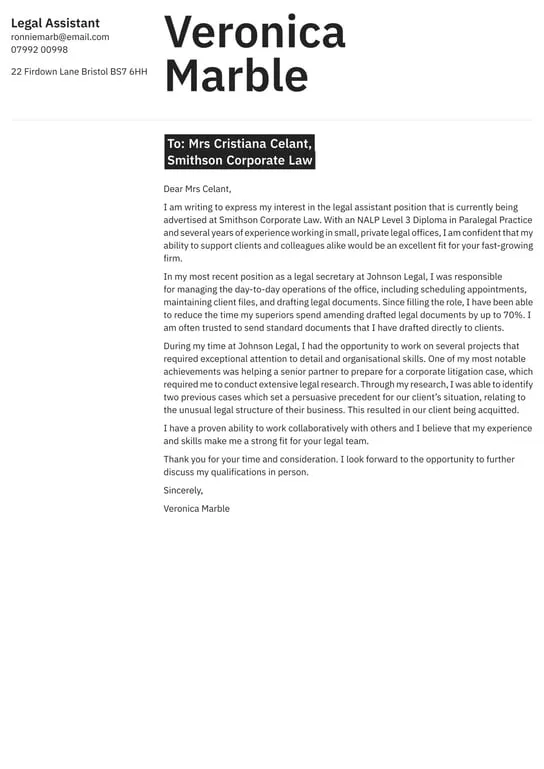
Crafting a Compelling Legal Cover Letter
In the competitive world of legal professions, a well-crafted cover letter can be the key to unlocking your dream job. A cover letter for a legal resume is not merely a formality; it’s your initial opportunity to make a strong impression, showcase your skills, and demonstrate your genuine interest in a specific position. This guide will delve into the secrets of crafting a legal cover letter that sets you apart from the competition and increases your chances of landing an interview. We’ll explore essential elements, formatting tips, and common pitfalls to avoid, equipping you with the knowledge to create a cover letter that truly represents your abilities and aspirations.
Understanding the Importance of a Legal Cover Letter
The importance of a legal cover letter cannot be overstated. It’s your first chance to speak directly to a potential employer, offering a narrative that brings your resume to life. Your legal resume provides a factual overview of your qualifications, experience, and education. Your legal cover letter, however, provides context, personality, and a clear indication of why you are a perfect fit for the role and the firm. It’s your opportunity to connect with the hiring manager on a more personal level, demonstrating not only your skills but also your enthusiasm for the position and the legal field. It shows your communication skill.
Making a Strong First Impression

First impressions matter, especially in the legal field. A compelling legal cover letter is the first impression you make on potential employers, and it can either open doors or close them. Your cover letter must grab the reader’s attention immediately, conveying professionalism, competence, and a genuine interest in the role. It should showcase your ability to communicate clearly, concisely, and persuasively. The opening paragraph is critical; it must make the reader want to continue reading. Consider it your first argument, designed to convince the hiring manager that you are a candidate worth considering. This is your opportunity to set the tone and signal your value.
Key Elements of a Successful Legal Cover Letter
Several key elements must be present in a successful legal cover letter. Each section should contribute to presenting a holistic picture of your qualifications and personality. These elements include clear and concise contact information, a compelling opening paragraph, a focused body highlighting relevant legal experience and skills, and a strong closing that reinforces your interest and calls for action. Furthermore, your cover letter should be tailored to each specific job application, demonstrating your understanding of the role and the employer’s needs.
Contact Information and Salutation
Start with your contact information: your name, phone number, email address, and LinkedIn profile (if applicable). Address the letter to a specific person whenever possible. Research the hiring manager’s name or the name of the contact person to personalize the letter. A generic salutation like “Dear Sir/Madam” can be acceptable, but addressing the letter directly to a named individual is always better. The salutation sets the tone for a professional exchange and immediately shows that you’ve taken the time to understand who will be reviewing your application.
Opening Paragraph Grab the Reader’s Attention

Your opening paragraph is the most critical part of your cover letter. It should immediately grab the reader’s attention and clearly state the position you’re applying for and where you saw the job posting. Briefly mention your most relevant skill or experience that aligns with the job requirements. Express your enthusiasm for the role and the firm. Use a strong, concise sentence or two that highlights why you are a great fit for the position. This is your chance to make a memorable first impression, so make sure your opening is captivating and professional, leaving no doubt that you are a serious candidate.
Highlighting Relevant Legal Experience
The body of your legal cover letter should highlight your relevant legal experience, focusing on achievements and results. Instead of just listing your responsibilities, describe your accomplishments. Use the STAR method (Situation, Task, Action, Result) to provide concrete examples of how you have contributed in previous roles. Quantify your achievements whenever possible. For example, “Managed a caseload of 50+ clients, resulting in a 90% success rate in settlements.” This shows prospective employers the value you can bring to their team, going beyond a mere list of tasks. Showcase your achievements.
Showcasing Skills and Achievements
Beyond experience, showcase the skills and achievements that make you a strong candidate. This is where you can highlight your legal skills, such as research, writing, negotiation, and litigation. Tailor your skills to align with the job description. Furthermore, highlight any specific achievements or awards that set you apart from other applicants. Emphasize the impact you’ve made in previous roles, providing quantifiable results whenever possible. For instance, did you improve efficiency, reduce costs, or increase client satisfaction? This shows your capacity to deliver results and your contributions to the firm.
Tailoring Your Cover Letter to the Specific Role

Generic cover letters are easily identified and often discarded. Customize your cover letter for each job application. Carefully read the job description and identify the key skills and qualifications the employer is seeking. Use the cover letter to explain how your skills and experience match those requirements. Mentioning the specific firm or company, its values, and the details of the role will make it apparent that you are seriously interested in the position. Tailoring your letter demonstrates that you’ve taken the time to research the position and understand the needs of the employer, which greatly increases your chances of a positive response.
Expressing Enthusiasm and Interest
Expressing your enthusiasm and interest in the specific role and firm is crucial. Your cover letter should convey a genuine interest, showing that you’re excited about the opportunity and motivated to join the organization. Briefly discuss why you are drawn to the firm, its culture, or the specific work they do. Research the firm’s values, mission, and recent achievements, and mention these details to demonstrate your interest. Show the employer that you are not just looking for any job, but specifically, this job at this firm. Show your enthusiasm and passion.
Closing the Letter and Call to Action
Conclude your cover letter with a strong closing paragraph. Reiterate your interest in the position and summarize why you are a good fit for the role. Include a call to action, such as requesting an interview or expressing your availability to discuss your qualifications further. Be polite and professional in your closing. Thank the hiring manager for their time and consideration. This final touch leaves a lasting impression and encourages the reader to take the next step. Your closing paragraph is just as important as your opening one, as it is the last thing the hiring manager will read.
Formatting and Presentation

The formatting and presentation of your legal cover letter are vital to making a positive first impression. A well-formatted and easy-to-read cover letter demonstrates your attention to detail and professionalism. Poor formatting can reflect poorly on your overall professionalism and can distract from the content of your letter. Ensure that your cover letter is visually appealing and easy to follow, as this demonstrates your attention to detail and professionalism.
Choosing the Right Font and Font Size
Choose a professional and easy-to-read font, such as Times New Roman, Arial, or Calibri. The font size should be between 10 and 12 points to ensure readability. Avoid using overly elaborate fonts or small font sizes, as they can be difficult to read and give an impression of unprofessionalism. Your font choice and size contribute to the overall visual appeal of your cover letter, and the choice of font should be professional.
Proper Use of White Space and Margins
Use appropriate margins (typically 1 inch on all sides) and adequate white space to ensure that your cover letter is not cluttered. Properly spaced text makes the letter easier to read and more visually appealing. Avoid large blocks of text; break up paragraphs to create visual breaks. The use of white space contributes to the overall readability of your cover letter, preventing it from appearing cramped or overwhelming. Effective use of white space will enhance readability.
Proofreading and Editing Your Cover Letter

Proofreading and editing are non-negotiable steps in the cover letter writing process. Before sending your cover letter, meticulously proofread it for any grammatical errors, typos, or punctuation mistakes. Ensure your language is clear, concise, and professional. Consider asking a colleague, mentor, or career counselor to review your cover letter for any potential errors or areas for improvement. A flawless cover letter demonstrates your attention to detail and professionalism, increasing your chances of making a positive impression. Check grammar and ensure it’s error-free.
Avoiding Common Legal Cover Letter Mistakes
Avoiding common legal cover letter mistakes can significantly improve your chances of success. These mistakes often signal a lack of attention to detail, lack of interest, or a poor understanding of the job requirements. Being aware of common pitfalls and taking steps to avoid them is essential for crafting a cover letter that enhances your job application.
Generic Cover Letters
Sending a generic cover letter to multiple employers is a significant mistake. Generic cover letters do not demonstrate your interest in the specific role or the firm. Tailor your letter to each job application, referencing the specific role, firm, and the job requirements. Demonstrate your understanding of the company’s needs. Generic letters suggest a lack of interest. Customize the content for each job application.
Typos and Grammatical Errors

Typos and grammatical errors can damage your credibility and create a negative impression. Proofread your cover letter carefully before submitting it. Use spell-check and grammar-check tools, but don’t rely on them entirely. Have someone else review your cover letter. Errors reflect poorly on your attention to detail. Ensure the cover letter is polished before submission.
Focusing on Yourself Too Much
While showcasing your skills and experiences is important, avoid making your cover letter all about you. Balance your achievements with the needs of the employer and the role. Show how your skills and experience align with the requirements of the job and what value you bring to the firm. Focus on how you can contribute to the firm’s success. Highlight the firm’s requirements.
Ignoring the Job Description
Failing to address the job description is a critical error. Always reference the specific requirements outlined in the job description. Demonstrate how your skills and experience match the employer’s needs. Tailoring your letter to align with the job requirements shows the employer that you’re a good fit. Align your skills with the requirements in the job description.
Examples of Effective Legal Cover Letter Sections

To write an excellent legal cover letter, learn from examples and templates. Use effective phrasing and structure for inspiration. Study the examples below to understand how to write different sections of the letter to convey your message. Examples demonstrate how to implement the advice given throughout this guide.
Example Opening Paragraphs
Here are a few examples of effective opening paragraphs:
Example 1: “I am writing to express my enthusiastic interest in the Associate Attorney position at [Law Firm Name], as advertised on [Platform]. With my proven track record in [specific legal area] and a passion for [firm’s area of expertise], I am confident that my skills and experience align perfectly with your firm’s values and goals.”
Example 2: “Having followed [Law Firm Name]’s groundbreaking work in [specific legal field] for several years, I am eager to apply for the Legal Intern position. My experience in [related experience] and strong research skills make me well-suited to contribute to your team and further my career in legal studies.”
Example 3: “I am writing to express my strong interest in the Legal Assistant position at [Law Firm Name]. My background in [specific skill set] combined with my understanding of [specific legal tasks] make me a strong candidate. I am eager to contribute to the team.”
Example Experience Highlights
Here are a few examples of how to effectively highlight experience:
Example 1: “During my internship at [Previous Firm], I drafted over 30 legal documents, including motions and pleadings. My work contributed to a 15% increase in case win rates.”
Example 2: “As a paralegal at [Previous Firm], I managed a caseload of 40+ cases, ensuring all deadlines were met. I also spearheaded a new case management system that reduced processing time by 20%.”
Example 3: “In my role as a law clerk, I conducted legal research and analysis, prepared briefs, and assisted with trials. I was involved in 5 successful cases.”
Example Closing Paragraphs
Here are examples of how to close your cover letter effectively:
Example 1: “Thank you for considering my application. I am excited about the possibility of contributing to [Law Firm Name] and would welcome the opportunity to discuss my qualifications further in an interview. I look forward to hearing from you soon.”
Example 2: “I am very interested in the Legal Assistant position and believe my skills are a great fit. I am available for an interview at your earliest convenience and can be reached at [Phone Number] or [Email Address]. Thank you for your consideration.”
Example 3: “I am grateful for your time and consideration and am very enthusiastic about this opportunity. I am confident that my skills and experience make me an excellent fit for [Law Firm Name]. I welcome the chance to discuss my qualifications further.”
Resources and Templates for Legal Cover Letters
Several resources and templates can assist you in crafting an effective legal cover letter. Use a variety of available tools to help you. Utilize online templates to create a cover letter that suits your style. Remember, the goal is to create a letter that effectively represents your value to a potential employer. Many online resources offer templates, examples, and guides. Adapt templates for your needs. Consider leveraging these resources to create a powerful and professional cover letter that highlights your skills and experience.