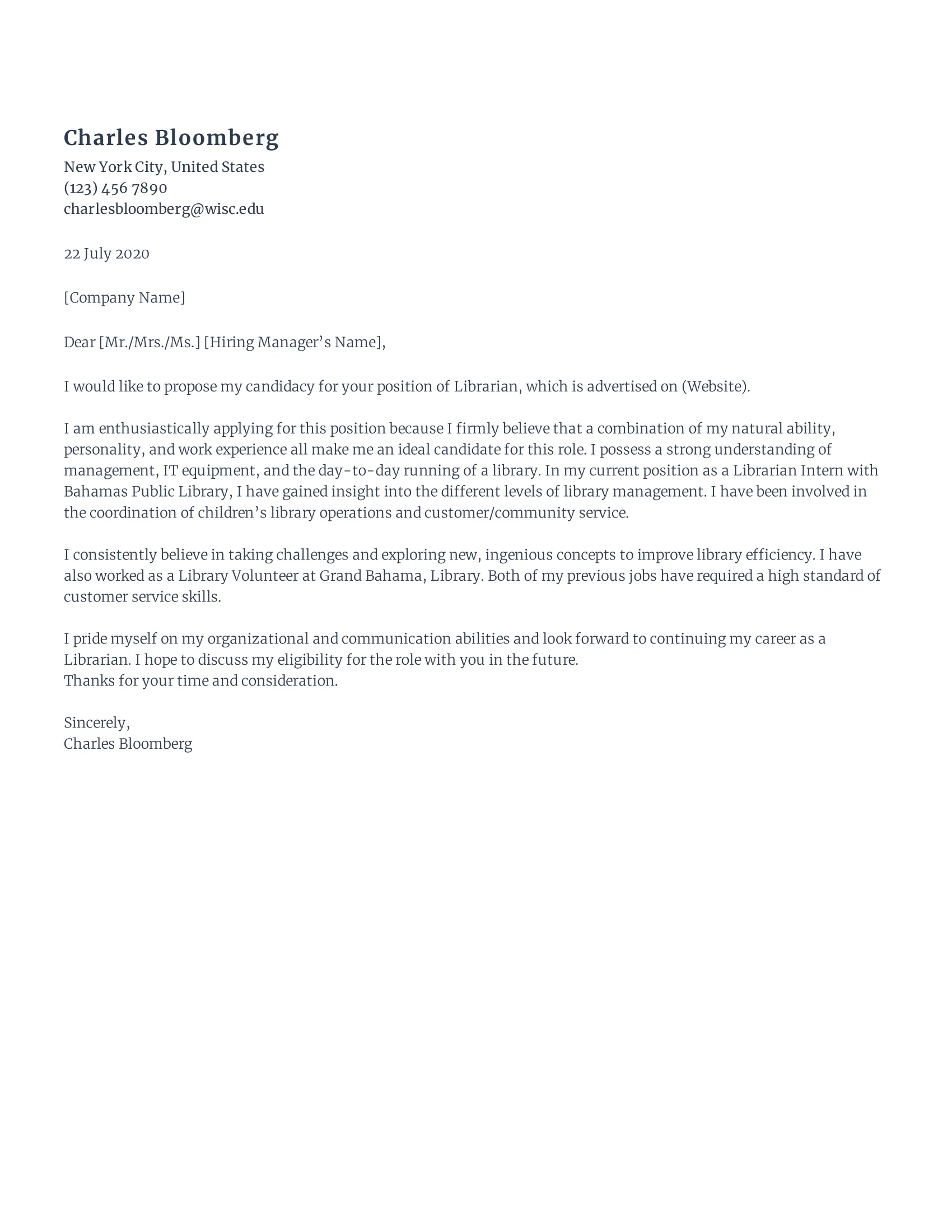
What is a Librarian Cover Letter?
A librarian cover letter is a crucial document that accompanies your resume when applying for a librarian position. It serves as an introduction, providing the hiring manager with a snapshot of your skills, experience, and passion for the field. Unlike a resume, which lists your qualifications, a cover letter allows you to showcase your personality, elaborate on specific achievements, and explain why you are the perfect fit for the role. It’s your opportunity to make a strong first impression and convince the employer to delve deeper into your qualifications by reading your resume. A well-crafted cover letter can significantly increase your chances of landing an interview.
Why Is a Cover Letter Important?
The importance of a cover letter cannot be overstated. In a competitive job market, it helps you stand out from other applicants by highlighting your unique skills and experiences. It provides a platform to tell a story about your career aspirations and how your qualifications align with the specific needs of the library. Many hiring managers use cover letters as a primary screening tool, quickly assessing whether an applicant has taken the time to understand the job requirements and tailor their application accordingly. Furthermore, a cover letter demonstrates your communication skills, attention to detail, and genuine interest in the position, all of which are essential qualities for a successful librarian.
Key Components of a Librarian Cover Letter

A well-structured librarian cover letter consists of several key components, each serving a specific purpose in conveying your qualifications and enthusiasm. These elements work together to create a compelling narrative that captures the hiring manager’s attention and encourages them to learn more about you. From your contact information to the closing salutation, each section should be carefully crafted to present you in the best possible light. Understanding these components and how they contribute to the overall effectiveness of your cover letter is essential for making a positive impression and securing an interview.
Your Contact Information
Start your cover letter with your contact information at the top. Include your full name, phone number, professional email address, and LinkedIn profile URL if you have one. This makes it easy for the hiring manager to reach you. Ensure your email address is professional; avoid using nicknames or informal language. Double-check that the information is accurate and up-to-date. Your contact information is not just a formality; it’s the gateway to your potential employment.
The Hiring Manager’s Contact Information
Below your contact information, include the hiring manager’s name, title, and the library’s address. Addressing the letter to a specific person shows that you’ve done your research and are genuinely interested in the position. If you can’t find the hiring manager’s name, try searching the library’s website or LinkedIn. Using a specific name is significantly more impactful than using a generic title such as ‘Hiring Manager.’ Personalization demonstrates your commitment to the application process.
Professional Salutation

Use a professional salutation like ‘Dear Mr./Ms./Mx. [Last Name]’ to begin your letter. If you don’t know the hiring manager’s name, use a professional alternative like ‘Dear Hiring Committee.’ Avoid using informal greetings like ‘Hello’ or ‘Hi.’ The salutation sets the tone for the entire letter, indicating your level of professionalism and respect. It’s one of the first things a hiring manager will see, making a good first impression crucial.
Opening Paragraph Crafting a Compelling Hook
The opening paragraph is your chance to grab the reader’s attention. Start with a strong statement that highlights your enthusiasm for the position and the library. You might mention something specific that drew you to the role, such as the library’s mission or a particular initiative. Briefly mention your relevant qualifications and how they align with the job requirements. This paragraph should be concise and engaging, enticing the reader to continue reading. The initial sentence must immediately capture the reader’s interest and set the tone for the entire letter, making it clear why you are a suitable candidate.
Highlighting Relevant Skills and Experience
The body of your cover letter is where you showcase your skills and experience. Focus on the qualifications mentioned in the job description and provide specific examples of how you’ve used those skills in the past. Use action verbs to describe your achievements and quantify your results whenever possible. Instead of simply listing your responsibilities, explain what you accomplished and the positive impact you made. Tailor this section to each job you apply for, ensuring you highlight the most relevant experiences and skills for that particular position. Tailoring is the secret sauce to getting noticed by recruiters.
Showcasing Library Skills

Emphasize your library-specific skills, such as cataloging, reference services, collection development, and information literacy. Mention any experience with library systems (e.g., OCLC, Sierra) or digital resources. If the job requires specialized skills (e.g., archival management, grant writing), be sure to highlight your expertise in those areas. Provide specific examples of how you have successfully applied these skills to meet the needs of library patrons and improve library services. Showcase a combination of soft and hard skills is essential for a complete profile.
Quantifying Achievements
Whenever possible, quantify your achievements with numbers and data. For example, instead of saying ‘Improved circulation,’ say ‘Increased circulation by 15% through the implementation of a new marketing strategy.’ Quantifying your accomplishments demonstrates the impact you’ve made in previous roles and provides concrete evidence of your abilities. Using numbers makes your achievements more tangible and shows the value you can bring to the library. Use metrics to back your statements and make them more compelling.
Emphasizing Education and Certifications
Clearly state your educational background, including your Master of Library Science (MLS) or equivalent degree. Mention any relevant certifications or professional development courses you’ve completed. If you’re an entry-level candidate, highlight any relevant coursework, internships, or volunteer experiences. For experienced librarians, briefly mention your advanced degrees or specialized certifications. Highlighting your credentials assures the hiring manager that you meet the baseline requirements for the role. Including relevant certifications also showcases your commitment to professional growth.
Demonstrating Passion for Librarianship

Express your passion for librarianship and your commitment to serving the community. Explain why you’re drawn to this particular library and what you admire about its mission or services. Share any personal experiences that have fueled your interest in libraries. Showing genuine enthusiasm helps you connect with the hiring manager on a personal level and demonstrates your dedication to the profession. Your passion can be a key differentiator between you and other candidates, making your cover letter more memorable.
Closing Paragraph Expressing Enthusiasm
In your closing paragraph, reiterate your enthusiasm for the position and the library. Briefly summarize your key qualifications and why you’re the ideal candidate. Express your eagerness to contribute to the library’s mission and your confidence in your ability to succeed in the role. This is your final chance to leave a lasting positive impression. The closing paragraph should be concise, enthusiastic, and leave the hiring manager with a clear understanding of why you are a good fit for the job and the institution.
Call to Action Requesting an Interview
End your cover letter with a clear call to action. Specifically request an interview and express your availability to discuss your qualifications further. Provide your contact information once more, just in case. Make it easy for the hiring manager to take the next step by explicitly stating your interest in an interview. This shows that you are proactive and eager to move forward in the application process. A direct call to action increases the likelihood of receiving an interview invitation.
Formal Closing and Signature

Use a professional closing such as ‘Sincerely,’ ‘Best regards,’ or ‘Respectfully,’ followed by your typed name. If you’re submitting a physical copy of your cover letter, leave space for your handwritten signature above your typed name. The formal closing reinforces the professional tone of your cover letter. Ensure your signature is clear and easy to read. A professional sign-off completes the overall polished appearance of your application.
Formatting Your Librarian Cover Letter
The formatting of your cover letter is just as important as the content. A well-formatted letter is easy to read and reflects your attention to detail. Use a clean and professional layout that is visually appealing. Poor formatting can distract from the content, making your letter less effective. Paying close attention to formatting details is a simple way to enhance the overall professionalism of your application. This creates a positive first impression, increasing your chances of being taken seriously.
Font Selection
Choose a professional and easy-to-read font, such as Times New Roman, Arial, or Calibri. Use a font size between 10 and 12 points. Avoid using overly decorative or unusual fonts, as they can be distracting. Consistent font use throughout your document is important. The font should be clear and easy to read, enhancing the overall readability. The goal is to make your cover letter accessible and professional. Maintain consistency for a polished appearance.
Margins and Spacing

Use standard one-inch margins on all sides of your cover letter. Use single or 1.15 line spacing for the body of your text. Double space between paragraphs to improve readability. Proper margins and spacing create a clean, uncluttered look, making it easier for the hiring manager to focus on the content. Good formatting showcases your professionalism. These formatting elements contribute to the overall neatness and visual appeal of the cover letter.
Proofreading and Editing
Proofread your cover letter carefully for any grammatical errors, typos, or inconsistencies. Use spell check and grammar check tools, but don’t rely on them entirely. Read your cover letter aloud to catch any awkward phrasing or errors that you might have missed. Ask a friend or colleague to review your letter as well. A polished and error-free cover letter demonstrates your attention to detail and commitment to quality. Make sure everything is accurate and well-written before submitting your application.
Librarian Cover Letter Examples
Reviewing examples can help you understand how to structure your cover letter and tailor it to different types of positions. The following examples showcase how to address specific job requirements and highlight relevant skills. Adapt these examples to your own experience and the specific requirements of the job you’re applying for. Consider these as starting points, tailoring them to reflect your unique background. This provides a template to build from, ensuring you present your qualifications effectively.
Entry-Level Librarian Cover Letter Example

An entry-level cover letter should emphasize your education, relevant coursework, and any volunteer or internship experience. Highlight any skills you’ve gained through your MLS program, such as cataloging, reference services, or information literacy. Show your enthusiasm for the profession and your willingness to learn and grow. Make sure your application reflects that this is your starting place in the profession. The key is to show your potential. You’re not expected to have years of experience, so focus on your foundational knowledge and enthusiasm for the field.
Experienced Librarian Cover Letter Example
An experienced librarian cover letter should highlight your professional accomplishments and demonstrate your leadership skills. Provide specific examples of how you’ve improved library services, managed projects, or led teams. Showcase your expertise in your area of specialization (e.g., public services, technical services, or special collections). Quantify your achievements and explain how you’ve contributed to the success of previous libraries. Present your accomplishments using concise and compelling language. The goal is to demonstrate expertise and a track record of success, showing your ability to excel in the role.
Specialized Librarian Cover Letter Example
A specialized librarian cover letter should focus on your expertise in a specific area, such as archival management, data science, or digital librarianship. Highlight your knowledge of relevant technologies, software, and best practices. Provide examples of how you’ve used your specialized skills to solve problems, improve processes, or achieve specific goals. Show how your specialized skills align with the job requirements. This should demonstrate that you have in-depth experience within a particular niche. The goal is to showcase your specialized skills and unique value proposition.
Additional Tips for Librarian Cover Letters
In addition to the core components, several additional tips can help you write a more effective cover letter. These suggestions will help you showcase your qualifications and passion for the profession. By incorporating these strategies, you can increase your chances of landing an interview and securing the job. Always tailor your cover letter to the specific job requirements, reflecting your unique skills. Following these tips will make your cover letter more compelling and increase your application’s effectiveness.
Tailoring to the Job Description
Carefully read the job description and tailor your cover letter to match the specific requirements and qualifications. Highlight the skills and experiences that are most relevant to the position. Use keywords from the job description throughout your letter. This shows that you understand the needs of the library and are a good fit for the role. Customizing your letter is a key factor in getting noticed by the hiring manager. Tailoring your cover letter demonstrates your attention to detail and your understanding of the job requirements, signaling to the employer that you’ve taken the time to understand their needs.
Using Keywords
Incorporate keywords from the job description into your cover letter. This helps your application get past applicant tracking systems (ATS) and ensures that your skills and experience are easily recognizable by the hiring manager. Keywords help your application stand out and ensures your relevant skills and experience are easily recognized. Strategically weaving in these terms will help your cover letter resonate with both the automated screening systems and the human readers. Use the keywords naturally, not stuffing them in. This shows you understand the job’s requirements and speak its language.
Highlighting Soft Skills
Don’t forget to highlight your soft skills, such as communication, teamwork, problem-solving, and leadership. Provide examples of how you’ve used these skills in the workplace. Soft skills are essential for success in any library role. Incorporating these skills into your cover letter makes your application more appealing. Soft skills often make a real difference in whether you get an interview or not. Showcasing these traits shows you’re not only qualified but also a well-rounded candidate.
Common Mistakes to Avoid
Avoiding common mistakes is critical for crafting a successful librarian cover letter. These missteps can undermine your application. Understanding and avoiding these pitfalls increases your chances of a positive outcome. Be mindful of these mistakes to ensure your cover letter strengthens your application. Correcting these mistakes can drastically improve the quality of your application, helping you secure a job.
Length and Tone
Keep your cover letter concise and professional. Aim for one page, unless the job description specifically requests more information. Use a formal and respectful tone. Avoid slang, jargon, or overly casual language. Your goal is to present a polished and professional image. Length and tone are important to presenting your application in the best way possible. Maintain a professional and respectful tone throughout your cover letter to make a favorable impression.
Grammatical Errors and Typos
Proofread your cover letter carefully for any grammatical errors, typos, or inconsistencies. A polished and error-free cover letter demonstrates your attention to detail and your commitment to quality. Before submitting, double-check everything to ensure it reflects well on you. These errors create a negative impression and could lead to your application being rejected. Meticulous proofreading is essential for presenting yourself professionally.
Generic Content
Avoid using a generic cover letter template. Tailor your letter to each job application, highlighting the skills and experiences that are most relevant to the position. Generic content doesn’t impress hiring managers. The best approach is to tailor your letter to each specific role, and generic content won’t resonate with the hiring manager. This level of customization shows you are genuinely interested in the specific opportunity. Generic content often fails to resonate with hiring managers. Personalize your cover letter by addressing specific requirements.
Final Thoughts on Librarian Cover Letters
Writing a compelling librarian cover letter is a critical step in the job application process. By following these guidelines and tailoring your letter to each specific job, you can significantly increase your chances of landing an interview. Take your time, be thorough, and always proofread carefully. Writing a strong cover letter can make all the difference in the competitive job market. A well-written cover letter is key to making a great first impression and showcasing your qualifications. Good luck with your job search!