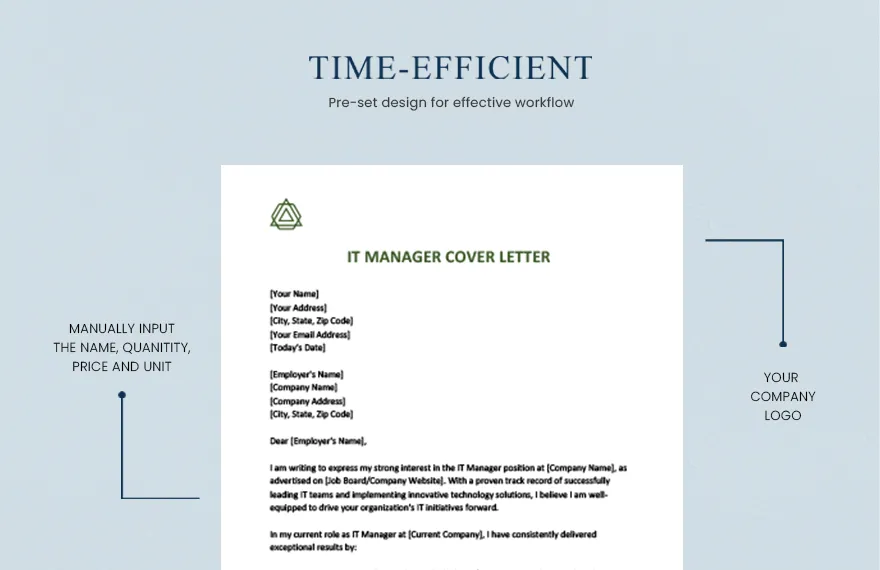
Why You Need a Manager Cover Letter
A manager cover letter is your first impression. It’s the initial opportunity to showcase your qualifications, experience, and personality to a potential employer. While a resume provides a snapshot of your professional history, the cover letter allows you to tell your story, connect your skills to the job’s requirements, and express your genuine interest in the role and the company. It is not merely a formality; it’s a powerful tool that can significantly increase your chances of landing an interview. Without a well-crafted cover letter, your application might get overlooked, especially in a competitive job market. A strong cover letter demonstrates professionalism, attention to detail, and a proactive approach to your job search.
Key Elements of a Manager Cover Letter
Several key elements combine to create a compelling manager cover letter. These include a well-structured header, a captivating opening, a focused middle section highlighting relevant skills and experiences, a confident closing, and careful proofreading. Each component serves a specific purpose in conveying your suitability for the position. Moreover, customization is crucial; tailoring your cover letter to each job application demonstrates genuine interest and a deeper understanding of the company’s needs. The structure should be easy to read, with clear paragraphs, concise sentences, and a professional tone. Avoiding generic phrases and instead using specific examples of your achievements is essential. Finally, always remember to include a call to action, encouraging the hiring manager to take the next step, such as scheduling an interview.
Header Section Essentials

Your Contact Information
The header section of your cover letter starts with your contact information. This includes your full name, phone number, professional email address, and optionally, your LinkedIn profile URL. Ensuring accuracy in this section is critical, as it allows the hiring manager to easily reach you. The header should be formatted consistently with your resume to maintain a professional presentation. Make sure your email address is professional and appropriate; avoid using nicknames or informal addresses. Consider including a link to your online portfolio or personal website if relevant to the job.
Recipient’s Information
Following your information, include the recipient’s details. This typically includes the hiring manager’s name (if known), their title, the company name, and the company’s address. Researching the hiring manager’s name shows initiative and attention to detail. If you can’t find the specific name, address the letter to the hiring manager or the hiring team. Always double-check the company’s address for accuracy. Addressing the letter to a specific person personalizes your application and increases the likelihood that it will be read by the relevant individual.
The Opening Paragraph

Express Your Enthusiasm
The opening paragraph sets the tone of your letter. Start by clearly stating the position you’re applying for and where you found the job posting. Then, express your enthusiasm for the role and the company. Highlight something specific that attracted you to the position, such as a project, a company value, or a recent achievement by the company. Avoid generic phrases. Show genuine interest by explaining why you’re excited about this specific opportunity. Your goal is to grab the reader’s attention and make them want to continue reading your letter.
Highlight Relevant Skills and Experience
Quantify Your Achievements

The middle section of your cover letter should highlight your skills and experience, directly related to the job requirements. Review the job description carefully and identify the key skills and qualifications the employer is seeking. Then, provide concrete examples of how you’ve demonstrated those skills in previous roles. Use the STAR method (Situation, Task, Action, Result) to structure your examples. Quantify your achievements whenever possible. Instead of saying ‘Improved team performance,’ say ‘Improved team performance by 15% through implementing new training programs.’ Using numbers and specific data makes your accomplishments more impactful and credible.
Showcase Leadership Abilities
As a manager, demonstrating leadership abilities is crucial. Provide examples of how you’ve led teams, mentored employees, and made strategic decisions. Describe situations where you successfully motivated a team to achieve a goal, resolved a conflict, or implemented a new process. Focus on the results of your leadership, such as increased productivity, improved employee satisfaction, or successful project completion. Demonstrate your ability to delegate tasks, provide constructive feedback, and foster a positive work environment. Highlighting these leadership qualities will significantly enhance your cover letter and make you a more attractive candidate.
Middle Paragraph Essentials
Detail Your Accomplishments

In the middle paragraphs, focus on detailing your accomplishments that align with the job requirements. Instead of merely listing your responsibilities, emphasize your achievements and how you’ve made a difference in previous roles. Use action verbs to describe your accomplishments. Instead of writing ‘Managed a team,’ write ‘Managed a team of 15 employees, increasing productivity by 20% and reducing project delivery time by 10%.’ Provide specific examples and quantifiable results to demonstrate your value. This section should be the core of your cover letter, showcasing your skills and experience in a clear and concise manner.
Use Action Verbs
Action verbs are essential for creating a dynamic and engaging cover letter. Start each sentence with a strong action verb to describe your achievements and responsibilities. Examples of effective action verbs include ’led,’ ‘managed,’ ‘developed,’ ‘implemented,’ ‘achieved,’ ‘improved,’ ‘increased,’ ‘streamlined,’ and ’negotiated.’ Using action verbs makes your accomplishments more impactful and shows that you are a proactive and results-oriented individual. Avoid passive language and instead focus on what you did and the impact you had in your previous roles.
Tailor to the Specific Job
Each cover letter should be tailored to the specific job you are applying for. Generic cover letters are easily spotted and often discarded. Customize your letter by carefully reviewing the job description and identifying the key skills and qualifications the employer is seeking. Then, highlight the relevant experiences and accomplishments that demonstrate your suitability for the role. Research the company and the hiring manager to understand their values and priorities. This customization shows that you have taken the time to understand the role and the company, making your application more compelling.
Address the Company’s Needs

Your cover letter should address the company’s needs and demonstrate how you can contribute to their success. Show that you understand the company’s mission, values, and goals. Explain how your skills and experience can help them achieve their objectives. Research the company’s recent achievements, challenges, and future plans. This research will enable you to tailor your letter to address the specific needs of the company and make a compelling case for why you are the best candidate. Demonstrating this understanding shows you are genuinely interested and can bring value to the organization.
The Closing Paragraph
Reiterate Your Interest
In your closing paragraph, reiterate your interest in the position and the company. Summarize your key qualifications and why you are a good fit for the role. Express your enthusiasm for the opportunity to contribute to the company’s success. Show that you are confident in your abilities and eager to learn more about the position. Re-emphasizing your interest leaves a lasting positive impression and reinforces your qualifications.
Call to Action
Include a clear call to action in your closing paragraph. Encourage the hiring manager to take the next step, such as scheduling an interview. State your availability for an interview and how they can contact you. This demonstrates your proactive approach and encourages the hiring manager to move forward with your application. The call to action should be polite, confident, and direct.
Proofread and Edit
Proofreading Checklist
Before submitting your cover letter, carefully proofread and edit it. Typos, grammatical errors, and formatting inconsistencies can create a negative impression. Use a proofreading checklist to ensure that you have checked every aspect of the letter. Check for spelling mistakes, grammatical errors, punctuation errors, and inconsistencies in formatting. Ensure that the language is clear, concise, and professional. Read the letter aloud to catch any awkward phrasing or errors. Having a second pair of eyes review your letter can also be extremely helpful.
Formatting Your Manager Cover Letter
Font and Font Size
Choose a professional and easy-to-read font, such as Times New Roman, Arial, or Calibri. Keep the font size between 10 and 12 points. A clean and legible font will make your cover letter easier to read, and a consistent font size ensures a professional appearance. Avoid using overly decorative fonts that might be difficult to read. Maintaining consistency in your font choice throughout the letter is critical for a polished look.
Margins and Spacing
Use standard margins (1 inch on all sides) and single or 1.15 line spacing. This formatting provides adequate white space, making the letter easier to read and visually appealing. Proper spacing prevents the letter from appearing cluttered. Ensuring your margins and spacing are consistent throughout the document makes it look organized and professional. Use a consistent format with your resume to create a cohesive application.
Manager Cover Letter Samples to Inspire You
Reviewing manager cover letter samples can provide valuable insights and inspiration. Look for samples that are tailored to different industries, roles, and levels of experience. Pay attention to the structure, tone, and language used in the samples. Analyze how the candidates highlight their skills, experiences, and achievements. Adapt and customize the samples to fit your qualifications and the specific job you are applying for. Using cover letter samples is an excellent way to understand what works and to avoid common mistakes. However, be sure to customize each letter to make it your own and reflect your unique qualifications and experience.