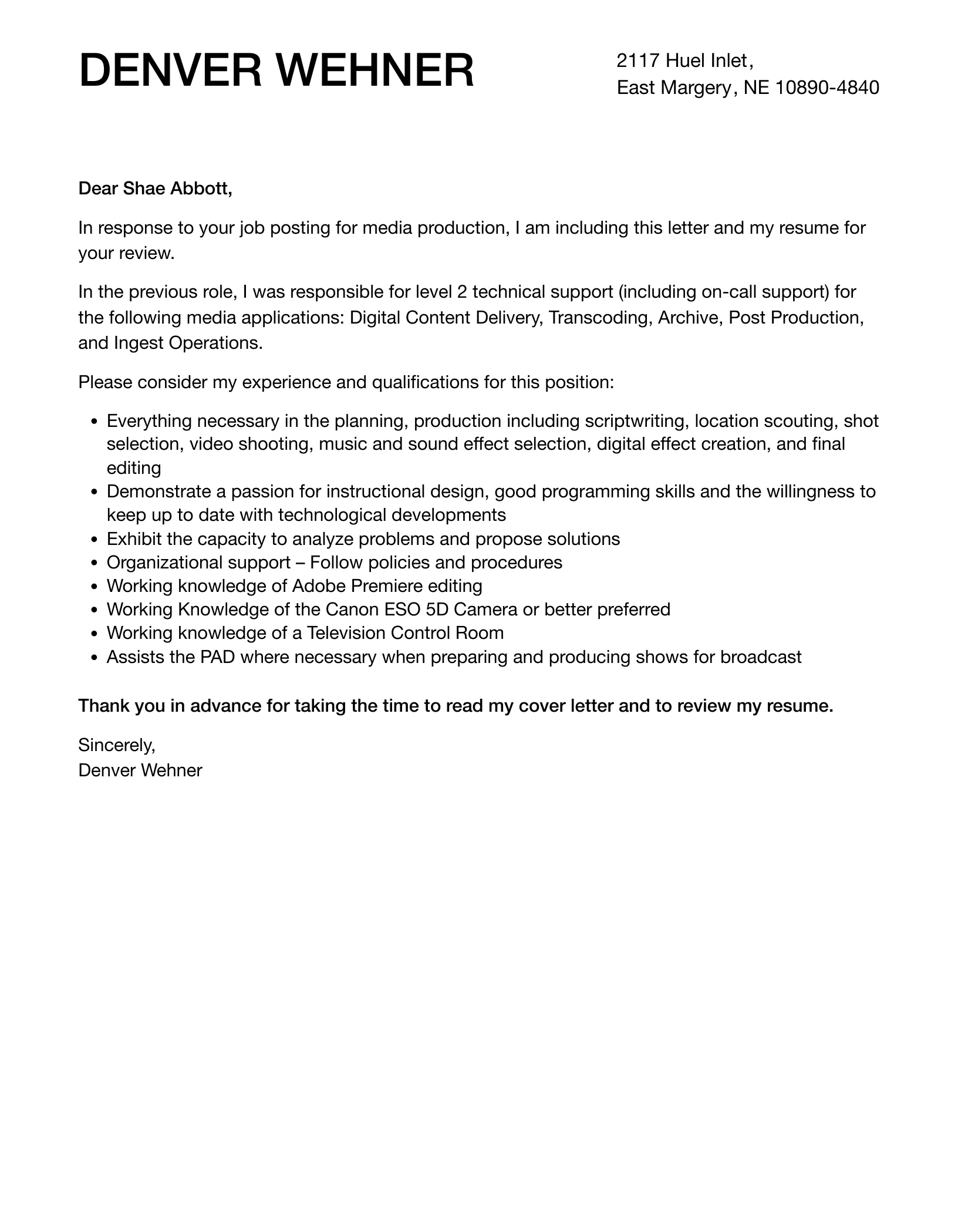
Crafting Your Media Planning Cover Letter
In the competitive world of media planning, a compelling cover letter is your first opportunity to make a lasting impression. This document serves as your introduction, showcasing your skills, experience, and enthusiasm for the role. A well-crafted media planning cover letter goes beyond simply listing your qualifications; it tells a story, highlighting your achievements and demonstrating your understanding of the advertising landscape. It should be tailored to each specific job application, emphasizing the skills and experiences that align with the employer’s needs.
Understanding the Purpose and Importance
The primary purpose of a media planning cover letter is to secure an interview. It complements your resume, providing a more detailed account of your relevant experiences and how they relate to the position. It’s a chance to communicate your passion for media planning and explain why you are the ideal candidate. The importance of a strong cover letter cannot be overstated. It’s often the deciding factor between your application and the hundreds of others. It’s your chance to grab the hiring manager’s attention and highlight the value you bring to their team. A well-written cover letter shows that you have the writing skills and the ability to tailor your message to the specific opportunity.
Key Components of a Media Planning Cover Letter

Your Contact Information and Date
Start your cover letter by clearly displaying your contact information, including your name, phone number, email address, and LinkedIn profile URL. This should be at the top, left-aligned. Directly below your contact information, include the date. Use a standard date format (e.g., Month Day, Year). This information is crucial, allowing the hiring manager to quickly contact you should they wish to move forward with your application. Ensuring that this information is presented clearly and professionally demonstrates attention to detail, a key quality in media planning.
Addressing the Hiring Manager
Addressing the hiring manager by name is a significant advantage. Research the company and the specific hiring manager to find out their name, and use this to personalize your cover letter. Start with “Dear Mr./Ms./Mx. [Last Name]” instead of a generic greeting like “To Whom It May Concern.” This demonstrates that you’ve taken the time to learn about the company and the role. If you are unable to find the hiring manager’s name, you may use “Dear Hiring Manager.” However, personalized greetings create a stronger connection.
Highlighting Your Relevant Skills and Experience

This is the core of your cover letter. Focus on the skills and experiences most relevant to the media planning role. Use the job description as your guide, and tailor your language to the requirements listed. Don’t simply reiterate your resume; elaborate on specific achievements, quantify your results whenever possible, and explain how your skills align with the company’s needs. Provide concrete examples from your past experiences that prove your ability to succeed in the role.
Showcasing Your Media Planning Skills
Highlight your core media planning skills. This includes, but is not limited to, campaign strategy development, media buying, budget management, market research, audience analysis, and familiarity with media planning tools such as Nielsen, Comscore, and Google Analytics. Describe your experience with different media channels (digital, print, broadcast, social media), and demonstrate your understanding of the media landscape. This demonstrates the ability to create and execute successful media plans.
Demonstrating Your Analytical Abilities
Media planning relies heavily on data analysis. Showcase your ability to analyze campaign performance, identify trends, and make data-driven recommendations. Mention your experience with data analysis tools, such as Excel, and any experience with advanced analytics platforms. Provide examples of how you used data to optimize campaigns, improve ROI, or achieve specific marketing objectives. Analytical skills are crucial for measuring success and making informed decisions.
Emphasizing Your Communication and Collaboration Skills

Media planners often work in cross-functional teams and communicate with various stakeholders, including clients, media vendors, and internal teams. Highlight your communication and collaboration skills by describing your experience working in teams, presenting data, and negotiating with vendors. Mention your ability to explain complex concepts clearly and concisely. Successful media planning requires strong interpersonal skills, including active listening and the ability to build relationships.
Quantifying Your Achievements
Wherever possible, quantify your achievements. Instead of saying “Improved campaign performance,” state “Increased click-through rates by 15%” or “Reduced media costs by 10%.” Use numbers to demonstrate the impact of your work. This provides concrete evidence of your abilities and makes your accomplishments more tangible to the hiring manager. It differentiates you from other candidates who may make general claims without providing specific data.
Providing Specific Examples of Success
Back up your claims with specific examples. Describe a successful campaign you managed, the media channels used, the target audience, and the results. Explain the strategies you employed and how they contributed to the campaign’s success. Use the STAR method (Situation, Task, Action, Result) to structure your examples. This allows you to provide a clear, concise account of your accomplishments and demonstrates your ability to achieve results. These examples illustrate your capacity for success.
Tailoring Your Cover Letter to the Job Description

Researching the Company and the Role
Before writing your cover letter, research the company and the specific role. Understand the company’s mission, values, and culture. Identify the specific needs of the role by carefully reviewing the job description. This research will enable you to tailor your cover letter to the specific requirements and demonstrate your genuine interest in the company and the position. Understanding the company’s current initiatives and their approach to media planning can help you personalize your letter effectively. Look at their past campaigns, and consider what made them successful.
Matching Your Skills and Experience to the Requirements
Carefully review the job description and identify the key skills and experiences the employer is seeking. Use the keywords and phrases from the job description in your cover letter. This will help the hiring manager see how you align with their needs. Match your skills and experience to the listed requirements and provide specific examples to support your claims. Demonstrate how your past experiences have prepared you to excel in the role. Focus on the experiences that most closely align with the needs of the company.
Formatting and Proofreading Your Cover Letter

Formatting Guidelines for a Professional Look
Use a professional and easy-to-read font, such as Times New Roman, Arial, or Calibri, with a font size between 10 and 12 points. Keep the formatting consistent throughout the document. Use single-spacing within paragraphs and double-spacing between paragraphs. Use a clear and concise structure with short paragraphs and bullet points to highlight key information. A well-formatted cover letter makes it easy for the hiring manager to read and understand your key qualifications.
Proofreading for Errors and Clarity
Proofread your cover letter carefully for any grammatical errors, spelling mistakes, and typos. Ask a friend or colleague to review your cover letter for a second opinion. Ensure that your writing is clear, concise, and easy to understand. Avoid jargon and overly complex language. A polished cover letter reflects your attention to detail and professionalism. Errors create a negative impression. Thorough proofreading shows that you are thorough and reliable.
Closing Your Media Planning Cover Letter

Expressing Your Enthusiasm and Availability
End your cover letter with a strong closing statement expressing your enthusiasm for the role and the opportunity to contribute to the company’s success. Reiterate your interest in the position and mention your availability for an interview. Show your eagerness to learn more about the role and the company. This shows you’re genuinely interested in the opportunity. A strong close reinforces your key qualifications.
Thanking the Reader and Providing Contact Information
Thank the hiring manager for their time and consideration. Provide your contact information again (phone number and email address) to make it easy for them to reach you. Use a professional closing, such as “Sincerely” or “Best regards,” followed by your name. Ensure that all your contact information is accurate and up-to-date. This final step ensures the hiring manager can reach you to schedule an interview.