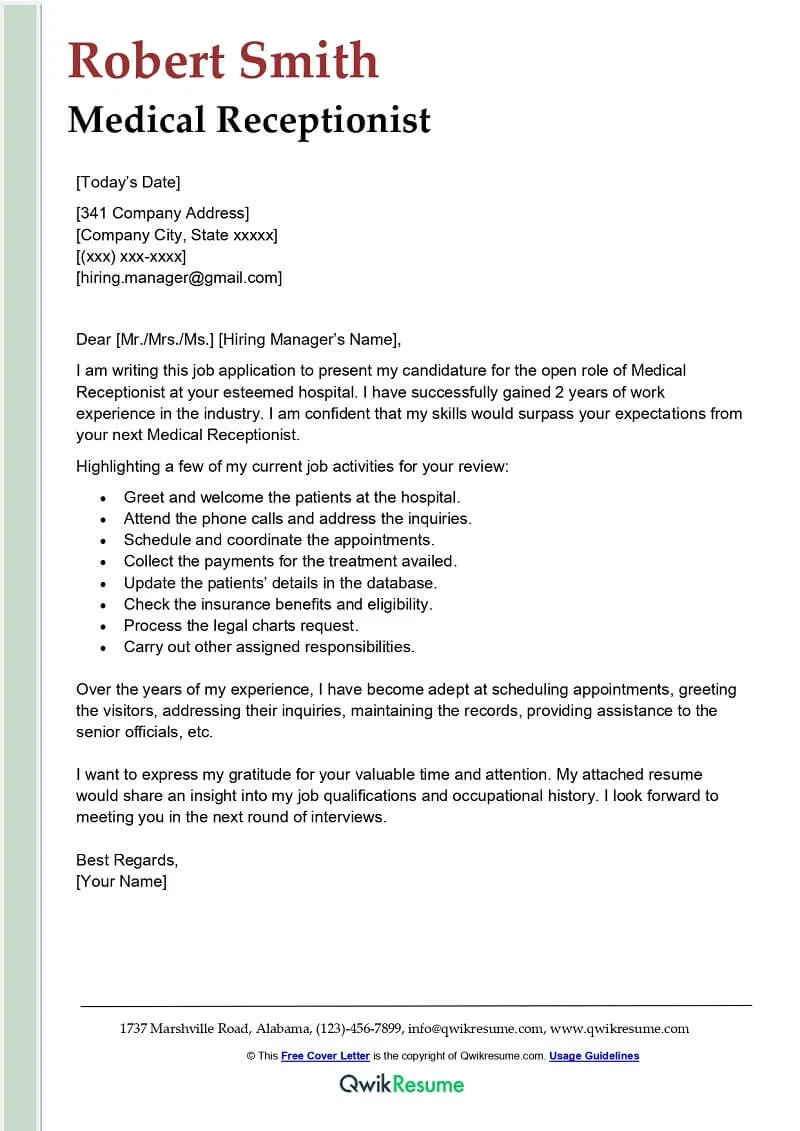
Landing your dream job as a medical receptionist requires more than just a stellar resume. A well-crafted cover letter is your chance to shine, demonstrating your skills, experience, and personality. It’s the first impression you make, often setting the stage for whether you’ll get an interview. A compelling cover letter will showcase your unique qualifications and why you’re the perfect fit for the role. This guide provides essential tips and examples to help you create a standout cover letter, increasing your chances of securing that coveted position in the healthcare field. Your ability to communicate effectively in writing, as demonstrated in your cover letter, is crucial for a medical receptionist. It sets the stage for your role as the first point of contact for patients, and a well-written cover letter is crucial.
Why You Need a Medical Receptionist Cover Letter
A cover letter offers an opportunity to expand on your resume, providing context and showcasing your personality. It’s a chance to highlight how your skills and experience align with the specific needs of the healthcare practice. While a resume lists your qualifications, a cover letter tells your story, explaining why you’re passionate about the medical field and how you can contribute to the team. A cover letter enables you to connect your skills with the job requirements, such as patient interaction, scheduling, billing, and record keeping. It allows you to show enthusiasm for the role and the practice. It showcases your writing skills, professionalism, and your understanding of the healthcare environment. Moreover, it allows for a personalized approach to demonstrate your genuine interest and how your values align with the practice.
Highlighting Your Skills
The best cover letters showcase the skills that make you an excellent medical receptionist. Employers want to see evidence of your abilities, so use your cover letter to spotlight your most relevant qualifications. Consider these key areas to highlight your skills, using examples to demonstrate how you’ve applied them in previous roles. Mention any certifications or training you have received, for instance, in medical terminology, HIPAA compliance, or electronic health records (EHR) systems. Show how you have utilized these skills in the past to provide efficient support to patients. Providing concrete examples of your skills in action makes your cover letter more impactful and demonstrates your ability to perform the job effectively.
Communication Skills

Excellent communication is crucial for a medical receptionist. You must be able to communicate clearly, concisely, and compassionately with patients, doctors, and other staff. Highlight your ability to listen actively, empathize, and provide information in a way that patients can understand. Give examples of how you have resolved patient issues, addressed concerns, or provided comfort during stressful situations. Use sentences to show your interpersonal abilities and your professionalism. Mention how you manage difficult situations, such as handling complaints or dealing with irate patients. Being able to describe your experience in this context will give you an edge.
Organizational Skills
Medical receptionists must be organized and able to manage multiple tasks simultaneously. Emphasize your ability to maintain schedules, manage patient records, and keep the front desk running smoothly. Give examples of how you have organized and prioritized tasks. Mention your ability to manage appointments, answer phones, and handle correspondence efficiently. Highlight your experience with maintaining patient confidentiality and accuracy in record-keeping, including your familiarity with relevant medical terminology, which can significantly improve your application. Describe how you have streamlined processes or implemented systems that improved efficiency.
Technical Skills
In the modern medical environment, technical skills are essential. Highlight your proficiency with electronic health records (EHR) systems, scheduling software, and other relevant technologies. Mention any experience with medical billing and coding software or other systems used in the healthcare field. If you are familiar with certain software such as Epic, Cerner, or Practice Fusion, specify in your cover letter. Detail the different ways that you have utilized the systems and your ability to adapt to new technologies. Your technical prowess, combined with your soft skills, makes you an ideal candidate.
Formatting Your Medical Receptionist Cover Letter

Formatting your cover letter correctly is crucial. Ensure it is easy to read and visually appealing, as this reflects your professionalism and attention to detail. Use a standard font, such as Times New Roman or Arial, and maintain a consistent font size throughout the document. Structure your letter with clear headings, well-spaced paragraphs, and bullet points to highlight key information. Using bullet points helps with readability, making your cover letter simple to scan. Proofread for grammatical errors and typos, as these can detract from your qualifications. A well-formatted cover letter will demonstrate your professionalism and commitment to excellence.
Use a Professional Tone
The tone of your cover letter is important. Use a professional, yet approachable tone. Address the hiring manager by name, if possible. Start with a strong opening that grabs the reader’s attention and conveys your enthusiasm for the position. Avoid slang, jargon, or overly casual language. Focus on your skills and experiences that align with the job requirements. End with a polite closing, reiterating your interest and thanking the reader for their time. Your tone reflects your personality and professionalism, so ensure it aligns with the culture of the practice you’re applying to. This ensures a cohesive and professional presentation throughout your application.
Keep it Concise
Keep your cover letter brief and to the point. Hiring managers are busy, so make your letter easy to read and understand. Aim for a single page, unless the job description specifically asks for additional details. Focus on the most relevant information and avoid repeating details from your resume. Instead of summarizing your resume, use your cover letter to expand on key experiences and provide context. Be specific and avoid using unnecessary words or phrases. Highlighting your skills concisely will demonstrate your ability to communicate efficiently. Your brevity will demonstrate an understanding of the employer’s time constraints, which is a valuable quality in a medical reception role.
Tailoring Your Cover Letter

Tailor your cover letter to each specific job application. Review the job description carefully and customize your letter to highlight the skills and experiences most relevant to the role. Generic cover letters are easily spotted and often discarded. Customize your cover letter so it is unique to the job. This shows that you are genuinely interested in the position and have taken the time to understand the practice’s needs. Research the healthcare practice and incorporate this information into your letter to demonstrate your interest. Tailoring is the difference between a generic application and a compelling pitch.
Researching the Practice
Before you begin writing, research the healthcare practice to understand their mission, values, and the services they provide. Visit their website, read reviews, and look for information about their staff and patients. Addressing your cover letter to a specific person, if possible, shows that you’ve done your homework. Mention specific details about the practice that appeal to you, such as their commitment to patient care or their use of new technologies. This research demonstrates your interest and shows that you are a good fit. This proactive approach can make your cover letter stand out.
Matching Skills to Requirements
Carefully review the job description and identify the key skills and qualifications the employer is seeking. Use your cover letter to showcase how your skills and experiences align with their needs. Give specific examples of how you have demonstrated these skills in previous roles, and use the same keywords and phrases used in the job description. This approach will demonstrate your awareness of the requirements of the position. Tailoring your letter to meet specific requirements dramatically increases your chance of success. It ensures that your cover letter is directly relevant to the job you are applying for and emphasizes your qualifications.
Medical Receptionist Cover Letter Examples

To further illustrate the best practices, here are a few examples to show different approaches. Note the different ways to emphasize experience and skills.
Example 1 General Application
This general example provides a strong foundation. [Insert example of a general medical receptionist cover letter. This should showcase basic skills]. For instance, the applicant may include basic patient care, scheduling and communication.
Example 2 Experience Focus
This example emphasizes relevant experience. [Insert example of a cover letter highlighting experience. Mention previous roles and responsibilities]. Include any specializations like insurance billing.
Example 3 Skills Focused

This approach is helpful when you are changing careers. [Insert example of a skills-focused cover letter. Focus on transferable skills]. You can include communication, organization, and technical skills.
Common Mistakes to Avoid in Medical Receptionist Cover Letters
Certain mistakes can severely damage your chances of getting an interview. Avoid these pitfalls to ensure your cover letter impresses hiring managers.
Generic Greetings
Avoid generic greetings like “To Whom It May Concern.” Research the hiring manager’s name and address them directly in your cover letter. This personalized approach demonstrates your interest and attention to detail. If you cannot find a name, it’s better to use a more specific greeting that relates to the practice itself. The use of a specific person’s name shows that you are thorough.
Typos and Grammatical Errors

Proofread your cover letter carefully. Typos and grammatical errors can create a negative impression, suggesting a lack of attention to detail. Always use a spell checker and grammar checker, but also review your letter manually. Ask a friend or family member to review your cover letter for clarity and accuracy. Errors undermine your credibility and professionalism, which is essential for the medical field. Therefore, a well-written cover letter must be error-free.
Ignoring the Job Description
Failing to address the specific requirements outlined in the job description is a critical mistake. Employers want to know how your skills and experience align with their needs. Always tailor your cover letter to the specific job, highlighting relevant qualifications and demonstrating your understanding of the position. Generic cover letters often get overlooked, so customize your letter. Review the job description and directly address how your skills and experience match their needs. Taking the time to tailor your letter demonstrates your commitment to the role and the practice.
Conclusion
A well-crafted medical receptionist cover letter can significantly improve your job application. By highlighting your skills, experience, and personality, you can make a positive first impression and increase your chances of getting an interview. Always customize your cover letter to each job, and emphasize your ability to communicate effectively, organize tasks efficiently, and use relevant technologies. Focus on the key skills that employers seek in medical receptionists, such as communication, organization, and technical expertise. By following these tips and avoiding common mistakes, you can create a cover letter that stands out and lands you your dream job in the medical field. Good luck with your application!