Understanding the Music Performance Cover Letter
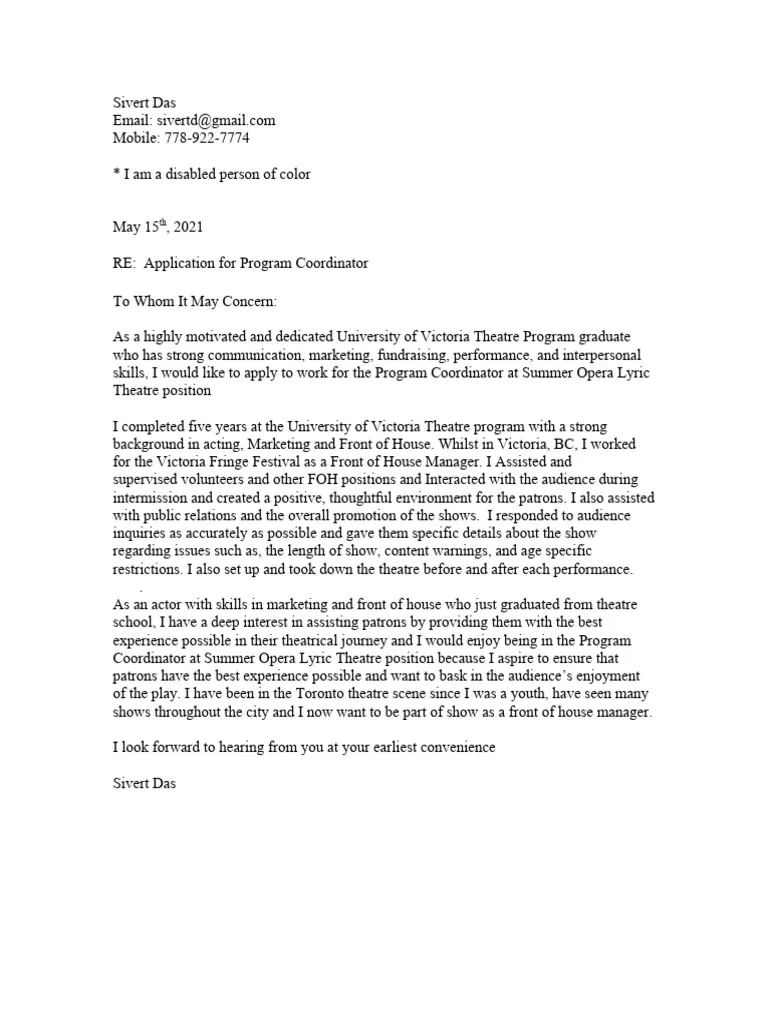
A music performance cover letter is a crucial document that accompanies your resume when applying for music-related positions. It serves as your introduction to a potential employer, providing a personalized narrative that highlights your skills, experience, and passion for music. This guide will help you craft a compelling cover letter that captures the attention of hiring managers and increases your chances of landing an interview. A well-written cover letter can set you apart from other applicants and showcase your unique qualifications.
What is a Music Performance Cover Letter?
The music performance cover letter is your opportunity to tell a story. It is more than just a summary of your resume; it’s a chance to express your enthusiasm for the specific role and the organization. You can use it to explain why you’re a perfect fit for the position and what you can bring to the table. The letter should be tailored to each application, reflecting your understanding of the job requirements and the company’s values. It is a direct communication to the hiring manager, demonstrating your communication skills and professional approach.
Why is a Cover Letter Essential?

A cover letter is essential for several reasons. First, it allows you to provide context to your resume. You can elaborate on your experiences, skills, and accomplishments in more detail. Second, it helps you personalize your application and show genuine interest in the position. This demonstrates that you’ve taken the time to understand the role and the organization. Third, it is a demonstration of your communication skills. Your ability to articulate your ideas and showcase your personality can make a strong first impression. Finally, many employers expect a cover letter, so submitting an application without one can be a disadvantage.
Key Components of a Music Performance Cover Letter
A well-structured cover letter includes several key components that work together to create a compelling narrative. The format ensures clarity, professionalism, and readability, making it easier for the hiring manager to grasp the key points. Following this structure helps you present the most relevant information effectively.
Header Information
Start with your contact information at the top. This includes your name, address, phone number, and email. Make sure this information is easily accessible. A well-formatted header looks professional and makes it easy for the employer to reach you. Avoid any unprofessional email addresses. Use a clean and professional font for this section.
Contact Information

List your full name, address, phone number, and email address. Ensure the email address sounds professional. This is how the employer will contact you. Accuracy in the contact information is essential. Double-check all the details before submitting.
Date
Include the current date directly below your contact information. This helps establish when you sent the application. Format the date correctly (e.g., Month Day, Year). Consistent formatting enhances the letter’s professional look.
Recipient’s Information
If possible, address the cover letter to a specific person (e.g., the hiring manager). Research the company to find out the name of the hiring manager. If you cannot find a specific name, use a professional title like ‘Hiring Manager’. This personalizes the letter and shows that you have done your research. Addressing the correct person is important for a positive first impression.
Salutation

Use a professional salutation such as ‘Dear Mr./Ms. [Last Name]’ or ‘Dear Hiring Manager’. Avoid using generic salutations like ‘To Whom It May Concern’ whenever possible. It is a sign of professionalism and respect. Ensure the salutation matches the recipient’s information. If you don’t know the name, a more general approach is acceptable.
Body of the Cover Letter
The body of your cover letter is the most crucial part. It is the place to showcase your skills, experience, and passion for the role. The body typically comprises of three to four paragraphs, each serving a specific purpose. It should be well-organized, focused, and easy to read. Keep paragraphs concise and use strong action verbs to describe your experience.
First Paragraph State Your Purpose
Start by stating the position you are applying for and how you found the job listing. Briefly mention why you are interested in the role and the organization. Clearly state your purpose in applying for the job. Make a strong first impression that captures the reader’s attention. Indicate your understanding of the company’s needs.
Second Paragraph Showcase Your Skills
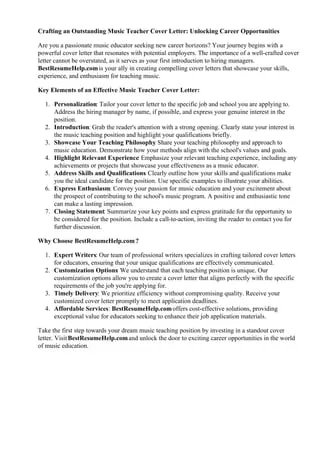
Highlight your relevant skills and experience. Provide specific examples of how you have demonstrated those skills in previous roles or experiences. Use quantifiable achievements to show the impact of your work. This part should directly address the requirements of the job description. Use action verbs to describe what you have accomplished.
Highlight Your Musical Abilities
Specifically, mention your musical abilities. Discuss your proficiency with your instrument, your performance experience, and any notable achievements. Mention your ability to read music, your experience with different musical genres, and your experience with ensembles. Show how your musical skills align with the job requirements. Include any awards, certifications, or recognition you have received.
Mention Your Experience
Share your relevant experience, such as previous performance roles, teaching experience, or any other related activities. Describe your accomplishments and how you contributed to those past experiences. Quantify your achievements wherever possible to make your impact clear. Show the employer how your experience aligns with their needs.
Third Paragraph Express Your Enthusiasm

Express your enthusiasm for the role and the organization. Explain why you are excited about this opportunity and what you hope to achieve. Show how your values align with the organization’s mission. This demonstrates your interest in the long-term. Make it clear why this job is a good fit for you.
Fourth Paragraph Request an Interview
Conclude by requesting an interview. Thank the reader for their time and consideration. Reiterate your interest in the position and your contact information. Make it easy for them to take the next step. Clearly state that you are available for an interview at their earliest convenience.
Closing and Signature
End your cover letter with a professional closing and your signature. This is the final impression you make, so choose your closing carefully. Ensure your closing is respectful and appropriate for the recipient.
Complimentary Close

Use a formal closing such as ‘Sincerely,’ ‘Best regards,’ or ‘Thank you’. Choose a closing that reflects your tone and the formality of the application. Consistency in tone helps create a professional document.
Typed Name
Type your full name below the closing. This is especially important if submitting an electronic cover letter. Provide your name so it’s clear who wrote the letter. The typed name ensures the letter is easily identifiable.
Formatting Your Cover Letter
Proper formatting is essential for a professional cover letter. It improves readability and makes your letter look polished. Pay attention to font choice, margins, and spacing. Formatting can make or break your first impression.
Font Choice and Size
Use a professional, easy-to-read font like Times New Roman, Arial, or Calibri. Choose a font size between 10 and 12 points. This makes your cover letter easy to read. Ensure the font size is consistent throughout.
Margins and Spacing
Use standard one-inch margins on all sides. Use single-spacing for the body of the letter and double-spacing between paragraphs. Proper spacing enhances readability and gives your letter a clean look. Avoid cramming text; leave enough white space.
Proofreading and Editing
Proofreading and editing your cover letter is essential to catch any errors. Typos and grammatical errors can undermine your credibility. Always proofread your letter multiple times. Ask a friend to review your cover letter. Careful proofreading ensures a professional presentation.
Common Mistakes to Avoid
Avoid common mistakes that can hurt your chances. These mistakes can make a negative impression and reflect poorly on your attention to detail. Be aware of these pitfalls and avoid making them.
Generic Language
Avoid using generic phrases and clichés that could apply to any job. Tailor your language to the specific role and organization. Showcase your personality and express your unique qualities. Generic language makes your cover letter less impactful.
Typos and Grammatical Errors
Typos and grammatical errors are a sign of carelessness and lack of attention to detail. Always proofread your cover letter carefully. Use spell check and grammar check tools. Ask someone else to review your letter. Accuracy shows professionalism.
Lack of Customization
Do not use a generic cover letter for every application. Customize your letter to each specific role. Show that you have researched the organization and understand their needs. Tailoring your cover letter is crucial for showing genuine interest.
Tailoring Your Cover Letter
Tailoring your cover letter is essential to show that you are the right fit for the job. This shows that you’ve done your research and are truly interested. Adapt your letter for each opportunity.
Research the Organization
Before you write your cover letter, research the organization. Understand their mission, values, and recent activities. This will help you align your skills and experience. Show that you understand their mission.
Adapt to Each Opportunity
Customize your cover letter for each job. Highlight the skills and experiences most relevant to the specific role. Show how your qualifications meet the requirements. Adapt your language to match the tone of the job description. Customize it to show that you are serious about the opportunity.
Examples of Effective Cover Letter Phrases
Using strong and impactful phrases can make your cover letter more compelling. These examples can help you articulate your skills and experience. Choose phrases that are relevant to your experience. Using strong phrases makes your letter stand out.
Action Verbs to Use
Action verbs are powerful words that bring your accomplishments to life. Using action verbs helps you describe your skills in a dynamic way. Choose the most appropriate verbs based on your experiences. Action verbs make your letter more engaging and dynamic.
Keywords to Incorporate
Incorporate keywords from the job description into your cover letter. This helps your application get noticed by applicant tracking systems. Use keywords naturally throughout your letter. Doing this will help ensure your application is reviewed.
Final Checklist Before Submission
Before submitting your cover letter, review a final checklist to ensure that it is polished and ready. This checklist helps you catch any remaining errors. Ensure everything is perfect before submitting.
- Ensure your contact information is accurate.
- Address the letter to the correct person.
- Proofread for any typos or grammatical errors.
- Customize the letter for each role.
- Include relevant keywords from the job description.
- Use a professional font and formatting.
- Request an interview at the end.
- Save your cover letter as a PDF.