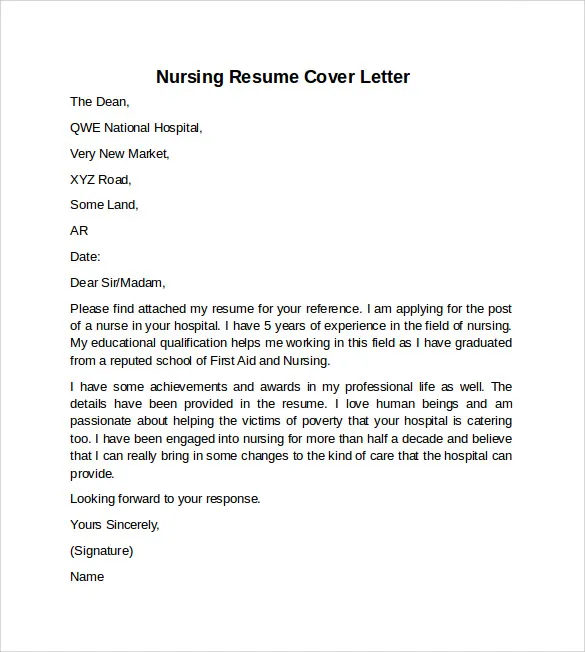
Understanding the Nursing Cover Letter
A nursing cover letter is a crucial document in your job application, serving as your introduction to a potential employer. It provides an opportunity to highlight your skills, experience, and passion for nursing, going beyond the information presented in your resume. A well-crafted cover letter can significantly increase your chances of securing an interview and ultimately landing your dream nursing job. It’s your first chance to make a positive impression and demonstrate why you are the ideal candidate for the role.
Why a Cover Letter Is Crucial for Nurses
In the competitive field of nursing, a cover letter offers a distinct advantage. It allows you to personalize your application and showcase your unique qualifications. Unlike a resume, which presents a summary of your experience, a cover letter enables you to elaborate on your accomplishments, explain any gaps in your employment history, and express your enthusiasm for the specific position and healthcare facility. It’s an opportunity to stand out from other applicants and demonstrate your commitment to the nursing profession.
The Importance of a Strong Cover Letter

A strong cover letter is essential for several reasons. It demonstrates your writing skills, attention to detail, and professionalism. It allows you to connect with the hiring manager on a personal level, showing your personality and genuine interest in the role. A compelling cover letter can capture the reader’s attention and encourage them to delve deeper into your qualifications, leading to a higher likelihood of being selected for an interview. Therefore, investing time and effort into crafting a well-written cover letter is paramount.
Key Elements of a Nursing Cover Letter
A well-structured cover letter should include several key elements to effectively convey your qualifications and enthusiasm. These elements work together to present a cohesive and compelling case for your candidacy. The essential components include the contact information of both you and the hiring manager, a professional salutation, a concise and engaging body that highlights your skills and experiences, and a clear call to action, such as requesting an interview. Remember, each element contributes to the overall impact of your application.
Contact Information
Start your cover letter by providing your contact information, including your full name, phone number, email address, and professional online profiles (if applicable). Following this, include the hiring manager’s name, title, and the name and address of the healthcare facility. This section ensures that the employer can easily reach you and indicates that you’ve researched the organization, showing initiative and attention to detail. Ensuring accuracy is crucial to avoid any communication problems.
Applicant’s Information

Your contact information should be at the top of the cover letter. Include your full name, address, phone number, and professional email address. This is important to help the employer contact you if they wish to offer you an interview. Ensure your email address sounds professional, and is easy to read.
Hiring Manager’s Information
Find out the name of the hiring manager, their title, and the address of the healthcare facility. Addressing the cover letter directly to the hiring manager shows you’ve taken the time to find out who will be reading your application. It helps to personalize the letter and makes it easier to make a connection with the hiring manager. If the name of the hiring manager isn’t listed, address it to the hiring team or the department in question.
The Salutation
The salutation sets the tone for your cover letter. Use a professional greeting, such as “Dear Mr./Ms./Dr. [Last Name],” if you know the hiring manager’s name. If you are unsure of the hiring manager’s name, use a general greeting such as “Dear Hiring Manager” or “Dear [Department Name] Hiring Team.” Avoid overly casual greetings to maintain a professional tone throughout your application.
Writing the Body of Your Nursing Cover Letter

The body of your cover letter is the heart of your application, where you showcase your skills, experience, and passion for nursing. Structure your body paragraphs to provide a clear and concise narrative, highlighting relevant information and demonstrating your suitability for the role. Consider using a three-paragraph approach, starting with an introduction, followed by a discussion of your key qualifications, and concluding with a strong closing statement.
Highlighting Relevant Skills and Experiences
Use the body of your cover letter to highlight the skills and experiences most relevant to the job description. Carefully review the job posting and identify the key requirements, then provide specific examples of how you have demonstrated those skills in previous roles. Quantify your achievements whenever possible, using data and metrics to demonstrate the impact you’ve made. Tailor your cover letter to each job application to reflect the specific needs and expectations of the employer.
Tailoring Your Cover Letter to the Specific Job
Customizing your cover letter for each job application is essential. Avoid using a generic template. Instead, carefully review the job description and tailor your letter to match the specific requirements and expectations. Demonstrate that you understand the needs of the employer and that your skills and experience align with those needs. Highlighting specific keywords from the job description can further demonstrate your suitability for the role and increase your chances of getting noticed.
Quantifying Achievements with Data

Whenever possible, quantify your achievements with data and metrics. For example, instead of saying, “Improved patient satisfaction,” you could say, “Increased patient satisfaction scores by 15% within six months through implementing a new communication strategy.” Data-driven examples demonstrate the impact of your contributions and provide concrete evidence of your capabilities. Use numbers, percentages, and specific examples to showcase your accomplishments.
Demonstrating Passion for Nursing
Express your genuine passion for nursing in your cover letter. Share why you chose this profession and what motivates you. Discuss your career goals and how the specific role aligns with your aspirations. Demonstrating your enthusiasm for nursing can make a strong impression on the hiring manager. Let your passion shine through your writing by using enthusiastic language and sharing your genuine interest in the role.
Showcasing Relevant Certifications and Licenses
Clearly state your relevant certifications and licenses, such as your Registered Nurse (RN) license, Advanced Cardiovascular Life Support (ACLS) certification, or any other specialized credentials. Include the issuing organization and the expiration date, if applicable. This information provides the employer with confidence in your qualifications and assures them that you meet the necessary requirements for the role. Make sure your licenses and certifications are up-to-date.
Formatting Your Nursing Cover Letter

The formatting of your cover letter significantly impacts its readability and professionalism. Adhere to standard formatting guidelines to ensure your letter is easy to read and visually appealing. Proper formatting demonstrates attention to detail and respect for the recipient. Using clear formatting will increase your chances of the hiring manager actually reading your letter.
Choosing the Right Font and Font Size
Select a professional and readable font for your cover letter, such as Times New Roman, Arial, or Calibri. Use a font size between 10 and 12 points to ensure readability. Avoid using overly ornate or unusual fonts, which can distract from the content. Maintain consistency throughout the document to create a polished and professional appearance.
Structuring Your Cover Letter for Readability
Structure your cover letter with clear sections and paragraphs to improve readability. Use headings and bullet points to break up large blocks of text and highlight key information. Maintain consistent margins and spacing to create a visually balanced document. Ensure a logical flow from the introduction to the conclusion, with each paragraph serving a specific purpose. Aim to make your cover letter visually appealing and easy to navigate.
Examples of Effective Nursing Cover Letters

Reviewing examples of effective nursing cover letters can provide valuable insights and inspiration as you write your own. By examining how other nurses have successfully presented their qualifications, skills, and passion, you can gain a better understanding of what works and how to structure your letter. Analyze the language used, the emphasis on different skills, and the overall tone to create a winning cover letter. Tailor your cover letter to the job posting, using its keywords and describing your relevant skills and experience.
New Grad Nursing Cover Letter Example
New graduates should focus on highlighting their clinical experiences, relevant coursework, and any volunteer or extracurricular activities. Emphasize any clinical rotations that align with the job requirements. Showcase your passion for nursing and your eagerness to learn and grow within the profession. Demonstrate your understanding of patient care, teamwork, and communication skills. Use clear and concise language, avoiding jargon or overly technical terms, and demonstrate your ability to learn fast.
Experienced Nurse Cover Letter Example
Experienced nurses should highlight their specific skills, accomplishments, and years of experience. Quantify your achievements with data, such as the number of patients cared for, the reduction in infection rates, or the improvements in patient satisfaction scores. Showcase your leadership skills, such as mentoring new nurses or leading quality improvement initiatives. Focus on the specific skills and experiences that align with the job posting. Use powerful action verbs to convey your qualifications.
Nurse Practitioner Cover Letter Example
Nurse practitioners should emphasize their advanced education, certifications, and clinical expertise. Highlight your ability to diagnose and treat patients, order and interpret diagnostic tests, and prescribe medications. Discuss your experience in managing specific patient populations or clinical settings. Demonstrate your commitment to patient-centered care and your ability to work collaboratively with other healthcare professionals. Tailor the letter to align with the specific job description, and use your previous experiences to add value to the application.
Common Mistakes to Avoid
Avoiding common mistakes can significantly improve the effectiveness of your cover letter. Being aware of these pitfalls and taking steps to avoid them can help you make a positive impression on the hiring manager. Common mistakes can undermine your application and reduce your chances of getting an interview. Therefore, it is important to proofread your letter before submitting it.
Grammatical Errors and Typos
Proofread your cover letter carefully to eliminate grammatical errors and typos. Errors can undermine your professionalism and attention to detail. Use spell-check and grammar-check tools, but also read your letter aloud to catch any mistakes that may be missed by software. Ensure your writing is clear, concise, and free of errors. Ask a friend or colleague to review your letter for any errors.
Generic Cover Letters
Avoid using generic cover letters that are not tailored to the specific job. Generic letters demonstrate a lack of effort and can make you appear less interested in the position. Customize your cover letter for each application, highlighting the specific skills and experiences that align with the job requirements and demonstrating your understanding of the organization and its needs.
Failing to Tailor the Letter to the Job
Failing to tailor your cover letter to the job is a significant mistake. Always customize your cover letter to reflect the specific requirements and expectations outlined in the job description. Demonstrating your understanding of the employer’s needs and explaining how your skills and experience align with those needs is very important. Highlighting specific keywords and addressing the requirements directly will help you stand out from other applicants.
Finalizing and Submitting Your Cover Letter
After completing your cover letter, it’s essential to take the final steps to ensure it’s polished and ready for submission. Proper proofreading, formatting, and saving are crucial steps to ensure your cover letter makes a positive impression. Make sure to follow all the instructions provided in the job posting. The following steps ensure you submit a professional and well-presented application.
Proofreading and Editing
Before submitting your cover letter, carefully proofread and edit it to eliminate any errors. Check for grammatical errors, typos, and clarity of expression. Ensure that your writing is concise, professional, and easy to understand. Ask a friend or colleague to review your letter for a second opinion. Ensure that the letter flows well and that each paragraph supports the main points you are making.
Saving Your Cover Letter in the Correct Format
Save your cover letter in a professional and widely compatible format, such as PDF. This ensures that your formatting remains consistent across different devices and operating systems. Double-check the file name and any specific instructions provided by the employer. If the job posting requests a specific file format, be sure to use that format. Saving the cover letter correctly will ensure that it is compatible with the systems used by the employer.