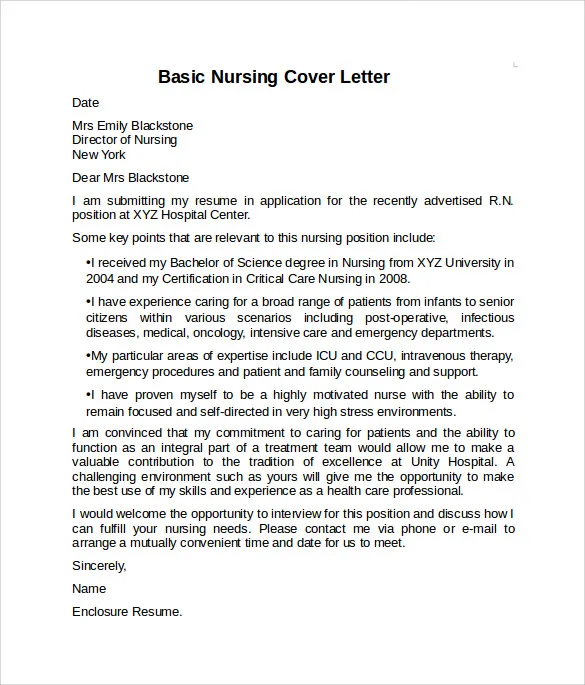
What is a Nursing Cover Letter
A nursing cover letter is a crucial document that accompanies your resume when applying for nursing positions. It serves as your introduction to a potential employer, providing an opportunity to highlight your skills, experience, and passion for nursing. Unlike a resume, which provides a factual overview of your qualifications, a cover letter allows you to personalize your application and demonstrate why you are the ideal candidate for the specific role. A well-crafted cover letter can significantly increase your chances of landing an interview, making it an essential component of any nursing job application. This document showcases your unique qualities and enthusiasm for the nursing profession.
Why Do You Need a Nursing Cover Letter
In a competitive job market, a nursing cover letter can set you apart from other applicants. It allows you to go beyond the information presented in your resume and provide a more comprehensive narrative of your qualifications and career aspirations. A cover letter enables you to explain any gaps in your employment history, address specific requirements outlined in the job description, and showcase your personality and communication skills. By effectively communicating your value proposition, you can make a strong first impression and convince the hiring manager that you are a suitable fit for their team and the position. Additionally, a cover letter demonstrates your attention to detail and commitment to the application process.
Highlighting Your Skills and Experience

When writing your nursing cover letter, it’s essential to highlight your relevant skills and experience. Identify the key skills and qualifications sought by the employer, and provide specific examples of how you have demonstrated these skills in previous roles. Use action verbs to describe your accomplishments and quantify your achievements whenever possible. For instance, instead of simply stating that you provided patient care, you could mention the number of patients you cared for daily, the types of procedures you performed, and any positive outcomes you achieved. This approach will help the hiring manager quickly assess your abilities and determine if you meet their requirements. Tailor the skills and experiences you highlight to match the specific needs of the job.
Showcasing Your Achievements
Your nursing cover letter is an excellent opportunity to showcase your achievements. Instead of simply listing your job duties, focus on the results you have achieved in your previous roles. This might include improvements in patient outcomes, successful implementation of new protocols, or recognition for your contributions to the team. Quantify your achievements whenever possible to provide concrete evidence of your impact. For example, you might mention that you reduced patient fall rates by a certain percentage or increased patient satisfaction scores through improved communication. Use the STAR method (Situation, Task, Action, Result) to provide context and demonstrate the value you brought to your previous positions. This approach will help potential employers understand your capabilities.
Tailoring Your Cover Letter
Each nursing cover letter should be tailored to the specific job and employer. Review the job description carefully and identify the key requirements and qualifications. Then, customize your cover letter to address these requirements directly. This involves highlighting the skills and experiences most relevant to the position and using keywords from the job description. Research the healthcare organization to understand its mission, values, and culture. Personalize your letter by mentioning your interest in the organization and explaining why you are drawn to their specific work environment. Demonstrating this level of personalization shows that you have done your research and are genuinely interested in the opportunity.
Cover Letter Examples for Nursing

Entry-Level Nurse Cover Letter Example
For entry-level nurses, a cover letter should emphasize educational background, clinical experience, and any relevant skills gained during internships or volunteer work. Highlight your passion for nursing, your willingness to learn, and your adaptability. Demonstrate your understanding of patient care and your commitment to providing high-quality healthcare. Mention any specific areas of interest, such as a specialty you are keen to explore. Frame your experience to show your strengths. Even if you lack extensive work experience, focus on your enthusiasm, dedication, and the transferable skills you have developed. Also, highlight any certifications you might have.
Experienced Nurse Cover Letter Example
Experienced nurses should leverage their cover letters to showcase their extensive experience, leadership skills, and specialized expertise. Provide concrete examples of your accomplishments and the positive impact you have made in previous roles. Highlight your ability to manage complex cases, mentor junior nurses, and contribute to team success. Mention any certifications, advanced degrees, or professional awards you have received. If applying for a management or leadership position, emphasize your experience in areas such as staff management, budgeting, and quality improvement. Demonstrate your ability to take on more responsibility. Also, mention any specific procedures you are proficient with.
Nurse Practitioner Cover Letter Example

Nurse practitioner cover letters should highlight advanced education, clinical expertise, and the ability to provide comprehensive patient care. Emphasize your experience in diagnosing and treating patients, ordering and interpreting diagnostic tests, and prescribing medications. Mention any specialized training or certifications you have obtained. Describe your experience working with different patient populations and your ability to collaborate with other healthcare professionals. If you’re applying for a specific specialty, such as family medicine or cardiology, tailor your letter to showcase your relevant expertise and experience. Explain your ability to act as the primary care provider. Also, demonstrate that you know how to work within established medical guidelines.
Tips for Writing a Nursing Cover Letter
Formatting and Structure
Maintain a professional format and structure for your nursing cover letter. Use a standard business letter format with a clear heading, date, recipient’s information, salutation, body paragraphs, and closing. Keep the letter concise, ideally within one page. Use a readable font such as Times New Roman or Arial, with a font size between 10 and 12 points. Use clear headings and subheadings to organize the information and make it easy to read. Ensure proper spacing and margins for a clean and visually appealing presentation. Proper formatting makes your cover letter easier to read. Also, it shows that you are committed to presentation standards.
Keywords and Phrases

Incorporate relevant keywords and phrases from the job description throughout your cover letter. This helps the hiring manager quickly identify that you possess the required qualifications. Use keywords naturally within the context of your sentences, avoiding keyword stuffing. Highlight your skills, experience, and achievements using terms that align with the job requirements. Review the job description and make note of any specific skills, certifications, or technologies mentioned. Then, integrate these keywords into your cover letter to demonstrate your suitability for the role. Using relevant keywords is a great way to get past the initial screening process.
Proofreading and Editing
Before submitting your nursing cover letter, carefully proofread and edit it for any errors in grammar, spelling, punctuation, and style. Errors can create a negative impression and detract from your qualifications. Read the letter aloud to identify awkward phrasing or unclear sentences. Ask a friend, family member, or career counselor to review your letter and provide feedback. Ensure that the tone of your letter is professional and enthusiastic. Pay close attention to details. Polishing your work before sending it out increases your chances of getting the job. Moreover, it shows the potential employer your level of attention to detail.
Common Mistakes to Avoid
Generic Cover Letters

Avoid using a generic cover letter. A generic cover letter is one that is not tailored to a specific job or employer. Generic letters often use vague language. They fail to highlight relevant skills and experiences, and they do not demonstrate a genuine interest in the position. Always customize your cover letter to match the requirements of the job and the values of the organization. Research the employer and the role and then tailor your letter to address their specific needs and expectations. Make sure your cover letter shows why you are an excellent choice for the organization.
Typos and Grammatical Errors
Typos and grammatical errors can damage your credibility. They can make you appear careless or unprofessional. Always proofread your cover letter carefully before submitting it. Use spell-check and grammar-check tools. Ask a trusted friend or colleague to review your letter. A polished and error-free cover letter reflects attention to detail and professionalism. It shows that you care about the application and are willing to take the time to ensure that it is perfect. These errors can be easily avoided, but they can also disqualify you.
Ignoring the Job Description
Failing to address the requirements outlined in the job description is a significant mistake. The job description provides a clear indication of the skills, experience, and qualifications the employer is seeking. Failing to tailor your cover letter to match these requirements can result in your application being overlooked. Review the job description carefully and highlight the skills and experiences most relevant to the position. Use keywords and phrases from the job description. Make sure that your cover letter clearly demonstrates that you meet the employer’s requirements. Showing your attention to detail is crucial.
Conclusion

A well-crafted nursing cover letter is an essential tool for any nurse seeking a job. By highlighting your skills, experience, and achievements and tailoring your letter to each specific job, you can increase your chances of landing an interview and securing your dream nursing position. Remember to follow the tips outlined in this guide, avoid common mistakes, and present yourself professionally. With a compelling cover letter, you can make a strong first impression and demonstrate your value to potential employers. Take the time to prepare your cover letter. This will increase your chances of getting hired. All your hard work will pay off.