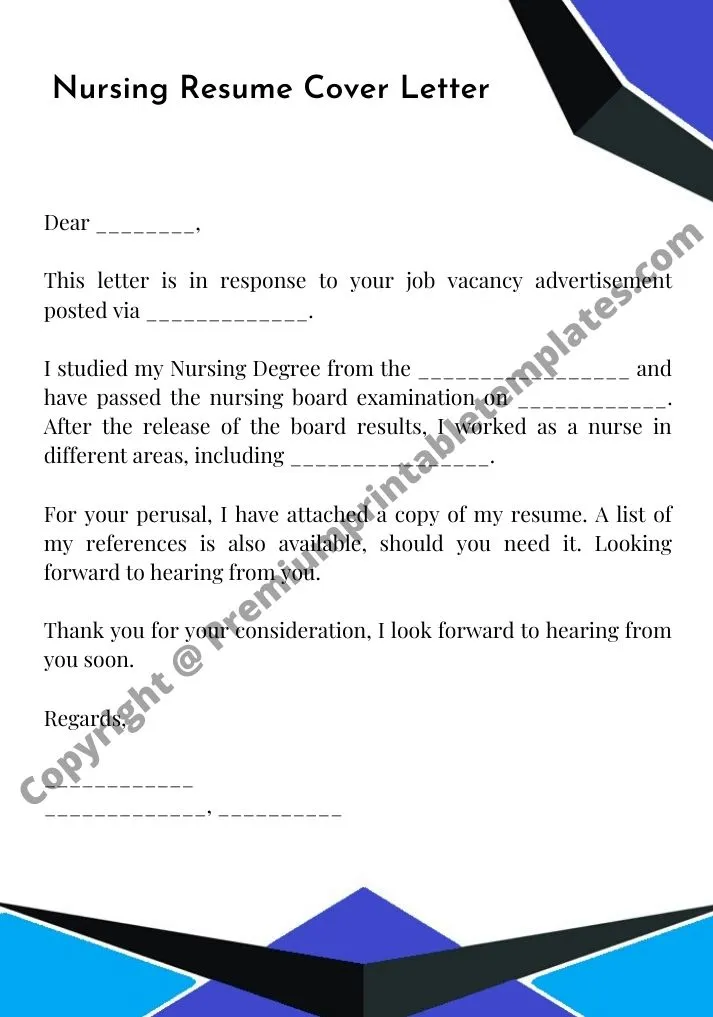
What is a Nursing Cover Letter and Why Do You Need One?
A nursing cover letter is a vital document that accompanies your resume when applying for nursing positions. It serves as your introduction to a potential employer, providing a concise overview of your qualifications, skills, and experiences. Unlike a resume, which offers a factual account of your professional history, a cover letter allows you to elaborate on why you are the ideal candidate for a specific role. It’s your chance to express your personality, showcase your enthusiasm, and demonstrate how your abilities align with the job requirements and the employer’s values. In a competitive field like nursing, a well-crafted cover letter can significantly increase your chances of securing an interview. Failing to submit a cover letter can signal a lack of attention to detail or a lack of genuine interest in the position, potentially leading to your application being overlooked.
Key Components of a Nursing Cover Letter
A strong nursing cover letter comprises several key elements that work together to create a compelling narrative. These components are essential for effectively conveying your suitability for the position. Each section of the cover letter should be carefully crafted to present a professional and engaging image of yourself to the hiring manager. Understanding the purpose of each section is critical for crafting a cover letter that grabs attention and sets you apart from other candidates. This ensures that the employer can easily grasp your qualifications and why you would be a valuable asset to their team. Remember, a well-structured cover letter is more than just a formality; it is a powerful tool for securing an interview and ultimately, your dream nursing job.
Contact Information

At the top of your cover letter, include your full name, address, phone number, and professional email address. Make sure your email address is professional and appropriate. This section allows the employer to easily contact you. Ensure all information is accurate and up-to-date.
Professional Greeting
Address the hiring manager by name if possible. Research the company to find the hiring manager’s name, or use a professional alternative like “Dear Hiring Manager.” This shows you’ve done your homework and pay attention to detail. Avoid generic greetings like “To Whom It May Concern.”
Opening Paragraph Grab Attention
Start with a strong opening that immediately captures the reader’s attention. Briefly state the position you are applying for and where you saw the advertisement. Consider mentioning your most relevant skill or a compelling achievement to make a strong first impression. Your opening paragraph sets the tone for the entire letter; make it count. Clearly state your interest in the position and express enthusiasm.
Highlighting Your Skills and Experience

The main body of your cover letter should showcase your nursing skills and experience. This section is where you demonstrate your qualifications and how they align with the job requirements. Be specific and provide examples to illustrate your capabilities. Use this section to demonstrate your expertise and how your previous experiences make you the ideal candidate for the position. This includes showing relevant skills, quantifiable achievements, and a demonstration of passion for nursing. It is important to show, don’t just tell the employer about your skills and experiences. This section should be clear, concise, and tailored to the specific requirements of the job you are applying for.
Showcasing Your Relevant Skills
Identify the key skills required for the nursing position and highlight your proficiency in those areas. These might include clinical skills (e.g., administering medications, wound care), technical skills (e.g., using electronic health records, operating medical equipment), and interpersonal skills (e.g., communication, teamwork). Provide concrete examples of how you have utilized these skills in previous roles. Focus on skills that are relevant to the specific job.
Quantifying Your Achievements
Whenever possible, quantify your achievements. Use numbers and data to illustrate your successes. For example, you might state, “Reduced patient fall rates by 15% within six months” or “Managed a team of 10 nurses.” Quantifiable achievements provide concrete evidence of your abilities and demonstrate the value you can bring to the employer. They provide compelling evidence of your success and make your claims more credible.
Demonstrating Your Passion for Nursing

Express your passion for nursing. Explain why you chose this career path and what motivates you. Mention your specific interests within nursing (e.g., critical care, pediatrics) and any professional goals you have. Let the employer see that you are truly enthusiastic about the profession. A clear demonstration of your enthusiasm can make you stand out from the other applicants and show you are the right fit for their team. Your passion can be demonstrated through a genuine interest in the patient and their well-being.
Expressing Your Enthusiasm
Show your genuine enthusiasm for the specific role and the organization. Explain why you are excited about the opportunity and what you can bring to the team. Show that you have done your research on the company’s values and mission. Mention specific aspects of the job or the organization that appeal to you. This personalized approach demonstrates your interest and makes a positive impression.
Tailoring Your Cover Letter to the Job
Avoid sending generic cover letters. Tailor each letter to the specific job and organization. This shows that you have invested time and effort in the application. Customize the content to match the job description, highlighting the skills and experiences that are most relevant. This personalization significantly increases the chances of your application being noticed. Tailoring the cover letter to the job is a critical aspect of the application process, as it directly addresses the employer’s needs. Make sure your cover letter reflects your genuine interest in the specific role and the organization.
Researching the Employer

Before writing your cover letter, research the employer. Understand their mission, values, and the services they provide. Visit their website, read about their recent accomplishments, and look for any news or information that can help you understand their culture. This research helps you tailor your cover letter effectively and show that you are genuinely interested in the organization. Understanding the employer also shows you have a sincere desire to work with them, showcasing your initiative and commitment to excellence.
Matching Skills to Job Requirements
Carefully review the job description and identify the key requirements. Highlight your skills and experiences that directly align with those requirements. Use keywords from the job description to ensure your cover letter resonates with the hiring manager. This focused approach will help demonstrate that you are a strong fit for the role. Use specific examples to prove how you have used these skills in previous nursing roles. This matching shows you understand the requirements of the job and are prepared for the role.
Formatting and Style for Maximum Impact
The formatting and style of your cover letter are critical to making a positive impression. A well-formatted and easy-to-read cover letter shows your attention to detail and professionalism. The format and style of your cover letter also affects readability and the overall impression of your application. Poor formatting can distract the reader and make your qualifications less impactful.
Choosing the Right Font and Size

Choose a professional and easy-to-read font, such as Times New Roman, Arial, or Calibri. Use a font size between 11 and 12 points. Ensure consistent formatting throughout the document. Avoid using overly decorative or complex fonts. Maintain consistent spacing, using single- or 1.15-line spacing, and ensure clear margins. Proper formatting enhances readability and presents a polished image.
Proofreading and Editing
Proofread your cover letter carefully for any typos, grammatical errors, or inconsistencies. Ensure the language is clear, concise, and professional. Ask a friend or colleague to review your cover letter for a second opinion. Proofreading ensures that your application reflects your attention to detail and professionalism. A polished and error-free cover letter conveys that you are a diligent and thorough individual. Make sure to check all contact information for accuracy, so the hiring manager can easily reach you.
Call to Action Encouraging Contact
In your closing paragraph, include a call to action that encourages the reader to contact you. Express your interest in an interview and provide your contact information again. Thank the reader for their time and consideration. This final touch reinforces your enthusiasm and encourages the next step in the hiring process. Always express your willingness to discuss the application further.
Closing Paragraph Thanking the Reader

Conclude your cover letter by thanking the reader for their time and consideration. Express your appreciation for the opportunity to be considered for the position. A gracious closing leaves a positive impression and shows your respect for the hiring manager. Expressing gratitude at the end of your cover letter is essential for showing your appreciation. A simple thank you can go a long way in making a positive impression.
Proper Salutation
Use a professional and appropriate salutation. If you know the hiring manager’s name, use it. If not, use a general greeting like “Dear Hiring Manager.” Ensure the salutation matches the tone and formality of the rest of your cover letter. This shows respect and attention to detail. Avoid informal greetings or clichés. Double-check the spelling of the hiring manager’s name and title for correctness.
Common Mistakes to Avoid in a Nursing Cover Letter
Avoiding common mistakes is essential to ensure your cover letter makes a strong impression. These mistakes can detract from your qualifications and reduce your chances of landing an interview. By carefully reviewing your cover letter and avoiding these pitfalls, you can significantly improve your chances of success.
Typos and Grammatical Errors
Typos and grammatical errors can damage your credibility and make you appear unprofessional. Always proofread your cover letter carefully before submitting it. Use spell-check and grammar-check tools, but also read it aloud to catch any mistakes. Ensure correct sentence structure and punctuation. Errors can create a negative impression on the reader, suggesting you lack attention to detail. Always double-check your cover letter for any errors before submitting your application.
Generic Cover Letters
Avoid sending generic cover letters that are not tailored to the specific job or organization. Hiring managers can easily spot a generic letter, which suggests that you did not take the time to understand the role or the company. Tailor your cover letter to the job description, highlighting the skills and experiences that are most relevant. Customize your letter to match the specific requirements. This shows you care and are genuinely interested in the role and makes you stand out from the competition.
Overly Long Cover Letters
Keep your cover letter concise and to the point. Aim for one page. Hiring managers often have limited time, so make sure your key qualifications and experiences are clearly and quickly conveyed. Omit unnecessary details and stick to the most relevant information. A concise cover letter shows respect for the hiring manager’s time, making it more likely they will read it thoroughly. Ensure every sentence adds value and contributes to the overall message.
Final Thoughts and Resources
Writing a strong nursing cover letter requires careful attention to detail, tailoring, and showcasing your skills and passion. By following the guidelines provided in this guide, you can create a cover letter that effectively highlights your qualifications and increases your chances of landing your dream nursing job. Remember to proofread meticulously, tailor each letter to the specific job, and express your genuine interest and enthusiasm. Additional resources can help refine your writing skills, such as online cover letter templates and career counseling services. Always seek feedback from trusted sources and continuously refine your approach to maximize your success. Good luck with your job search!