What is a Nursing Resume?
A nursing resume is a professional document that summarizes your education, skills, experience, and certifications relevant to the nursing profession. It serves as your first impression on potential employers, showcasing your qualifications and suitability for a nursing role. A well-crafted resume can significantly increase your chances of getting an interview and ultimately landing your dream job. It should be tailored to each position you apply for, highlighting the most relevant information and keywords to capture the attention of hiring managers.
Purpose of a Nursing Resume
The primary purpose of a nursing resume is to secure an interview. It provides a concise overview of your professional background, demonstrating how your skills and experience align with the job requirements. It quickly communicates your value proposition to the employer, making it easy for them to assess whether you meet their needs. In today’s competitive job market, a strong resume can differentiate you from other applicants, making it crucial to invest time and effort in creating a compelling document that accurately reflects your capabilities.
Key Components of a Nursing Resume

A comprehensive nursing resume includes several key sections, each designed to highlight different aspects of your qualifications. These sections work together to present a complete picture of your professional profile, allowing employers to quickly assess your suitability. Pay close attention to each component to ensure you include all the necessary information and present it in a clear and organized manner. Omitting critical details can weaken your application and hinder your chances of getting an interview.
Contact Information
This section should include your full name, phone number, email address, and optionally, your LinkedIn profile URL. Ensure that the contact information is accurate and up-to-date. Use a professional-sounding email address. Double-check the phone number and voicemail setup to ensure you don’t miss any calls from potential employers. A well-presented contact section ensures that employers can easily reach you for interviews and other important communications.
Summary/Objective
The summary or objective provides a brief overview of your skills, experience, and career goals. A summary is more suitable for experienced nurses, highlighting key achievements and qualifications. An objective is typically used by entry-level nurses, stating your career aspirations. Keep it concise and tailored to the specific job, showcasing what you bring to the table. Make it clear what kind of nursing position you are seeking, and state your qualifications clearly to showcase you are a good fit for the job.
Education

List your nursing degrees, including the name of the institution, degree earned, graduation date, and any honors or specializations. Be sure to include your Registered Nurse (RN) license information. For example, include your Bachelor of Science in Nursing (BSN) or Associate Degree in Nursing (ADN). Order your education in reverse chronological order. If you have multiple degrees, focus on the most relevant ones, and tailor your education section to match the job description.
Experience
This is the most crucial section. Detail your nursing experience in reverse chronological order, including the job title, employer, dates of employment, and a list of your responsibilities and achievements. Use action verbs to describe your tasks and quantify your accomplishments whenever possible. For example, instead of saying ‘Provided patient care,’ write ‘Administered medications to 20+ patients daily, ensuring accurate dosage and timely delivery.’ Focus on the impact you made in each role and the results you achieved.
Skills
Include a list of your relevant nursing skills, both hard skills and soft skills. Hard skills are technical skills, like medication administration, patient assessment, and electronic health record (EHR) proficiency. Soft skills include communication, teamwork, critical thinking, and problem-solving. Tailor your skills section to match the job description, highlighting the skills most relevant to the position. Use keywords from the job posting to help your resume get noticed by applicant tracking systems (ATS).
- Medication administration
- Patient assessment
- Electronic health records (EHR) proficiency
- Communication
- Teamwork
- Critical thinking
- Problem-solving
Certifications and Licenses

List all relevant certifications and licenses, such as your RN license, Advanced Cardiac Life Support (ACLS), Basic Life Support (BLS), and any specialty certifications like Critical Care Registered Nurse (CCRN) or Certified Medical-Surgical Registered Nurse (CMSRN). Include the issuing organization and expiration dates. Ensure your licenses are current and active to avoid any issues during the application process. Verify your certifications and licenses align with the specific requirements of the job you are applying for to increase your chances of selection.
Creating Your Nursing Resume
Creating an effective nursing resume involves several crucial steps, from choosing the right format to writing compelling content. The goal is to present your qualifications in a way that’s both professional and easy to read. By following these guidelines, you can create a resume that effectively highlights your skills and experience, increasing your chances of landing an interview.
Choosing the Right Format
Selecting the appropriate resume format is essential for showcasing your experience and skills effectively. The format you choose will depend on your career history and the specific job you are applying for. There are several standard formats to choose from, each with its advantages and disadvantages.
Chronological Format

The chronological format lists your work experience in reverse chronological order, starting with your most recent job. It’s the most common format and is ideal if you have a consistent work history. This format is best for nurses with a steady career progression and clearly demonstrates your career growth. Be sure to include dates for each position and describe your roles and responsibilities clearly.
Functional Format
The functional format emphasizes your skills and abilities rather than your work history. This format is useful if you have gaps in your employment or are changing careers. It focuses on your transferable skills, making it easier to highlight your strengths. It may not be the best choice if you have a traditional career path because employers are less familiar with this format.
Combination Format
The combination format combines elements of both chronological and functional formats. It highlights your skills while also providing a brief overview of your work history. This format can be a good option if you have a diverse skill set and want to showcase your experience and expertise. It allows you to include your experience as well as skills to make your resume more appealing to the potential employer.
Writing the Content

Once you’ve chosen the format, you can start writing the content. The content should be clear, concise, and tailored to the specific job requirements. Each section of your resume should be carefully crafted to showcase your qualifications effectively.
Highlighting Your Experience
The experience section is critical. Start with your most recent nursing position and work backward. Use action verbs to describe your responsibilities and achievements. Focus on results. For example, mention how you improved patient outcomes, reduced medication errors, or streamlined workflow processes. Quantify your accomplishments whenever possible to demonstrate the impact you’ve made in your previous roles. Include the specific setting (e.g., ICU, emergency room, etc.).
Quantifying Your Achievements
Whenever possible, quantify your achievements to demonstrate the impact you’ve made. Instead of saying ‘Improved patient care,’ write ‘Reduced patient fall rates by 15% through implementation of fall prevention protocols.’ Use numbers, percentages, and statistics to highlight your accomplishments. This makes your achievements more concrete and measurable, showing employers the value you bring to the table. Quantifying your accomplishments increases the likelihood of being chosen for an interview.
Using Action Verbs

Start each bullet point in your experience section with a strong action verb. Action verbs make your descriptions more dynamic and engaging. Instead of ‘Responsible for,’ use verbs like ‘Administered,’ ‘Managed,’ ‘Coordinated,’ ‘Developed,’ or ‘Implemented.’ Action verbs make your resume more compelling and help draw the reader’s attention. Tailor the action verbs to the specific job description.
Tailoring Your Resume
Tailor your resume to each job you apply for. Carefully review the job description and highlight the skills and experience that match the employer’s needs. Customize your resume to showcase the most relevant information. This demonstrates that you understand the requirements of the role and have the qualifications to succeed. Using keywords from the job description helps your resume get noticed by applicant tracking systems (ATS).
Keywords and ATS Optimization
Many employers use applicant tracking systems (ATS) to screen resumes. To ensure your resume gets noticed, include keywords from the job description throughout your resume. Pay close attention to the skills and qualifications listed in the job posting and incorporate those terms naturally into your experience, skills, and summary sections. Avoid keyword stuffing, and always ensure your resume is readable and well-organized.
Formatting and Design

The formatting and design of your resume are crucial for readability. Choose a clean and professional layout. Use clear headings, bullet points, and white space to make your resume easy to scan. Ensure the design is consistent throughout the document. The formatting should be designed to draw the reader’s attention to the key information. Use a consistent font style and size throughout.
Font and Readability
Choose a professional font like Arial, Times New Roman, or Calibri. Use a font size of 11 or 12 points for the body text and slightly larger for headings. Ensure there is sufficient white space between sections and bullet points to make your resume easy to read. Readability is crucial, so potential employers are more likely to find relevant information.
Proofreading and Editing
Proofread your resume carefully for any typos, grammatical errors, or inconsistencies. Errors can create a negative impression and undermine your credibility. Have a friend or colleague review your resume for a fresh perspective. Proofreading ensures you present a polished and professional document. Double-check all details, including contact information, dates, and job titles.
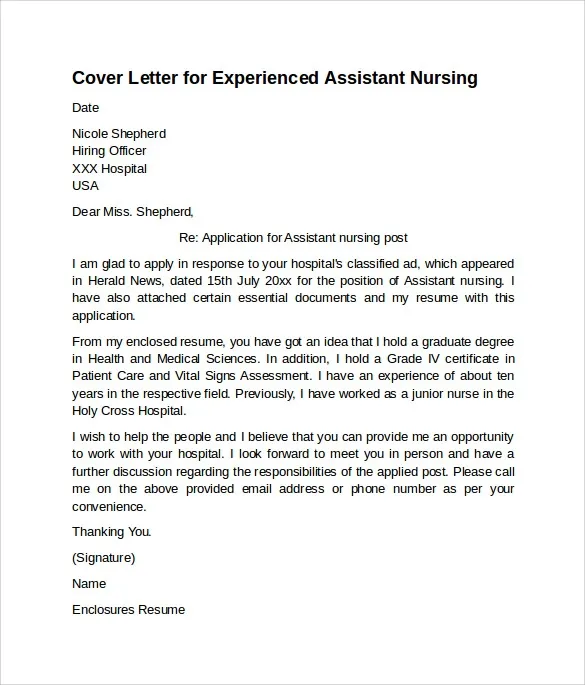
What is a Nursing Cover Letter?
A nursing cover letter is a document that accompanies your resume when applying for a nursing position. It serves as an introduction to your qualifications and expresses your interest in the specific job. The cover letter should highlight your key skills and experiences, demonstrating why you are a good fit for the role and why the employer should hire you. It allows you to personalize your application and provide context for your resume.
Purpose of a Nursing Cover Letter
The primary purpose of a nursing cover letter is to introduce yourself and demonstrate your interest in a specific nursing position. It should complement your resume, providing more detail about your skills, experience, and career goals. A cover letter allows you to personalize your application and express your enthusiasm for the role. It provides an opportunity to highlight how your qualifications align with the employer’s needs. It makes your application more likely to be considered.
Key Components of a Nursing Cover Letter
A nursing cover letter typically includes several key components, each designed to introduce you and showcase your qualifications. The components work together to create a compelling narrative that convinces the employer to consider your application. It is very important to include all the key elements to make your cover letter successful.
Heading and Salutation
Begin with your contact information, the date, and the employer’s contact information. Address the hiring manager by name if possible. If you don’t know the hiring manager’s name, use a professional greeting like ‘Dear Hiring Manager’ or ‘Dear [Department Name] Hiring Team.’ A personalized salutation shows you’ve taken the time to research the employer and the position.
Introduction
Start with a strong opening that states the position you’re applying for and how you learned about the opportunity. Briefly mention your qualifications and what makes you a good fit for the role. Show enthusiasm. For example, express your excitement about the job and company. Make it clear what role you’re seeking. You want to grab the reader’s attention.
Body Paragraphs
In the body of your cover letter, highlight your key skills and experiences, focusing on how they align with the job requirements. Provide specific examples of your achievements and how you have contributed to previous employers. Tailor your letter to the specific job and organization. Explain how your skills meet their needs. Reference specific skills to align with the job description.
Concluding Paragraph
End with a strong closing that reiterates your interest in the position and expresses your availability for an interview. Thank the employer for their time and consideration. Include a call to action, such as ‘I look forward to hearing from you soon.’ End by restating your interest in the position.
Writing Your Nursing Cover Letter
Writing an effective nursing cover letter requires careful planning and execution. You must tailor it to each job you apply for and use the right tone and format. It is an opportunity to make a strong first impression and increase your chances of securing an interview. There are several key tips to follow to achieve an effective letter.
Researching the Employer
Before writing your cover letter, research the employer and the specific job requirements. Understand the organization’s mission, values, and culture. Tailor your cover letter to highlight how your skills and experience align with their needs. This demonstrates your genuine interest in the position and the company. Showing that you’ve researched the employer can make a positive impact.
Highlighting Relevant Skills
In the body of your cover letter, highlight the skills and experiences most relevant to the job description. Use keywords from the job posting to help your cover letter get noticed. Provide specific examples of how you have used these skills in the past and the results you achieved. This demonstrates that you possess the qualifications needed to succeed in the role.
Expressing Your Enthusiasm
Express your enthusiasm for the position and the company. Show that you are excited about the opportunity to contribute to their team. Mention specific aspects of the job or company that appeal to you. Enthusiasm shows the employer you are genuinely interested in the position and ready to take it seriously.
Closing and Sign-off
End your cover letter with a strong closing that reiterates your interest in the position and expresses your availability for an interview. Thank the employer for their time and consideration. Include a call to action, such as ‘I look forward to hearing from you soon.’ A strong closing can leave a lasting impression and increase your chances of being called in for an interview.
Common Mistakes to Avoid
Several common mistakes can undermine your nursing resume and cover letter. Avoiding these mistakes can improve your chances of success. Always make sure to avoid these mistakes to present a good impression.
Generic Resumes and Cover Letters
Avoid using generic resumes and cover letters. Customize your resume and cover letter to each job you apply for, highlighting the skills and experiences most relevant to the position. Tailoring your application shows the employer that you are genuinely interested in the role and have the qualifications to succeed. Generic resumes and cover letters show a lack of effort and interest.
Typos and Grammatical Errors
Proofread your resume and cover letter carefully for any typos, grammatical errors, or inconsistencies. Errors can create a negative impression and undermine your credibility. Reviewing your resume and cover letter can help you avoid simple mistakes that can be avoided. Have a friend or colleague review your documents. Proofreading is essential.
Lying or Exaggerating
Never lie or exaggerate your skills, experience, or qualifications. Employers can easily verify the information you provide. Dishonesty can lead to serious consequences, including job loss. Honesty is always the best policy. It is very important to accurately reflect your skills and experiences.
Failing to Tailor to the Job
Failing to tailor your resume and cover letter to the specific job requirements can be a major mistake. Always review the job description carefully and highlight the skills and experiences that match the employer’s needs. Customizing your application shows that you have the qualifications to succeed. Focusing on what they seek can increase your chances of landing an interview.
Examples of Nursing Resumes and Cover Letters
Reviewing examples of nursing resumes and cover letters can provide valuable insights into how to structure your documents. Use these examples as a starting point and customize them to reflect your qualifications and experiences. You can find plenty of examples online that will assist you.
Example Resume Registered Nurse
A well-crafted resume for a Registered Nurse should showcase the key skills, experience, and certifications relevant to the role. It should be organized and easy to read, highlighting your most significant accomplishments. Consider a reverse-chronological format, detailing your work history, starting with your most recent position, ensuring you include all the necessary information.
Example Cover Letter Registered Nurse
A strong cover letter for a Registered Nurse should introduce yourself and highlight your qualifications and interest in the position. Express your enthusiasm for the role and the company. Customize the letter to the specific job requirements and company culture. Make sure you emphasize how your skills meet their needs to get your application selected.
Example Resume Nurse Practitioner
A Nurse Practitioner resume should emphasize advanced clinical skills, education, and any specializations. Highlighting patient care, leadership experience, and certifications are critical. Use action verbs to detail your responsibilities and quantify your achievements. Showcase relevant experience like diagnosis and treatment skills.
Example Cover Letter Nurse Practitioner
A Nurse Practitioner cover letter should showcase your expertise and interest in the advanced nursing position. Highlight your clinical skills, certifications, and experience in detail. Emphasize your ability to provide patient care. Make sure to personalize the cover letter to express enthusiasm for the role.
Tips for Success
Following these tips can greatly improve your chances of creating a successful nursing resume and cover letter. Keep these strategies in mind as you prepare your application materials. Make sure to take steps to make the best impression.
Seek Feedback
Ask friends, colleagues, or career counselors to review your resume and cover letter and provide feedback. Get a fresh perspective on your application. Feedback can help you identify areas for improvement and ensure your documents are clear, concise, and compelling. Their insights can help you refine your materials.
Update Regularly
Keep your resume and cover letter updated regularly, even when you are not actively looking for a job. As you gain new experiences, certifications, or skills, update your documents accordingly. This ensures that your resume and cover letter always reflect your current qualifications. Keeping your resume up-to-date is a good habit to follow.
Stay Positive
The job search process can be challenging, but staying positive and persistent is essential. Continue to apply for positions and refine your application materials. Don’t get discouraged by rejections. Remain optimistic and keep refining your skills. The right opportunity will come. Maintaining a positive attitude can increase your chances of success.