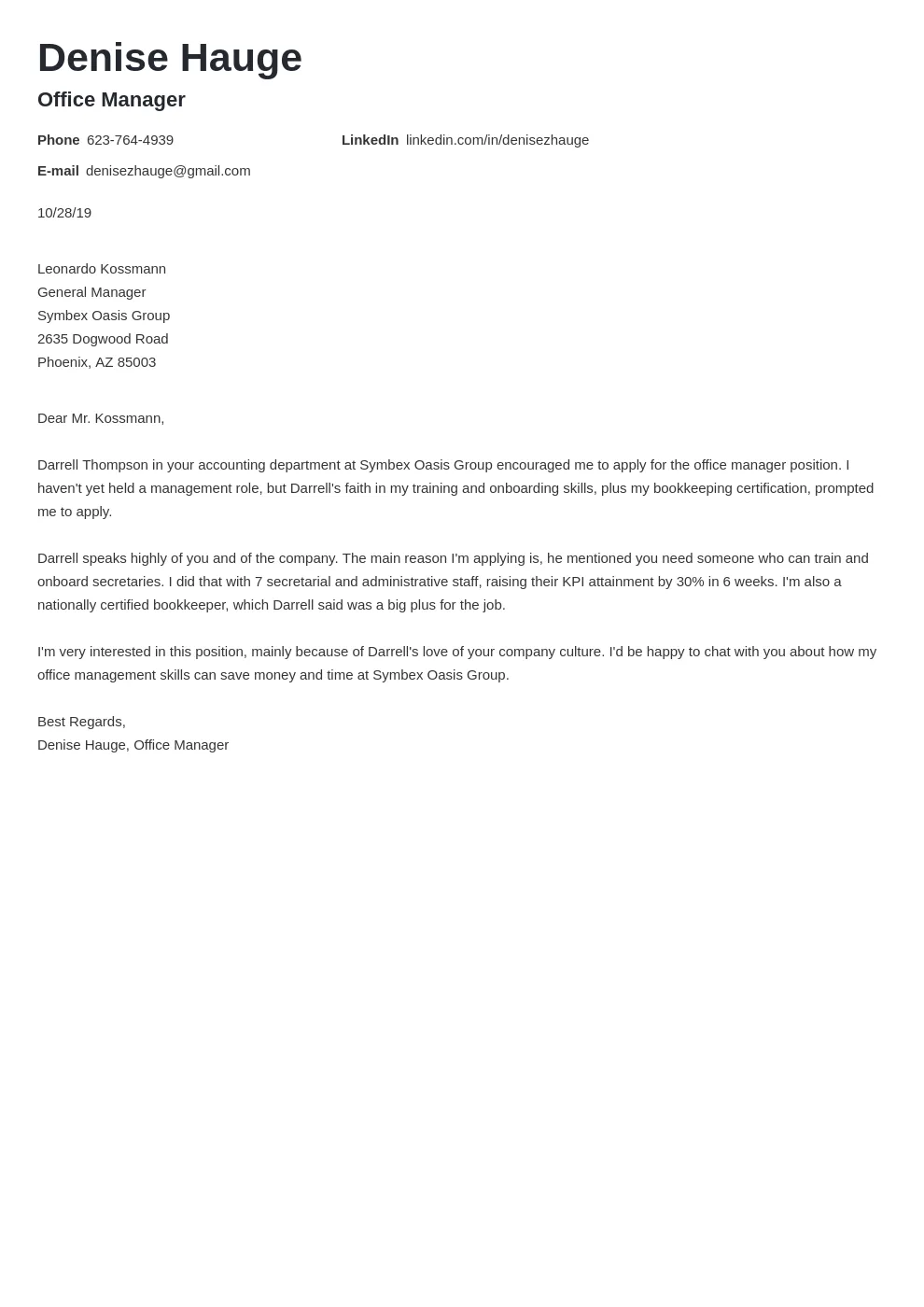
What is an Office Manager Cover Letter?
An Office Manager cover letter is a crucial document that accompanies your resume when applying for office manager positions. It serves as your introduction to a potential employer, providing a concise overview of your skills, experience, and qualifications. Unlike your resume, which lists your work history and accomplishments, the cover letter allows you to showcase your personality, express your enthusiasm for the role, and explain why you are the perfect fit for the company. It’s an opportunity to make a strong first impression and persuade the hiring manager to consider your application further.
Why is a Cover Letter Important for Office Managers?
A well-crafted cover letter is particularly important for Office Manager positions because it allows you to demonstrate your communication skills, attention to detail, and ability to connect with others. Office Managers interact with employees at all levels, handle sensitive information, and often act as the face of the company. Your cover letter provides the opportunity to showcase your interpersonal skills, your understanding of office operations, and your ability to contribute to a positive work environment. It enables you to highlight relevant experience and tailor your application to meet the specific needs of the employer. In a competitive job market, a strong cover letter can set you apart from other candidates.
Key Elements to Include in Your Office Manager Cover Letter

A compelling Office Manager cover letter requires careful attention to detail and a strategic approach. Several key elements should be included to increase your chances of success.
Contact Information
Begin with your full name, address, phone number, and professional email address. This information should be clearly displayed at the top of the letter. Make sure the email address is professional and reflects your name; avoid using nicknames or casual handles.
Professional Greeting
Address the hiring manager or the specific person mentioned in the job posting. If you can’t find a name, use a professional greeting such as “Dear Hiring Manager.” Avoid generic greetings like “To Whom It May Concern,” which can make your letter feel impersonal.
Opening Paragraph [Grab Attention]

Your opening paragraph is your first chance to make a strong impression. Start with a concise statement of your interest in the position and briefly mention where you found the job posting. Highlight a key skill or accomplishment that aligns with the job requirements to immediately capture the reader’s attention. Show enthusiasm for the company and the specific role.
Highlighting Your Skills and Experience
The body of your cover letter is where you demonstrate your skills and experience. Focus on the qualifications most relevant to the Office Manager role and provide specific examples to support your claims. Use action verbs to describe your accomplishments and quantify your achievements whenever possible. Organize your skills and experience into distinct categories for easy readability. Here are some key skills to consider:
Administrative Skills
Showcase your proficiency in administrative tasks, such as managing calendars, scheduling meetings, preparing reports, handling correspondence, and organizing files. Mention any experience with office software (Microsoft Office Suite, Google Workspace), database management, and other relevant tools.
Communication and Interpersonal Skills

Highlight your ability to communicate effectively with colleagues, clients, and vendors. Provide examples of your excellent written and verbal communication skills, your ability to resolve conflicts, and your knack for building positive relationships. Mention experience in handling customer inquiries or resolving issues.
Organizational and Time-Management Skills
Demonstrate your ability to prioritize tasks, manage your time effectively, and stay organized. Provide examples of how you’ve improved office efficiency, managed projects, or implemented new processes. Highlight your attention to detail and ability to handle multiple responsibilities simultaneously.
Showcasing Your Accomplishments
Instead of simply listing your responsibilities, focus on your accomplishments and the impact you’ve made in previous roles. The STAR method (Situation, Task, Action, Result) is a helpful technique for structuring your examples. Describe the situation you were in, the task you were assigned, the action you took, and the results you achieved. This helps the hiring manager understand the value you can bring to their organization.
Quantify Your Achievements

Whenever possible, quantify your accomplishments to demonstrate your impact. Instead of saying “Improved office efficiency,” say “Streamlined office procedures, resulting in a 15% reduction in administrative costs.” Use numbers, percentages, and specific data to make your achievements more impactful and credible. This demonstrates your ability to drive results and measure success.
Tailoring Your Cover Letter to the Job Description
To maximize your chances of getting hired, it’s crucial to tailor your cover letter to each specific job application. This demonstrates that you’ve taken the time to understand the requirements of the position and are genuinely interested in the role. Do not send a generic cover letter.
Research the Company
Before you start writing, research the company thoroughly. Visit their website, read their “About Us” page, and review their social media profiles to understand their mission, values, and culture. This information will help you tailor your cover letter to the company’s specific needs and demonstrate your genuine interest in working there.
Match Skills to Requirements

Carefully review the job description and identify the key skills, experience, and qualifications the employer is seeking. Then, highlight the relevant skills and experience from your background and explain how they align with the job requirements. Use the same keywords and phrases from the job description in your cover letter to demonstrate that you’re a good fit for the role.
Formatting and Style
The formatting and style of your cover letter are just as important as the content. A well-formatted letter is easy to read and presents you as a professional and organized candidate. Here are some formatting tips:
Keep it Concise
Aim for a cover letter that is no more than one page long. Hiring managers are busy, so keep your letter focused and to the point. Use clear, concise language and avoid lengthy paragraphs.
Proofread and Edit

Before submitting your cover letter, carefully proofread it for any grammatical errors, spelling mistakes, or typos. Errors can create a negative impression, so take the time to edit your letter thoroughly. Consider having a friend or colleague review your letter as well.
Closing Your Cover Letter
The closing of your cover letter is your final opportunity to make a positive impression and encourage the hiring manager to take action. Here’s how to close your letter effectively:
Thank the Reader
Express your gratitude for the hiring manager’s time and consideration. A simple “Thank you for your time and review of my application” is sufficient.
Call to Action
End with a call to action, such as requesting an interview. State that you are available for an interview at their earliest convenience. Provide your contact information again, just in case the reader has misplaced it. Consider, “I am eager to discuss my qualifications further and am available for an interview at your earliest convenience. Thank you for your time. I can be reached at [phone number] or [email address].”
Examples of Office Manager Cover Letters
Reviewing example cover letters can provide valuable insights into effective writing and formatting. Look for examples that match your experience level and the type of company you’re applying to. Remember to customize these examples to reflect your own skills and experiences. Consider the following scenarios:
Example 1: Entry-Level Office Manager
For entry-level positions, focus on your transferable skills and any relevant experience, such as internships, volunteer work, or part-time jobs. Highlight your strong work ethic, organizational skills, and willingness to learn. Mention any relevant coursework or certifications.
Example 2: Experienced Office Manager
Experienced candidates should emphasize their proven track record of success. Provide specific examples of your accomplishments, such as streamlining office procedures, reducing costs, or improving employee morale. Showcase your leadership and management skills, and highlight any specialized skills you possess.
Example 3: Office Manager with Specialized Skills
If you have specialized skills, such as experience with a particular software or industry, be sure to highlight them. Tailor your cover letter to emphasize these skills and explain how they would benefit the company. For example, if you have expertise in project management or human resources, be sure to showcase it.