Understanding the Postdoc Cover Letter
The postdoc cover letter is a crucial document in your application for a postdoctoral position. It serves as your introduction to the hiring committee, providing an opportunity to showcase your qualifications, research experience, and alignment with the lab’s goals. This guide will help you understand the purpose of a postdoc cover letter, its key components, and how to craft a compelling document that increases your chances of landing an interview.
Purpose of a Postdoc Cover Letter
The primary purpose of a postdoc cover letter is to persuade the hiring committee that you are a strong candidate for the position. It allows you to go beyond the information provided in your curriculum vitae (CV) and highlight your specific skills, research interests, and career goals. It’s also your chance to demonstrate your understanding of the research being conducted in the lab and explain why you are a good fit.
Key Components of a Postdoc Cover Letter
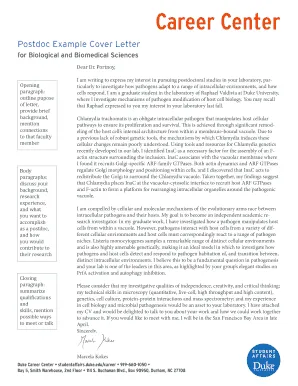
A well-structured cover letter typically includes the following elements. Each part contributes to the overall message you want to convey to the potential employer. A strong cover letter should be concise, clear, and engaging, capturing the reader’s attention from the start.
Formatting Your Postdoc Cover Letter
Proper formatting is essential for readability and professionalism. Ensure your cover letter is easy to read and visually appealing. Use a standard font, such as Times New Roman or Arial, and maintain consistent font sizes throughout the document. Choose a clear font size (e.g., 11 or 12 points) for body text and use appropriate margins (1 inch on all sides). The layout should be organized, with clear headings, paragraphs, and sufficient white space to avoid a cluttered appearance. Aim for a single-page document whenever possible, unless the instructions state otherwise.
Contact Information and Date
At the top of your cover letter, include your contact information (name, address, phone number, and email address) and the date. This information is crucial for the hiring committee to easily reach you and verify the letter’s authenticity. This section is also the first thing the reader sees, so ensure it is accurate and up-to-date.
Salutation

Address the letter to a specific person if possible (e.g., “Dear Dr. Smith”). Research the hiring professor’s name and use it to personalize your letter. If you’re unsure of the name, a general salutation like “Dear Hiring Committee” is acceptable. However, a personalized approach shows you’ve taken the time to research the position and the lab, which makes you a more appealing candidate.
Body Paragraphs
The body of your cover letter is where you articulate your qualifications and enthusiasm for the position. The body typically consists of several paragraphs that introduce yourself, highlight your research experience, connect with the lab’s work, and close by expressing your interest. Each paragraph has a distinct purpose and contributes to the overall message of your letter.
First Paragraph Introducing Yourself
Start with a brief introduction of yourself and state the specific position you are applying for. Mention where you saw the advertisement and briefly summarize your key qualifications. This paragraph sets the stage and provides the reader with an immediate understanding of why you’re writing.
Second Paragraph Highlighting Research

This is where you showcase your research experience. Briefly describe your previous research projects, focusing on their relevance to the postdoc position. Highlight your skills, techniques, and any significant accomplishments. Emphasize how your expertise aligns with the research being conducted in the lab.
Third Paragraph Connecting with the Lab
Demonstrate your understanding of the lab’s research and explain why you are interested in working there. Mention specific projects or publications that have resonated with you. Articulate how your research interests align with the lab’s goals and how you can contribute to their ongoing projects. This shows that you’ve done your homework and have a genuine interest in the position.
Fourth Paragraph Closing
Reiterate your interest in the position and express your enthusiasm to discuss your application further. Thank the hiring committee for their time and consideration. Provide contact information for follow-up.
Closing and Signature

Use a professional closing, such as “Sincerely” or “Best regards,” followed by your typed name. If submitting a physical copy, leave space for your handwritten signature above your typed name.
Content Creation Best Practices
Crafting a compelling cover letter requires attention to detail and strategic content creation. Tailor your letter to each specific position, highlighting your relevant skills and accomplishments. Be clear, concise, and professional in your writing. Proofread carefully to eliminate any errors. Demonstrate your knowledge of the lab and your enthusiasm for the research, and always follow all instructions provided in the job posting.
Tailoring to the Specific Position
Customize your cover letter for each postdoc position you apply for. Review the job description carefully and identify the specific skills, experiences, and qualifications the lab is seeking. Highlight how your background and expertise align with those requirements. Avoid using a generic cover letter template; instead, personalize your letter to reflect your understanding of the lab’s research and your ability to contribute to their projects.
Research Experience and Skills

Focus on your relevant research experience and skills. Provide specific examples of your accomplishments, such as publications, presentations, or successful grant applications. Quantify your achievements whenever possible (e.g., “Increased efficiency by 20%”). Highlight your proficiency in relevant techniques, software, and methodologies. Demonstrate your ability to think critically, solve problems, and work independently or as part of a team.
Highlighting Accomplishments
Showcase your most significant accomplishments and contributions to your field. Instead of just listing your responsibilities, emphasize your results and the impact of your work. Use action verbs to describe your achievements. For example, instead of writing “Responsible for data analysis,” write “Analyzed data resulting in the discovery of…” Quantify your results to make them more impactful. Include examples of how your contributions have advanced research or led to publications, presentations, or other recognition.
Common Mistakes and How to Avoid Them
Even the most qualified candidates can make mistakes that hurt their chances of getting an interview. Common errors include typos, generic language, and failing to follow instructions. To avoid these pitfalls, carefully proofread your cover letter and customize it to each application. Avoid clichés and make sure your letter is clear, concise, and tailored to the specific position.
Typos and Grammatical Errors

Typos and grammatical errors can create a negative impression and undermine your credibility. Always proofread your cover letter carefully. Use spell-check and grammar-check tools, but also read the letter aloud to catch any errors that these tools might miss. Ask a colleague or mentor to review your letter for you, as a fresh pair of eyes can often spot mistakes you might overlook.
Generic Letters
Avoid using a generic cover letter that you send to every position. Tailor your letter to each specific job and lab. Research the lab’s research interests and goals, and explain how your skills and experience align with their work. A generic letter does not demonstrate your genuine interest in the position, which can significantly reduce your chances of getting an interview.
Ignoring Instructions
Carefully read and follow all instructions provided in the job posting. Some labs may have specific requirements for the cover letter’s format, length, or content. Failing to follow these instructions may suggest that you are not detail-oriented or do not care enough about the opportunity. Always adhere to the requirements outlined in the job posting.
Proofreading and Editing
Proofreading and editing are essential steps in ensuring your cover letter is polished and professional. Read your letter multiple times, paying close attention to grammar, spelling, punctuation, and style. Eliminate any unnecessary words or phrases. Make sure the tone is appropriate for the specific position and lab. It’s often helpful to ask a trusted mentor or colleague to review your cover letter for feedback before submitting your application. This will help you catch any errors or weaknesses you might have missed.
In conclusion, a well-crafted postdoc cover letter is a key to a successful application. By understanding the purpose, components, and best practices of a cover letter, you can increase your chances of securing an interview and ultimately landing your dream job. Always proofread carefully and tailor each letter to the specific position and lab. Good luck!