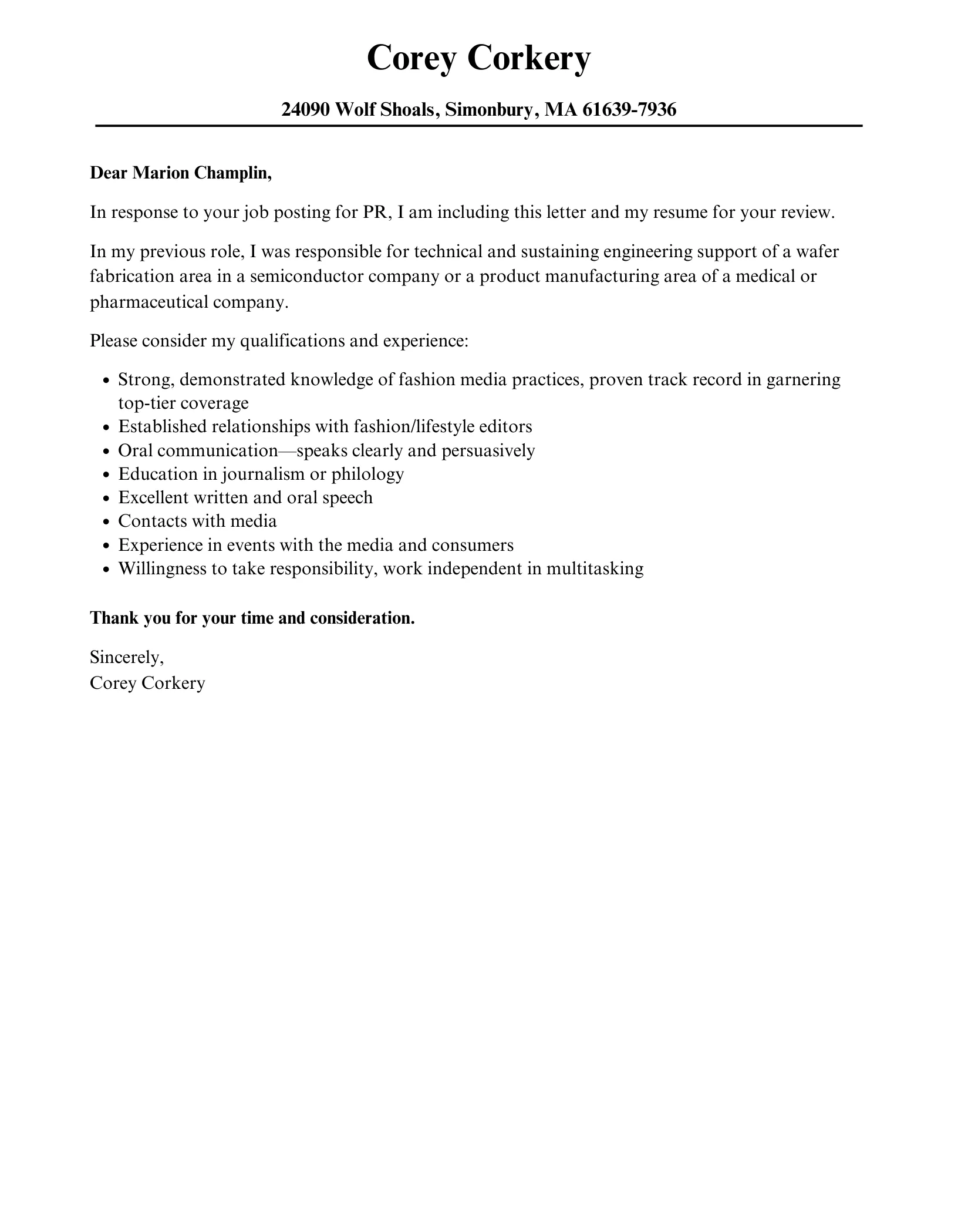
What is a PR Cover Letter
A PR cover letter is a critical document that accompanies your resume when applying for public relations positions. It serves as your first impression and allows you to introduce yourself, showcase your relevant skills and experience, and express your enthusiasm for the role and the company. Unlike a resume, which provides a summary of your professional history, a cover letter offers an opportunity to tell your story, explain your motivations, and demonstrate how your qualifications align with the specific requirements of the job. A well-crafted PR cover letter can significantly increase your chances of landing an interview and ultimately securing your dream job.
Key Components of a Powerful PR Cover Letter
A strong PR cover letter comprises several essential components that work together to create a compelling narrative. These elements ensure that your application stands out and effectively communicates your value to the hiring manager. The key aspects include your contact information and the date, the inside address (recipient’s details), a professional salutation, a captivating opening paragraph, a section highlighting relevant experience and skills, a demonstration of your passion for PR, tailored content specific to the job and company, meticulous proofreading, and an effective closing statement. Each component should be carefully crafted to reflect your personality, skills, and understanding of the role and the company’s needs.
Your Contact Information & Date

At the top of your PR cover letter, you should include your contact information, ensuring the hiring manager can easily reach you. This typically includes your full name, phone number, email address, and LinkedIn profile URL, if you have one. Below your contact information, add the current date. This information is essential for the recipient to know when the letter was written and how to reach you if they decide to offer you an interview.
The Inside Address
The inside address includes the recipient’s name, title, company name, and address. Researching and addressing your cover letter to a specific person within the company, such as the hiring manager or the relevant department head, is highly recommended. If you cannot find the name of the hiring manager, try to find the name of someone in the HR department or a relevant department. This personalized touch shows that you have taken the time to understand the company’s structure and demonstrates your attention to detail. If a specific name is unavailable, use a professional title like ‘Hiring Manager’.
The Salutation
The salutation sets the tone for the entire cover letter. If you know the hiring manager’s name, use a formal salutation like ‘Dear Mr./Ms. [Last Name]’. If you are unsure of the name, opt for a professional greeting such as ‘Dear Hiring Manager’ or ‘Dear [Department Name] Team’. Avoid generic greetings like ‘To Whom It May Concern’, as they lack personalization and can make your application seem less engaging. A well-chosen salutation shows respect and sets a positive tone from the start.
Crafting a Compelling Opening

Your opening paragraph is your first and often only chance to grab the hiring manager’s attention. It should be concise, engaging, and clearly state the position you are applying for and how you learned about it. Start with a strong hook, such as a brief statement about your passion for PR or an impressive achievement. Briefly mention why you are interested in the company and the specific role. This introduction should immediately highlight your enthusiasm, demonstrate your understanding of the company, and clearly state your purpose for writing. Make the reader want to continue reading to learn more about you.
Highlight Your Relevant Experience
The body of your cover letter is where you showcase your relevant experience. Focus on the experiences and achievements that align with the job requirements. For each experience, briefly describe your responsibilities and quantify your accomplishments whenever possible. Use action verbs to highlight your contributions and demonstrate your skills. Instead of simply listing your duties, explain how you achieved specific results, such as increased media coverage, improved brand awareness, or successfully managed a crisis. Use the STAR method (Situation, Task, Action, Result) to structure your descriptions. This section should demonstrate your ability to perform the job and deliver results.
Showcase Your Skills & Achievements
In addition to your experience, highlight your skills and achievements relevant to the PR role. Identify the key skills mentioned in the job description and provide examples of how you have demonstrated these skills in previous roles. These skills can include media relations, writing and editing, crisis communication, social media management, event planning, and strategic thinking. Showcase your achievements by quantifying your successes. For example, mention the number of press releases you wrote, the percentage increase in media mentions you secured, or the successful campaigns you managed. Providing concrete examples of your skills and achievements will make your application more compelling.
Demonstrate Your Passion for PR

Showcasing your passion for public relations is crucial in your cover letter. This demonstrates that you are not only qualified but also genuinely interested in the field and the company. Express your enthusiasm for the role and the company’s mission, values, and culture. Mention specific aspects of the company’s work that resonate with you and explain why you want to contribute to their success. Highlight any relevant professional development activities, such as certifications or workshops, that you have completed to enhance your skills. When you show passion, you make a memorable impression on the hiring manager.
Tailor Your Letter to the Job & Company
One of the most important steps is tailoring your cover letter to each specific job and company. Do not send generic cover letters. Research the company thoroughly and customize your letter to address their specific needs and values. Highlight the skills and experiences that align with the job description. Mention how your goals align with the company’s goals and explain why you are interested in the opportunity. This shows the hiring manager that you have taken the time to understand the role and the company, which demonstrates your commitment and dedication. Demonstrate that you are a good fit for the company culture.
Proofread and Edit Meticulously
Before submitting your cover letter, proofread it carefully. Typos, grammatical errors, and formatting mistakes can undermine your credibility and may lead to your application being rejected. Read your cover letter multiple times, or ask a friend or family member to review it. Pay close attention to spelling, grammar, punctuation, and sentence structure. Ensure that your cover letter is well-formatted and easy to read, with clear paragraphs and appropriate spacing. A polished and error-free cover letter reflects your attention to detail and professionalism.
Types of PR Cover Letters & Samples

PR cover letters vary depending on your experience level, the specific role, and the industry. Understanding the different types of cover letters can help you tailor your approach. Below are samples that demonstrate different formats and styles. These samples offer insights into the structure, tone, and content of effective cover letters, but remember to customize them to reflect your own experience, skills, and the specific requirements of the job.
Entry-Level PR Cover Letter Sample
For entry-level positions, focus on your education, internships, relevant coursework, and any volunteer experience. Highlight any skills you gained through these experiences, such as writing, communication, social media management, or event planning. Demonstrate your enthusiasm for the field and your willingness to learn. Include any relevant projects, such as writing press releases, managing social media accounts, or assisting with events. Emphasize how your skills and eagerness make you a valuable candidate, even with limited professional experience. You can also show how you are eager to take the opportunity to learn new skills and grow with the company.
Experienced PR Professional Cover Letter Sample
Experienced professionals should emphasize their achievements, the results they have delivered, and their specific skills. Focus on quantifiable results, such as increased media coverage, brand awareness, or improved crisis management. Highlight your experience in specific areas of PR, such as media relations, content creation, or strategic planning. Tailor your letter to demonstrate how your expertise aligns with the company’s needs and objectives. You must provide details about your ability to lead teams, manage campaigns, and achieve strategic goals. Consider using the STAR method in this cover letter.
PR Cover Letter for a Specific Role Sample

When applying for a specific role, tailor your cover letter to the job description’s requirements. Highlight the skills and experiences that are most relevant to the specific responsibilities of the position. Use keywords from the job description to demonstrate your understanding of the role. Explain why you are particularly well-suited to the position and how you can contribute to the company’s success. Address the company’s specific needs and explain how you can help them achieve their goals. Tailoring your cover letter to a specific role significantly increases the chances of standing out.
Formatting and Design Tips
The formatting and design of your cover letter play a vital role in creating a positive first impression. Keep your cover letter clean, organized, and easy to read. Choose a professional font and size, use effective white space, and ensure that your letter is visually appealing. Use a standard font such as Times New Roman, Arial, or Calibri, and set the font size to 11 or 12 points. Use one-inch margins and use white space to separate paragraphs, headings, and other elements. This will make your cover letter more readable. Ensure your letter is professional and easy to scan, conveying your message effectively.
Choosing the Right Font & Size
Choosing the right font and size is essential for readability and professionalism. Stick to standard, easy-to-read fonts like Times New Roman, Arial, or Calibri. Avoid using overly stylized or decorative fonts, as they can be difficult to read. Set the font size to 11 or 12 points, as this is the standard size and makes your letter easy to scan. Ensure that the font and size are consistent throughout the entire cover letter. You must keep it easy to read and professional, allowing the reader to focus on your content.
Using White Space Effectively

Using white space effectively can make your cover letter visually appealing and easy to read. Use white space to separate paragraphs, headings, and sections. This helps the reader scan your letter and quickly find the information they need. Avoid overcrowding your letter with text, as this can make it look cluttered and difficult to read. Use one-inch margins, and avoid using the full width of the page. This provides breathing room and makes your letter more aesthetically pleasing. White space can also create a sense of professionalism and order.
Sending Your Cover Letter
When sending your cover letter, consider the preferred format (PDF or Word document) as specified in the job posting. If the format is not specified, it’s generally a good idea to send your cover letter as a PDF. PDFs preserve the formatting of your document, ensuring that it looks the same on any device. Always check your document before sending it to ensure that it is properly formatted and free of any errors. Include your cover letter and resume in a professional email. Be sure to use a clear subject line. Personalize your email with a brief note, restating your interest in the role, and thanking the hiring manager for their time and consideration. Attach your cover letter and resume as separate files.
PDF vs. Word Document
PDFs are generally preferred because they preserve the formatting of your cover letter, ensuring that it looks the same on any device. Word documents are also acceptable, but there is a risk of formatting issues. If the job posting does not specify a format, sending your cover letter as a PDF is usually the safest option. PDFs ensure the document looks the way you intended it to, and also prevents any potential formatting issues, such as fonts shifting, or spacing becoming uneven.
Follow-Up Strategies
After submitting your cover letter and resume, a follow-up email can demonstrate your continued interest and initiative. Send a brief, polite follow-up email one to two weeks after submitting your application. In your email, briefly reiterate your interest in the role, thank the hiring manager for their time, and ask if they require any additional information. Keep your follow-up email concise and professional. Ensure that it is brief and respectful of the hiring manager’s time. A well-timed follow-up shows your enthusiasm and can help you stay top of mind, increasing your chances of an interview.