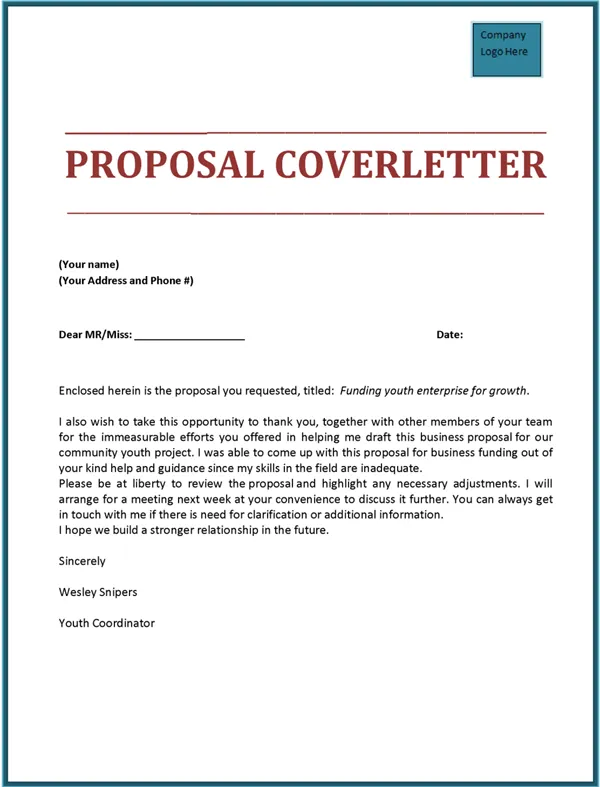
What is a Proposal Cover Letter?
A proposal cover letter serves as the formal introduction to your proposal document. It’s the first impression you make on the recipient and sets the tone for the rest of the submission. Think of it as a handshake, the initial point of contact that can significantly influence the reader’s perception of your proposal. This letter accompanies your detailed proposal, summarizing its core points and emphasizing why your solution is the best fit for the client’s needs. A well-crafted cover letter is much more than a formality; it is a strategic tool that can help you stand out from the competition and increase your chances of securing the project or opportunity. It demonstrates your professionalism, attention to detail, and understanding of the recipient’s requirements, all of which are crucial for a successful proposal submission. It is essentially a sales pitch in written form, carefully crafted to persuade the reader to delve deeper into your proposal and consider your solution.
Why Is a Proposal Cover Letter Important?
The importance of a proposal cover letter cannot be overstated. It is often the first document a potential client or stakeholder will read, making it a crucial opportunity to capture their attention and build a positive initial impression. A well-written cover letter provides context for the proposal, highlighting the key benefits and value proposition, and demonstrating your understanding of the recipient’s needs and objectives. This personalized approach shows that you’ve taken the time to research their requirements and tailor your proposal accordingly. Furthermore, a cover letter can help you establish a professional and trustworthy relationship with the recipient, setting the stage for a positive business interaction. It’s an opportunity to express enthusiasm for the project, demonstrate your commitment to delivering results, and encourage the reader to take action by reviewing your proposal and considering your solution.
Key Components of a Proposal Cover Letter

A compelling proposal cover letter typically includes several essential components, each serving a specific purpose in conveying your message effectively. By incorporating these elements, you can ensure your cover letter is comprehensive, persuasive, and professional. The structure includes sections dedicated to contact information, recipient’s details, opening statement, proposal introduction, benefits highlighting, call to action, and a professional closing, all carefully crafted to capture the reader’s attention and guide them through your proposal.
Your Contact Information
Begin your cover letter by including your contact information. This typically appears at the top of the letter and should include your name, title, company name, address, phone number, and email address. Ensure that all contact details are accurate and up-to-date. This information is essential for the recipient to contact you with questions or to discuss the proposal further. Make sure your email address and phone number are professional; a business-appropriate email address adds to your credibility. Using a clear and easily readable format makes it easy for the recipient to reach out and gives the impression that you are organized and attentive to detail.
The Recipient’s Information
Directly below your contact information, include the recipient’s details. This section is crucial as it immediately personalizes the letter and demonstrates that you’ve directed the proposal to the right person. Include the recipient’s full name, title, company name, and address. If possible, address the letter to a specific person rather than a general title like ‘To Whom It May Concern.’ This shows that you have researched the company and understand who will be reviewing the proposal. This personalization increases your chances of grabbing the reader’s attention, making the cover letter feel less generic and more tailored to their specific needs and role within the organization.
A Compelling Opening Statement

The opening statement is your chance to make a strong first impression. Start with a concise and engaging sentence that immediately captures the reader’s attention. Clearly state the purpose of the letter and briefly explain why you are submitting the proposal. You might mention where you heard about the opportunity or reference a previous conversation. The opening should be enthusiastic and demonstrate your understanding of the recipient’s needs. Avoid generic phrases; instead, tailor the introduction to the specific project or opportunity. A compelling opening sets the stage for the rest of the letter, encouraging the reader to continue reading and learn more about your proposal.
Briefly Introduce Your Proposal
In a few sentences, provide a brief overview of your proposal. Summarize the key objectives, the problem you’re addressing, and the proposed solution. This section should give the reader a clear understanding of what your proposal entails without going into excessive detail. Highlight the main points and emphasize how your solution aligns with the recipient’s needs and objectives. This concise introduction gives context to the detailed proposal and serves as a roadmap for the reader, helping them quickly grasp the core elements of your submission. Keep this section brief and focus on the essential information to maintain the reader’s interest.
Highlight Key Benefits & Value Proposition
This is where you showcase the benefits and value your proposal brings to the recipient. Focus on how your solution addresses their specific needs and the advantages they will gain. Highlight the key benefits, such as increased efficiency, cost savings, improved outcomes, or innovative solutions. Quantify the benefits whenever possible by using metrics or data to demonstrate the value you offer. Emphasize how your proposal stands out from others and why you are the best choice. By clearly articulating the value proposition, you make a compelling case for why the recipient should choose your solution.
Express Enthusiasm & Call to Action

Conclude your cover letter with a call to action that encourages the recipient to take the next step. Clearly state what you want them to do, such as reviewing the proposal, scheduling a meeting, or contacting you with questions. Express your enthusiasm for the opportunity and reiterate your commitment to delivering exceptional results. Make it easy for the recipient to take the desired action by providing your contact information again and indicating your willingness to discuss the proposal further. A strong call to action motivates the reader to move forward in the decision-making process, increasing your chances of a positive outcome.
Professional Closing & Signature
End your cover letter with a professional closing and signature. Use a formal closing such as ‘Sincerely,’ ‘Best regards,’ or ‘Yours faithfully.’ Below the closing, include your typed name and, if submitting a hard copy, leave space for your handwritten signature above your typed name. This reinforces the professional tone and adds a personal touch to the document. Make sure your closing and signature are consistent with the overall tone of your letter and reflect the level of formality appropriate for the recipient and the specific opportunity. The closing creates a polished finish, leaving a lasting impression on the reader.
Formatting & Design Best Practices
The formatting and design of your proposal cover letter significantly impact its readability and overall impression. Adhering to best practices ensures that your letter looks professional and is easy to read, enhancing your credibility. Use a clean and professional font such as Arial or Times New Roman with a font size between 10 and 12 points. Maintain consistent formatting throughout the document, including spacing, margins, and alignment. Use clear headings and subheadings to break up the text and make it easier to scan. Ensure that your letter is free of grammatical errors and typos; proofread carefully before submitting. Choose a simple, uncluttered design that is visually appealing and reflects your brand’s professionalism.
Proofreading & Editing

Proofreading and editing are critical steps in finalizing your proposal cover letter. Thoroughly review your letter for any errors in grammar, spelling, punctuation, and sentence structure. These errors can detract from your professionalism and credibility. Read your letter aloud to catch any awkward phrasing or unclear sentences. Ask someone else to review your letter as a fresh set of eyes can often identify errors you might have missed. Ensure that the tone of your letter is appropriate and consistent with your brand and the specific opportunity. By taking the time to proofread and edit your letter, you demonstrate attention to detail and a commitment to excellence, which will positively impact the recipient’s perception of your proposal.
Proposal Cover Letter Examples & Templates
Utilizing examples and templates can significantly streamline the process of writing a proposal cover letter. Many online resources offer customizable templates tailored to different industries and proposal types. These templates provide a structured framework for your letter, ensuring that you include all the necessary elements. Browse these examples to find inspiration and adapt the language to suit your specific needs. However, avoid simply copying and pasting; personalize the template to reflect your brand and the unique aspects of your proposal. Customize the templates to demonstrate your understanding of the recipient’s requirements and the project’s specific details. By using examples and templates, you can save time and create a professional, persuasive cover letter that enhances your chances of success.