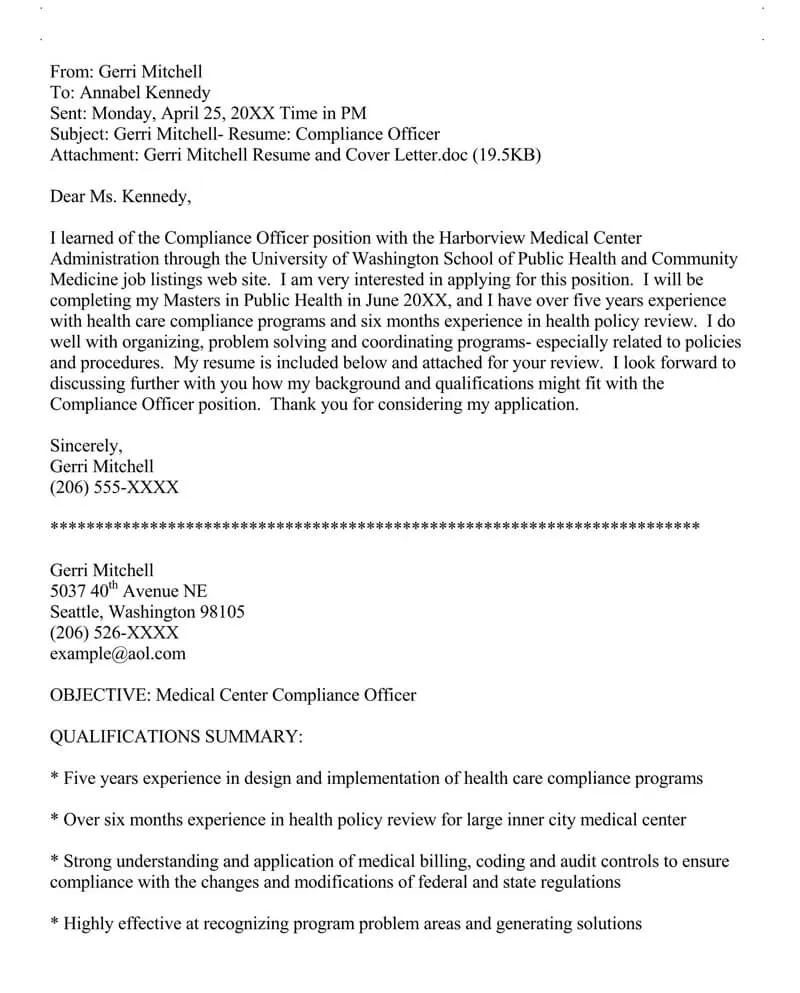
What is a Resume Cover Letter in Email
A resume cover letter in an email is a concise, professional message that accompanies your resume when applying for a job via email. It serves as your introduction, providing a brief overview of your qualifications, expressing your interest in the position, and encouraging the recipient to review your attached resume. Think of it as your first impression, the digital handshake that sets the tone for your application. In the modern job market, where email is the primary mode of communication, mastering the art of the email cover letter is crucial. It’s your opportunity to stand out from the crowd, demonstrate your communication skills, and make a compelling case for why you’re the ideal candidate. This guide will unveil the secrets to crafting an email cover letter that gets results.
Why is a Cover Letter Email Important
In the competitive landscape of job applications, a cover letter email is more than just a formality; it’s a strategic tool. It allows you to personalize your application, showcasing your understanding of the specific job and the company. By tailoring your message, you demonstrate genuine interest and initiative. Moreover, it provides context to your resume. While your resume lists your skills and experience, your email cover letter lets you explain how those qualifications align with the job requirements, highlighting the value you bring. A well-written email cover letter can significantly increase your chances of getting noticed, securing an interview, and ultimately landing your dream job. It is an opportunity to expand on your accomplishments and show some personality.
Formatting Your Email Cover Letter

The formatting of your email cover letter is as important as its content. A clean, professional format ensures readability and conveys your attention to detail. Begin with a clear and concise subject line that immediately grabs the reader’s attention and includes the job title. Use a professional email address and a standard, easy-to-read font such as Arial or Calibri. Keep the body of your email concise, typically no more than four or five paragraphs. Use bullet points or numbered lists to highlight key accomplishments and skills. Ensure proper grammar, spelling, and punctuation throughout your email. Maintain a professional tone, avoiding slang or overly casual language. Always include your contact information, including your phone number, and a professional email signature at the end. This ensures the recipient has all the necessary information to reach out to you.
Subject Line Secrets
The subject line is your first, and often only, chance to make an impression. It should be compelling and informative, encouraging the recipient to open your email. Use a subject line that includes the job title and your name, such as “[Job Title] Application - [Your Name]” or “Application for [Job Title] - [Your Name].” If the job posting specifies a particular subject line format, adhere to it strictly. Avoid generic subject lines like “Resume” or “Job Application” as they may get lost in a crowded inbox. Consider adding a keyword related to the job or company if appropriate, but keep it concise. Proofread the subject line carefully to avoid any errors, as a typo here can immediately create a negative impression. A well-crafted subject line significantly increases the likelihood of your email being opened and read.
Crafting the Body of Your Email
The body of your email should be well-structured and engaging. Start with a polite and professional greeting, such as “Dear [Hiring Manager name],” or “Dear Hiring Team,” if you don’t know the name. In the first paragraph, state the position you are applying for and how you learned about it. In the subsequent paragraphs, highlight your relevant skills and experience, connecting them to the job requirements. Use specific examples and quantifiable achievements to demonstrate your capabilities. Express your enthusiasm for the role and the company, showing that you’ve done your research. Keep the tone positive and professional throughout. The concluding paragraph should reiterate your interest, express your availability for an interview, and thank the reader for their time and consideration. Remember, the goal is to create a compelling narrative that showcases your value.
Opening: Grabbing Their Attention

Your opening paragraph sets the tone for the entire email, so make it count. Instead of starting with a generic statement, aim to grab the reader’s attention immediately. State the specific position you’re applying for, and mention where you saw the job posting. If possible, reference something specific about the company or the role that resonated with you, showing that you’ve researched the opportunity. You might begin with a brief statement of your biggest accomplishment or a skill directly relevant to the job. For example, “I am writing to express my strong interest in the Marketing Manager position, as advertised on [Platform]. With my proven track record of increasing brand awareness by 30%, I am confident I can significantly contribute to your team.” This approach shows your enthusiasm and highlights your most relevant qualification right from the start.
Highlighting Your Skills and Experience
In the body of your email, focus on highlighting your key skills and experiences relevant to the job description. Review the job requirements carefully and identify the skills and experiences that align with them. Provide specific examples to demonstrate your ability to perform the required tasks and achieve results. Avoid simply listing your responsibilities; instead, describe your accomplishments and the impact you made in previous roles. Use action verbs to describe your contributions, such as “managed,” “developed,” “implemented,” or “achieved.” Whenever possible, quantify your achievements using numbers or data. This helps the hiring manager understand the value you bring to the table. For example, instead of saying “Improved customer satisfaction,” state “Increased customer satisfaction scores by 15% through implementing a new feedback system.”
Quantifying Your Achievements
Quantifying your achievements is a powerful way to demonstrate your value and make your application stand out. Hiring managers are more impressed by concrete results than by vague statements. Wherever possible, use numbers, percentages, or data to illustrate the impact of your work. Instead of saying “Improved sales,” say “Increased sales by 20% in the first quarter.” If you managed a project, mention the budget, the number of people involved, and the project’s outcome. If you implemented a new system, state how much time or money it saved. By providing measurable results, you make it easy for the hiring manager to understand the value you can bring to the company. This adds credibility to your claims and makes a strong case for your qualifications.
Expressing Your Enthusiasm

Expressing your enthusiasm for the role and the company is critical to making a positive impression. Show that you’ve done your research and genuinely want to work there. In your email, mention specific aspects of the company or the role that appeal to you. You could refer to their mission, values, products, or recent achievements. Explain why you’re excited about the opportunity and how your skills and experience align with their goals. This demonstrates your initiative and passion. For example, “I was particularly drawn to [Company]’s commitment to [Company Value], which aligns perfectly with my own professional values.” or “I am excited by the opportunity to contribute to the development of [Product or Service], as I have a proven track record in similar projects.” This shows you are not just sending out applications but are genuinely interested in this particular opportunity. Avoid generic statements; be specific and sincere in your expression of interest.
Closing Your Email Cover Letter
The closing of your email cover letter should be professional and leave a lasting positive impression. Reiterate your interest in the position and express your eagerness to discuss your qualifications further. Thank the hiring manager for their time and consideration. Use a professional closing such as “Sincerely,” “Best regards,” or “Kind regards.” Then, include your full name and contact information, including your phone number and a link to your LinkedIn profile if you have one. Ensure that your contact information is accurate and up-to-date. Finally, make it clear that your resume is attached, and make it easy for the recipient to find it. A well-crafted closing reiterates your professionalism and leaves the reader with a positive impression of your application, increasing the likelihood of a response.
Proofreading and Editing
Proofreading and editing your email cover letter is a non-negotiable step. Typos, grammatical errors, and formatting inconsistencies can create a negative impression and undermine your application. Before sending your email, carefully review it for any errors. Check for spelling mistakes, grammatical errors, punctuation errors, and formatting issues. Read your email aloud to catch awkward phrasing or sentences. Use a spell-checker and grammar-checker tool, but don’t rely on them entirely; they may miss subtle errors. Ask a friend, family member, or career counselor to review your email. They can offer a fresh perspective and catch errors you might have missed. Taking the time to proofread and edit your email demonstrates your attention to detail and professionalism. This is a step that can set you apart from less prepared applicants.
Adding Your Resume as an Attachment

Attaching your resume correctly is crucial. Make sure your resume is in a professional format, such as a PDF. PDFs preserve the formatting and ensure your document looks the same on any computer. Name the file with your name and the job title, such as “Your Name - Job Title - Resume.pdf.” This helps the hiring manager quickly identify your resume. In your email cover letter, explicitly state that your resume is attached. This ensures the recipient knows to look for it. Double-check that you have attached the correct version of your resume. Ensure that the file is not corrupted and can be easily opened. Attachments are a key part of your application, making sure it is done correctly will reduce the risk of misinterpretation.
Sending Your Email Cover Letter
Before sending your email cover letter, take a moment to review it one last time. Ensure that the subject line is correct, the email is addressed to the right person, and that your resume is correctly attached. Send a test email to yourself to check the formatting and make sure everything looks as expected. Use a professional email address; avoid using nicknames or unprofessional email addresses. If the job posting specifies a preferred method of application, follow their instructions precisely. Send the email at a reasonable time, avoiding sending it late at night or very early in the morning. Once you’ve sent your email, avoid sending multiple emails unless necessary. Send one email and wait for a response before following up. Take the time to prepare and submit your application correctly; this will help you to make a good impression.
Following Up After Sending
Following up after submitting your email cover letter demonstrates your continued interest in the position, but timing is key. Wait at least a week but no more than two weeks before sending a polite follow-up email. If the job posting specifies a timeline for application reviews, wait until after that date before following up. Keep the follow-up email brief and professional. In the email, refer to the position you applied for and reiterate your interest. Express your appreciation for the hiring manager’s time and consideration. You might gently inquire about the status of your application and whether they need any additional information. Avoid being overly persistent or demanding. Keep the tone polite and respectful. If you still haven’t heard back after a second follow-up (another week or two), it’s best to assume they have moved on.
Common Mistakes to Avoid

Several common mistakes can negatively impact your email cover letter. Avoid sending generic cover letters that are not tailored to the specific job or company. Make sure to avoid typos, grammatical errors, and poor formatting. Don’t use overly casual or informal language. Refrain from including irrelevant information or rambling on about your life story. Avoid being negative or critical of previous employers. Don’t oversell yourself or make unrealistic claims. Refrain from using clichés or overly formal language. Avoid sending the email without a resume attached. Finally, make sure you send the email to the correct recipient and that your contact information is up to date. By avoiding these common pitfalls, you’ll significantly increase your chances of a positive outcome.
Email Cover Letter Examples
To further assist you, consider reviewing email cover letter examples to gain insights into effective writing. You can find many examples online, tailored to various industries and job roles. Analyze these examples to understand how others have structured their emails, highlighted their skills, and expressed their enthusiasm. Pay attention to the language used, the tone, and the overall organization. While these examples can serve as a guide, remember to personalize your own cover letter to reflect your unique qualifications and experience. Consider how the sample letters open, how they convey the applicant’s experience, and how they finish. Adapting these examples to your specific situation, you can improve your chances of making a great first impression and securing an interview.