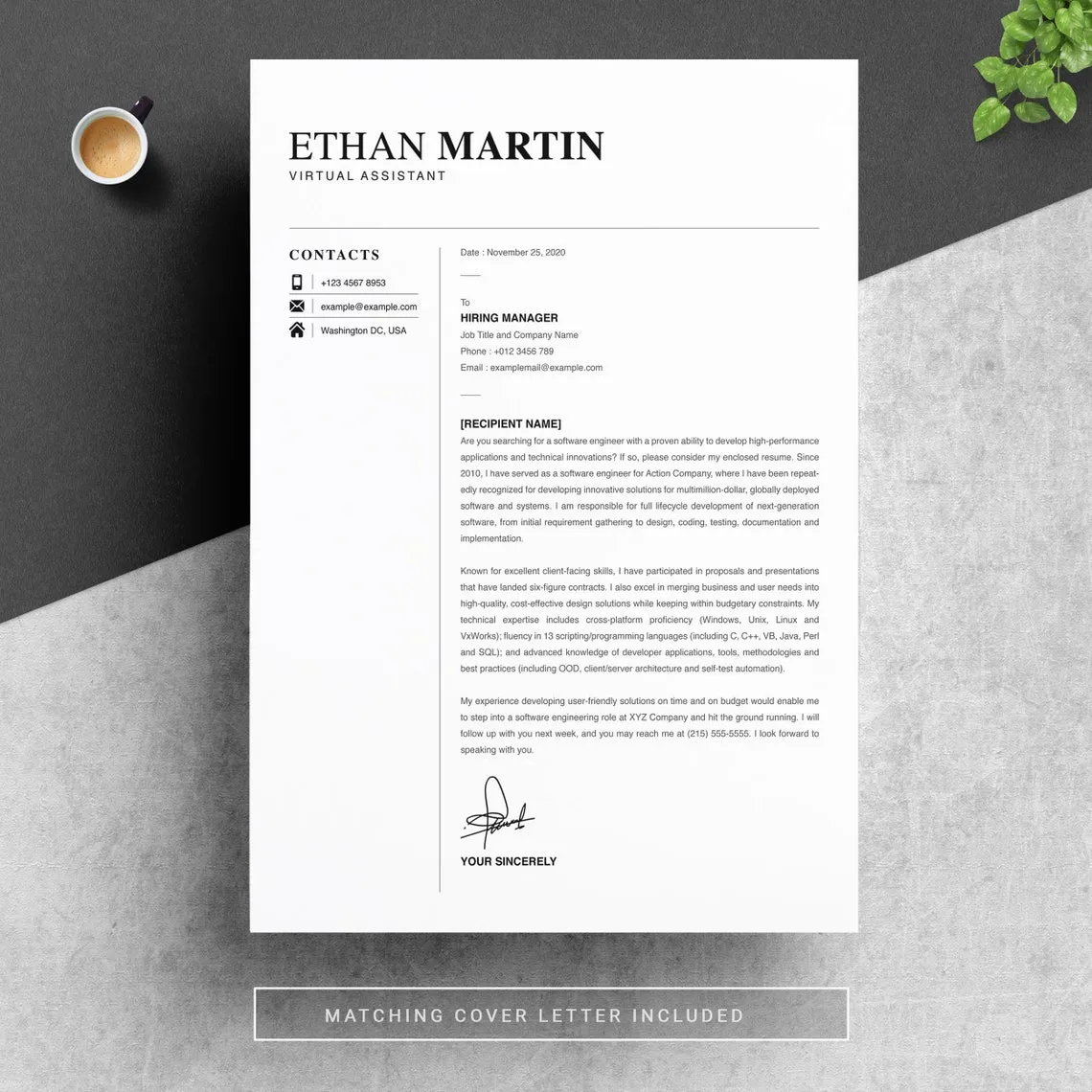
The Importance of a Strong Resume Cover Letter
In today’s competitive job market, a well-crafted resume cover letter is more than just a formality it’s your first opportunity to make a lasting impression on a potential employer. It serves as your personal introduction, allowing you to showcase your personality, skills, and enthusiasm in a way that a resume alone cannot. A compelling cover letter can significantly increase your chances of getting noticed and securing an interview, setting you apart from other applicants. Many hiring managers consider the cover letter as a crucial element of the application process, using it to assess your communication skills, attention to detail, and overall suitability for the role.
Think of it as a marketing tool. It’s your chance to sell yourself, highlighting why you are the best fit for the job and the company. A strong cover letter can bridge the gap between your resume and the employer’s needs, making a direct connection between your qualifications and the job requirements. It’s also an opportunity to address any potential gaps in your resume, explain career changes, or express genuine interest in the company’s mission and values. Ultimately, a well-written cover letter is a powerful tool that can significantly enhance your job application and increase your chances of landing an interview.
Crafting a Compelling Resume Cover Letter
Creating a compelling resume cover letter involves more than just restating the information on your resume. You need to tell a story. Begin with a strong opening that immediately grabs the reader’s attention. Clearly state the position you are applying for and how you learned about it. Then, in the body of your letter, focus on demonstrating your value. Highlight your key skills and experiences that directly align with the job requirements, providing specific examples of your accomplishments and how they can benefit the company. Make sure to demonstrate that you understand the company’s needs and explain how your skills and experience can help them achieve their goals. The goal is to make the hiring manager eager to learn more about you.
The body of your cover letter should be concise, well-organized, and engaging. Avoid generic statements; instead, use specific examples and quantify your achievements whenever possible. For instance, instead of saying “I improved sales,” say “I increased sales by 15% within six months.” Use action verbs to describe your accomplishments, and tailor your language to match the tone and style of the company you are applying to. End your letter with a strong closing that reiterates your interest in the position, thanks the reader for their time and consideration, and includes a clear call to action, such as inviting them to contact you for an interview.
Highlighting Your Key Skills and Experiences

When highlighting your key skills and experiences, focus on the ones most relevant to the job description. Carefully review the job posting and identify the skills and qualifications that the employer is seeking. Then, in your cover letter, provide specific examples of how you have demonstrated those skills in past roles. Instead of simply listing your skills, provide context and evidence. Describe the situation, the actions you took, and the results you achieved. This approach, often referred to as the STAR method (Situation, Task, Action, Result), makes your accomplishments more tangible and memorable.
Quantify your accomplishments whenever possible. Use numbers and data to demonstrate the impact you have made in previous roles. For example, if you improved efficiency, state the percentage increase. If you managed a budget, specify the size of the budget. If you led a team, mention the team size and any significant achievements. This helps the employer understand the value you can bring to their organization. Furthermore, use keywords from the job description throughout your cover letter. This helps the hiring manager quickly see that you possess the skills and qualifications they are looking for.
Customizing Your Cover Letter for Each Application
One of the biggest mistakes job seekers make is sending out generic cover letters. To truly stand out, you must customize your cover letter for each job application. This means tailoring the content to match the specific requirements of the role and the values of the company. Start by thoroughly reviewing the job description. Identify the key skills, qualifications, and experiences that the employer is seeking. Then, in your cover letter, highlight your relevant skills and provide examples of how you have demonstrated those skills in the past.
Research the company and learn about its mission, values, and culture. This information can help you tailor your language and demonstrate your genuine interest in the organization. Address your cover letter to a specific person, if possible. If you can find the name of the hiring manager or the person who will be reading your application, it shows that you have taken the time to do your research and that you are serious about the opportunity. Avoid using generic greetings like “To Whom It May Concern.” Instead, try to find the name of the person who is responsible for hiring.
Researching the Company and the Role
Before you start writing your cover letter, take the time to research the company and the role. This demonstrates to the hiring manager that you are genuinely interested in the opportunity and that you have taken the initiative to learn more about their organization. Visit the company’s website to learn about their mission, values, and culture. Read news articles, press releases, and social media posts to stay up-to-date on their recent activities and achievements. Understand their products or services, their target market, and their competitors.
Carefully analyze the job description to understand the specific requirements of the role. Identify the key skills, qualifications, and experiences that the employer is seeking. Consider the company’s needs and how your skills and experience can help them achieve their goals. This information will help you tailor your cover letter and demonstrate how you are the best fit for the position. If you know someone who works at the company, reach out to them for insights into the company culture and the role itself. Networking can provide valuable information and may give you an edge over other applicants.
Demonstrating Your Enthusiasm and Fit

Your cover letter should be more than just a list of your skills and experiences; it should also demonstrate your enthusiasm for the position and the company. Expressing genuine interest can make a significant impact on the hiring manager, making them feel that you are truly passionate about the opportunity. Start by clearly stating your interest in the role and the company. Explain why you are excited about the opportunity and what specifically attracts you to the organization. Reference specific aspects of the company’s mission, values, or recent achievements that resonate with you.
Show how your skills and experiences align with the job requirements. Explain how you have demonstrated the key skills in past roles and provide specific examples of your accomplishments. This helps the hiring manager see how you can contribute to their team. Tailor your language to match the company’s tone and style. If the company has a casual culture, your cover letter can reflect that. However, if the company has a more formal culture, you should adopt a professional tone. The goal is to show that you understand their environment and that you would be a good cultural fit. End your cover letter with a call to action, indicating your eagerness for an interview and expressing your enthusiasm for the opportunity.
Structuring Your Cover Letter Effectively
A well-structured cover letter is easy to read and highlights your key qualifications effectively. Start with a compelling opening that grabs the reader’s attention. Immediately state the position you are applying for and how you learned about it. Your opening should be concise and enthusiastic, setting the tone for the rest of the letter. The body of your cover letter should be organized into clear paragraphs, each focusing on a specific aspect of your qualifications or experiences. Use strong topic sentences to introduce each paragraph and provide a clear roadmap for the reader.
Use the STAR method (Situation, Task, Action, Result) to describe your accomplishments and quantify your achievements whenever possible. Focus on the skills and experiences that are most relevant to the job description. Make sure to customize your cover letter to the specific role and company. End your cover letter with a strong closing that reiterates your interest in the position, thanks the reader for their time and consideration, and includes a clear call to action. Proofread your cover letter carefully for any errors in grammar, spelling, and punctuation.
Formatting Your Resume Cover Letter for Readability
Formatting plays a crucial role in making your resume cover letter easy to read and visually appealing. Use a professional and readable font, such as Times New Roman, Arial, or Calibri, with a font size between 10 and 12 points. Ensure your font is consistent throughout the letter. Use clear and concise language, avoiding overly complex sentence structures or jargon. Keep your paragraphs relatively short and use bullet points or numbered lists to break up large blocks of text and highlight key information. Aim for a letter that is about one page in length.
Use ample white space to create a clean and uncluttered look. Use standard margins (1 inch on all sides) and double-space between paragraphs. This helps the reader’s eye move through the content easily. Use bolding, italics, and underlining sparingly to emphasize key points. Avoid using excessive formatting, which can distract the reader. Proofread the letter carefully for any errors in grammar, spelling, and punctuation. Use a professional-looking letterhead, including your name, contact information, and the date. Send your cover letter as a PDF file to preserve the formatting and ensure it is readable on any device.
Proofreading and Editing Your Cover Letter

Proofreading and editing are essential steps in ensuring your cover letter is polished and professional. Errors in grammar, spelling, and punctuation can create a negative impression and undermine your credibility. After writing your cover letter, set it aside for a few hours or even a day to allow your mind to rest. Then, come back to it with fresh eyes to catch any errors you may have missed the first time. Read your cover letter aloud to yourself. This can help you identify awkward phrasing, grammatical errors, and areas where your writing could be improved.
Use grammar and spell-checking tools, but don’t rely on them entirely. These tools can catch some errors, but they may not always detect subtle mistakes or stylistic issues. Have a friend, family member, or career advisor review your cover letter. A fresh perspective can help you identify errors and provide feedback on the overall clarity and effectiveness of your writing. Pay close attention to details, such as the correct spelling of the hiring manager’s name, the company’s name, and the job title. Review your contact information to ensure that it is correct and up-to-date. Ensuring that your cover letter is free of errors can leave a positive and lasting impression on the hiring manager.
Following Up After Submitting Your Cover Letter
After submitting your cover letter and resume, it’s important to follow up with the employer. Following up demonstrates your continued interest in the position and can help you stay top-of-mind with the hiring manager. After submitting your application, wait a reasonable amount of time, usually one to two weeks, before following up. If the job posting specified a deadline for applications, wait until after that deadline before contacting the employer. If you haven’t heard back after a reasonable amount of time, send a brief and polite follow-up email to the hiring manager or the person who contacted you regarding the role.
In your email, reiterate your interest in the position, remind the hiring manager of your application, and ask about the status of your application. Thank the hiring manager for their time and consideration. Keep your email concise and professional. Avoid being overly persistent or demanding. Be patient, as the hiring process can sometimes take longer than expected. If you are not selected for an interview, consider sending a thank-you note to the hiring manager to express your gratitude for their time and consideration. This small gesture can leave a positive impression and keep you in mind for future opportunities.