Crafting a Compelling Sales Assistant Cover Letter
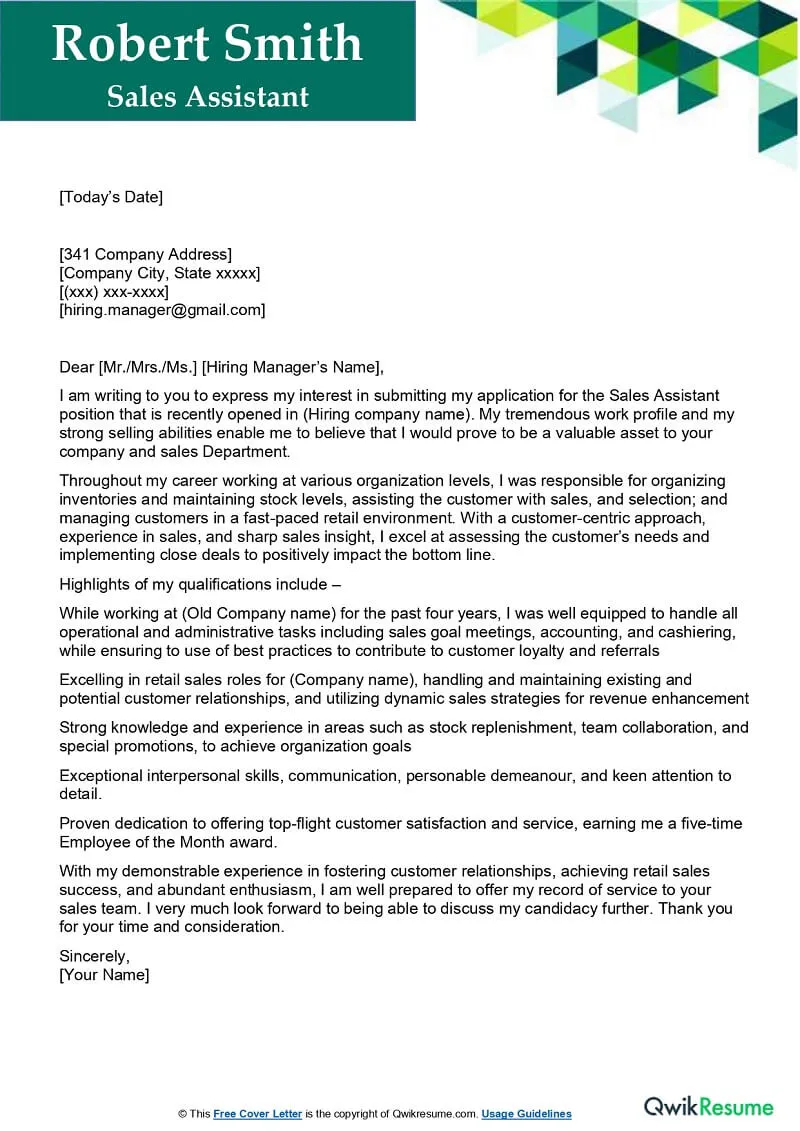
A well-crafted cover letter is your first opportunity to impress a potential employer and secure an interview for a sales assistant position. It provides a platform to showcase your skills, experience, and enthusiasm for the role. In a competitive job market, a strong cover letter can significantly increase your chances of standing out from other applicants. This guide provides you with the essential steps for creating a cover letter that captures attention and highlights your suitability for the job.
Understanding the Sales Assistant Role
Before writing your cover letter, it’s crucial to understand the sales assistant role. This understanding helps you tailor your letter to the specific requirements and expectations of the position. Researching typical responsibilities and required skills demonstrates your proactive approach and commitment to the role.
Key Responsibilities of a Sales Assistant

Sales assistants typically support sales teams by performing administrative tasks, managing customer interactions, and assisting in sales processes. Their responsibilities can include managing client databases, preparing sales reports, handling customer inquiries, and processing orders. Understanding these responsibilities will help you emphasize your relevant skills and experiences.
Essential Skills for Sales Success
Successful sales assistants possess a combination of soft and hard skills. These include excellent communication, customer service, organizational abilities, and proficiency in CRM software and sales processes. Highlighting these skills in your cover letter will demonstrate your capability to excel in the role.
Highlighting Your Achievements and Skills
Your cover letter is your chance to showcase your achievements and demonstrate how your skills align with the job requirements. Focus on providing specific examples that illustrate your capabilities and quantify your successes whenever possible. Avoid simply listing your skills; instead, explain how you have applied them in previous roles.
Quantifying Your Accomplishments

Whenever possible, quantify your accomplishments with data and figures. For example, if you improved customer satisfaction, mention the percentage increase. If you exceeded sales targets, state the amount or percentage by which you exceeded them. Such details provide concrete evidence of your value and effectiveness.
Using Action Verbs to Showcase Your Abilities
Use strong action verbs to describe your responsibilities and achievements. This approach makes your cover letter more dynamic and engaging. Words such as ‘managed,’ ‘achieved,’ ‘coordinated,’ ‘implemented,’ and ‘increased’ can effectively convey your skills and accomplishments. This will draw the hiring manager’s attention to the valuable skills you have.
Tailoring Your Letter to the Specific Job
Generic cover letters often fail to impress employers. Customizing your cover letter to match the specific requirements of each job is essential. This demonstrates your attention to detail and genuine interest in the position and the company. Tailoring shows you’ve done your homework and aren’t just sending out a generic application.
Researching the Company and the Hiring Manager
Before you start writing, research the company and, if possible, the hiring manager. Understanding the company’s values, mission, and recent achievements allows you to tailor your letter to their specific needs. Addressing the hiring manager by name, if you know it, adds a personal touch and shows initiative.
Customizing Your Cover Letter for Each Application
Carefully review the job description and identify the key skills and qualifications the employer is seeking. Then, adjust your cover letter to highlight the experiences and skills most relevant to those requirements. This targeted approach ensures your letter directly addresses the employer’s needs.
Structuring Your Cover Letter Effectively
A well-structured cover letter is easy to read and quickly conveys your key qualifications. Follow a standard business letter format, including an introduction, body paragraphs, and a conclusion. Proper structure helps the hiring manager easily find the most important information.
The Introduction Making a Strong First Impression

Your introduction should immediately grab the reader’s attention. State the position you’re applying for and briefly explain why you’re a good fit. Mention where you found the job posting and express your enthusiasm for the opportunity. A strong introduction sets the tone for the rest of your letter and encourages the reader to continue.
The Body Showcasing Your Value
The body of your cover letter is where you showcase your skills, experience, and achievements. Use this section to elaborate on your qualifications and provide specific examples of how you’ve succeeded in similar roles. Focus on the skills and experiences that align with the job requirements and demonstrate your value to the company.
The Closing Requesting an Interview
In your closing paragraph, express your enthusiasm for the position and reiterate your interest in an interview. Thank the hiring manager for their time and consideration and provide your contact information. A clear and confident closing leaves a positive lasting impression and encourages the next step in the hiring process.
Proofreading and Formatting

Proofreading and formatting are crucial steps in the cover letter writing process. Errors in grammar, spelling, and formatting can undermine your credibility and reduce your chances of getting an interview. Always proofread your cover letter carefully before submitting it, and ensure it’s visually appealing and easy to read.
Checking for Grammar and Spelling Errors
Carefully check your cover letter for any grammar and spelling mistakes. Use a spell checker and consider asking a friend or family member to review your letter. A polished cover letter demonstrates professionalism and attention to detail.
Ensuring a Professional and Readable Format
Use a professional font, such as Times New Roman, Arial, or Calibri, and maintain consistent formatting throughout your letter. Use clear headings and spacing to make the letter easy to read. Keep your paragraphs concise and to the point. A well-formatted cover letter is visually appealing and demonstrates your attention to detail.
By following these steps, you can create a compelling cover letter that effectively showcases your qualifications for a sales assistant position and increases your chances of securing an interview. Remember to tailor your letter to each job, highlight your achievements, and present yourself in a professional and enthusiastic manner.