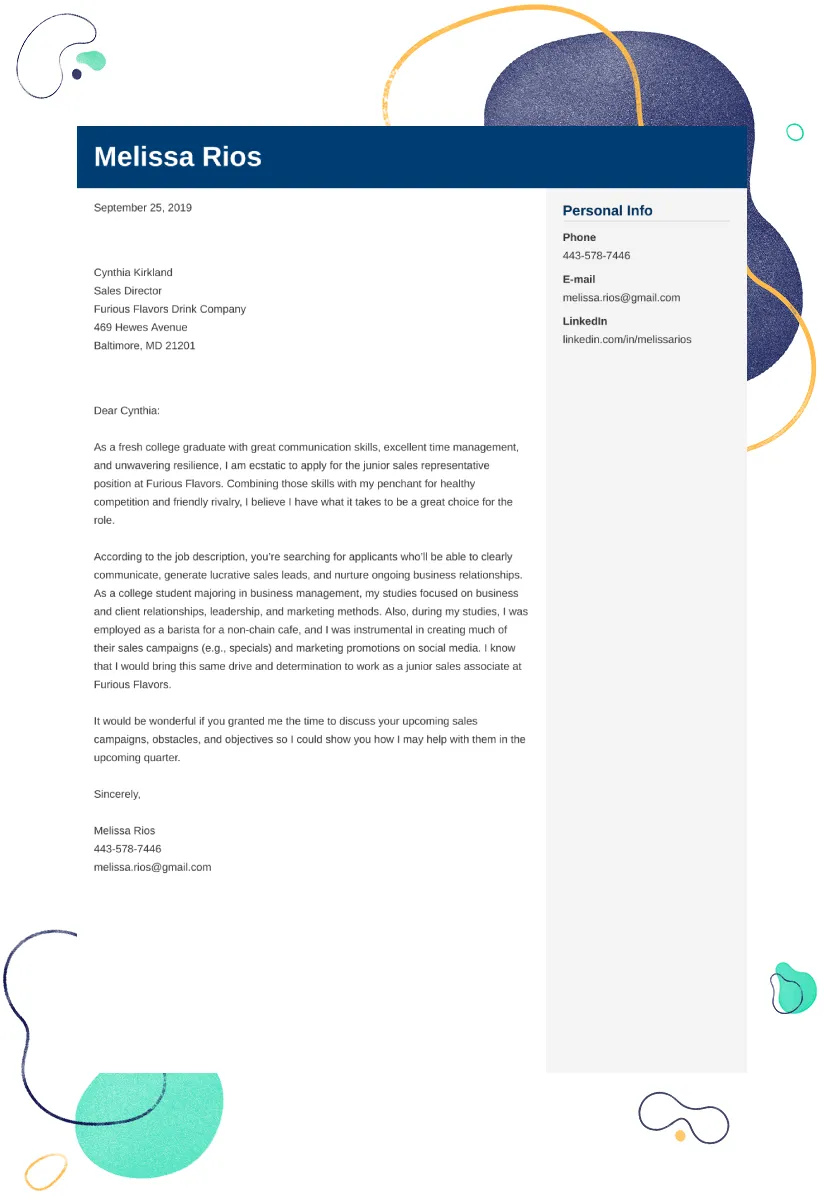
Why You Need a Sales Cover Letter
In the competitive world of sales, a compelling cover letter is your initial introduction—your chance to shine. More than just a summary of your resume, it’s where you tell your story, showcasing your personality and explaining why you’re the perfect fit for the role and the company. This is your opportunity to highlight specific experiences and skills that align with the job requirements and demonstrate your genuine interest in the position. A strong cover letter helps to set the stage for your application, providing context and emphasizing how your background aligns with the employer’s needs. It also shows your ability to communicate effectively, which is a critical skill in sales. It shows attention to detail and a genuine interest in the role and the organization. A well-crafted cover letter is a conversation starter that leaves a lasting positive impression, ultimately helping you to secure an interview. Your cover letter is your first impression, and it can make a big difference in getting hired.
Highlight Your Sales Skills
Use your cover letter to highlight your sales skills, providing specific examples of how you’ve used them effectively. Instead of just listing skills, tell stories that showcase those skills in action. Focus on key skills such as communication, negotiation, persuasion, and relationship-building. Describe successful deals closed, exceeding sales targets, and building strong client relationships. For example, to demonstrate your communication skills, you could mention a presentation that led to a major sale. When highlighting negotiation skills, detail a situation where you secured a favorable outcome through skillful bargaining. Back up your claims with quantifiable results—metrics like percentage increases in sales, the number of new clients acquired, or the total value of deals closed. This provides tangible evidence of your capabilities, proving your ability to produce results and making your application more impactful. Concrete examples backed by data reinforce your credibility and emphasize your achievements.
Demonstrate Your Achievements

Your cover letter should highlight your significant accomplishments in sales roles. Rather than just listing job duties, focus on the results achieved. Use the STAR method (Situation, Task, Action, Result) to present your achievements clearly. Describe the situation, the task at hand, the actions you took, and the final outcome. For example, describe a situation where sales were declining, the task was to boost revenue, the action involved implementing a new sales strategy, and the result was a 20% increase in sales. Quantify your achievements whenever possible. Instead of saying you “increased sales,” specify the percentage increase, the dollar amount, or the number of new clients gained. The use of measurable data and concrete figures highlights your value and your ability to contribute to the company’s goals, making your application more persuasive and memorable. Quantifying your achievements with specific metrics is key, and it provides the hiring manager with clear evidence of your performance.
Sales Cover Letter Structure & Format
A well-structured cover letter is easy to read and makes a positive first impression. Begin with a professional header, which includes your contact information, the date, and the employer’s contact details. The body of your letter should be concise and well-organized, typically consisting of an opening paragraph, a few body paragraphs, and a closing paragraph. Use a professional font such as Arial or Times New Roman, with a size of 11 or 12 points, and maintain consistent formatting throughout. Always proofread carefully to eliminate grammatical errors and typos. A clean and professional format demonstrates attention to detail and respect for the hiring manager’s time. Consider using bullet points to highlight your key achievements, which can also improve readability. Aim for a cover letter that’s no longer than one page, focusing on the most relevant information to make your case effectively. A well-formatted letter boosts your chances of securing an interview and making a lasting impression.
Header Information
The header is the first thing the hiring manager sees, so it must be perfect. Include your full name, address, phone number, and a professional email address at the top of the page. Below this, add the date, the hiring manager’s name (if you know it), their title, and the company’s address. If you don’t know the hiring manager’s name, use a general salutation like “Dear Hiring Manager.” Keep your contact information current and easily accessible. Use a professional email address, avoiding nicknames or casual language. Ensure the date is correct and properly formatted. The header sets the tone and showcases your attention to detail. It also allows for easy contact from the hiring manager. Accuracy and professionalism are key to making a strong initial impression. The header should present you in a clear and organized manner.
Salutation

The salutation is your formal greeting. If possible, address the letter to a specific person, such as “Dear Mr. Smith.” This shows you’ve taken the time to research the company. If the hiring manager’s name is not available, use a general greeting like “Dear Hiring Manager” or “Dear [Company Name] Team.” Avoid generic greetings such as “To Whom It May Concern.” Follow the salutation with a colon. The tone must be professional and respectful. The salutation sets the stage. A personalized salutation shows you are genuinely interested and that you are not sending a generic application. Research on LinkedIn or the company website can help you find the hiring manager’s name. Make sure the salutation is relevant to show genuine interest.
Opening Paragraph Grab Attention
The opening paragraph must immediately grab the reader’s attention. Start with a strong statement about your interest in the position and the company. Briefly mention the specific sales role you are applying for and why you are excited about the opportunity. Consider mentioning a key achievement or skill that directly aligns with the job requirements. Avoid generic opening lines; tailor your introduction to reflect your understanding of the company and the position. Show you have researched the company and understand its needs. A compelling opening sets the tone and encourages the hiring manager to read further. Use it to showcase your enthusiasm and create a memorable first impression. The opening paragraph sparks interest and motivates the reader to learn more about your qualifications.
Body Paragraphs Showcase Value
The body paragraphs are where you show your value. Focus on your experience, skills, and achievements. Use the STAR method to describe situations, tasks, actions, and results. Quantify your accomplishments, using numbers, percentages, and metrics to demonstrate your impact. Tailor each paragraph to match the job requirements, highlighting the most relevant skills and experiences. Avoid simply restating your resume. Provide additional context and insights that highlight your unique qualifications. Explain how your experiences have prepared you for this specific role. The body paragraphs provide compelling evidence of your ability to succeed. Showcase your strengths and provide examples that demonstrate your ability to drive results. Use clear and concise language and focus on what makes you stand out. These paragraphs are critical for showing why you’re the best fit for the job.
Closing Paragraph Call to Action

The closing paragraph should include a clear call to action. Express your enthusiasm for the opportunity, and restate your interest in the position. Thank the hiring manager for their time and consideration. State your availability for an interview and how they can contact you. Avoid generic phrases and personalize your closing to show you understand the company and the role. A strong closing leaves a positive final impression and encourages the next step. End with a professional closing such as “Sincerely,” “Best regards,” or “Yours sincerely,” followed by your full name. Make it easy for the hiring manager to contact you and schedule an interview. The closing paragraph reiterates your qualifications and enthusiasm.
Sales Cover Letter Examples Overview
Reviewing sales cover letter examples can provide valuable guidance on how to structure and write an effective letter. These examples present various approaches and styles, allowing you to adapt them to your situation. Analyzing different templates can help you understand the best practices for demonstrating your skills and experience. Pay attention to the tone, language, and the way achievements are highlighted. Notice how the candidates address the specific job requirements and demonstrate their understanding of the company. Use these examples to help you craft your own unique and compelling cover letter. Customize the examples to reflect your skills and accomplishments. By studying these different formats, you will find the most effective way to showcase your qualifications and make a strong impression on employers. This is a great way to prepare yourself.
Example 1 Sales Representative
Here is an example for a Sales Representative position. This example showcases the candidate’s ability to build relationships, generate leads, and close deals. The opening paragraph emphasizes the candidate’s enthusiasm and understanding of the company’s goals. The body paragraphs demonstrate experience in exceeding sales targets, developing client relationships, and implementing successful sales strategies. Quantifiable results are used to showcase the candidate’s achievements. This example highlights the candidate’s communication, negotiation, and problem-solving skills. The closing paragraph reiterates their interest in the position and their availability for an interview. This example illustrates how to tailor a cover letter to a specific job and highlight the most relevant skills. The focus is on providing evidence of success and showing how the candidate can contribute to the company’s sales objectives. Using specific examples and metrics shows the consistent delivery of results. The examples provide good insight on how to approach a cover letter.
Example 2 Account Manager

Here’s an example for an Account Manager position. This cover letter emphasizes the candidate’s skills in building and maintaining client relationships, managing accounts, and driving revenue growth. The opening paragraph focuses on the candidate’s understanding of the account manager role and their excitement about the opportunity. The body paragraphs showcase experience in managing key accounts, resolving client issues, and developing strategic plans to increase client retention and revenue. The cover letter contains examples of successful account management strategies and quantifiable results, such as increased client satisfaction scores or revenue growth. The closing paragraph reiterates the candidate’s interest and availability for an interview. This example shows how to emphasize your ability to cultivate strong client relationships and drive revenue growth. The letter provides concrete examples to demonstrate that the candidate has consistently exceeded expectations in previous account management roles. It reflects a strategic approach to account management and a commitment to client satisfaction. This is a great model to use when writing your own cover letter.
Example 3 Business Development
Here is an example for a Business Development position. This cover letter highlights the candidate’s ability to identify new business opportunities, develop strategic partnerships, and drive revenue growth. The opening paragraph expresses the candidate’s enthusiasm and understanding of the company’s business development goals. The body paragraphs showcase experience in market analysis, lead generation, and closing deals with new clients. The letter contains examples of successful business development initiatives and quantifiable results, such as the number of new partnerships established or the revenue generated from new business ventures. The closing paragraph reiterates the candidate’s interest and availability for an interview. This example demonstrates how to showcase your ability to identify and capitalize on new business opportunities. It uses strong examples to demonstrate your business development skills. The focus is on strategic thinking, relationship building, and driving revenue growth through new business initiatives. The letter reflects a commitment to expanding the company’s market presence and driving business growth.
Tips for Customizing Your Cover Letter
Customizing your cover letter for each job application is critical for making a strong impression. Generic cover letters are easily recognized and often lead to immediate rejection. Instead, tailor your letter to the specific requirements of the job and the company’s unique needs. This shows that you have researched the role and are genuinely interested in the opportunity. Highlighting your relevant skills, using the language from the job description, can help your letter stand out. Ensure you mention the company by name and address any specific requirements listed in the job posting. Customization involves more than just changing the company name. It requires you to carefully analyze the job description and highlight your skills that match the role. This shows you understand the role and how you can contribute, helping you make the best possible impression on potential employers.
Research the Company

Before writing your cover letter, thoroughly research the company. Visit their website, read their mission statement, and review recent news. Understand their products, target market, and company culture. This knowledge helps you tailor your cover letter to show enthusiasm and understanding. Mentioning the company and referencing their goals or achievements shows you’ve done your homework. Tailor your language to reflect the company’s values and culture. If they emphasize innovation, highlight your innovative thinking. If teamwork is valued, focus on collaborative skills. This level of detail shows you are serious. Use the company’s website, social media profiles, and news to understand the culture and values. This demonstrates your genuine interest.
Tailor to the Job Description
Carefully review the job description and identify the key requirements. Highlight the skills and experiences that directly match those requirements. Use the same keywords and phrases from the job description to show you are a strong match. Provide specific examples of how you’ve demonstrated those skills. Address each requirement in your letter. Offer specific examples that showcase your abilities. Avoid restating your resume; offer more details to demonstrate your capabilities. Tailor your letter by understanding the company’s priorities. If the job requires specific technical skills, emphasize those aspects. Focus on the aspects of your background most relevant to the role. Tailoring shows you understand the requirements and are a strong candidate.
Proofread Carefully
Proofreading is essential to make a professional impression. Errors in grammar, spelling, and punctuation can undermine your credibility. Carefully review your cover letter for typos, grammatical errors, and formatting issues. Use spell check and grammar check tools, and read the letter manually. Ask a friend or career counselor to review your cover letter for feedback. A fresh pair of eyes often spots errors. Proofread multiple times. Pay close attention to sentence structure, word choice, and clarity. Ensure the tone is professional, and the message is clear and concise. Proofreading demonstrates attention to detail. A polished cover letter shows respect and increases your chances of getting an interview. Make sure that your cover letter is impeccable.