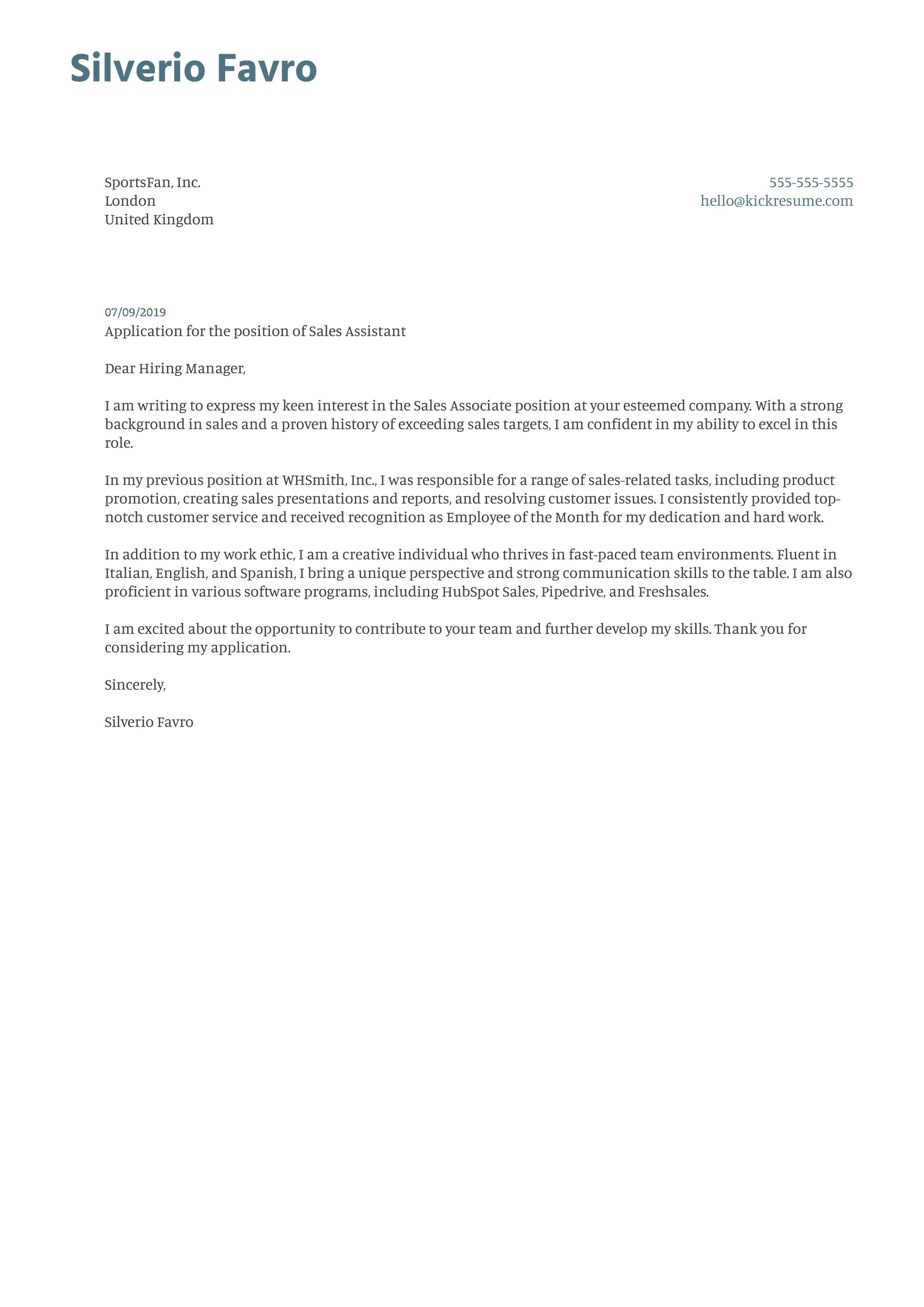
What is a Sales Cover Letter?
A sales cover letter is a vital document that accompanies your resume when applying for a sales position. It’s your opportunity to introduce yourself, highlight your key skills and achievements, and express your enthusiasm for the specific role and the company. Unlike a resume, which provides a factual overview of your experience, a cover letter allows you to tell a story, demonstrating how your unique qualifications align with the company’s needs and the demands of the sales role. It’s a chance to make a strong first impression and convince the hiring manager to read your resume in detail and, ultimately, invite you for an interview.
Why is a Sales Cover Letter Important?
In the competitive world of sales, a well-crafted cover letter can be the deciding factor in whether your application makes it to the next stage. It provides context to your resume, allowing you to elaborate on your accomplishments and explain how you’ve consistently exceeded sales targets. It demonstrates your communication skills, which are crucial in any sales role, by showcasing your ability to articulate your value proposition clearly and persuasively. Moreover, a tailored cover letter shows that you’ve taken the time to research the company and understand its specific needs, indicating genuine interest and a proactive approach, qualities highly valued in sales professionals.
Key Components of a Sales Cover Letter

Header and Contact Information
Begin your cover letter with a professional header that includes your full name, phone number, email address, and optionally, your LinkedIn profile URL. This information should be clearly displayed at the top of the page, making it easy for the hiring manager to contact you. Ensure that your email address is professional and that your voicemail greeting is also professional. Using a clean and organized header sets a positive tone and demonstrates attention to detail, a critical trait for success in sales.
Greeting
Address your cover letter to a specific person whenever possible. Research the hiring manager’s name and use it in your greeting (e.g., “Dear Mr. Smith,”). This personalized touch shows that you’ve done your homework and are genuinely interested in the opportunity. If you can’t find a specific name, use a professional salutation like “Dear Hiring Manager” or “Dear [Company Name] Recruiting Team.” Avoid generic greetings like “To Whom It May Concern,” as they can make your letter seem impersonal and less impactful.
Opening Paragraph Grab Attention

The opening paragraph is your chance to immediately capture the hiring manager’s attention. Start with a strong statement that showcases your enthusiasm for the role and the company. Briefly mention how you learned about the position and why it excites you. You can also highlight a relevant achievement or skill that aligns with the job requirements. The goal is to make the reader want to continue reading, so make your opening paragraph engaging and tailored to the specific job description. Show how you can add value from the start.
Highlighting Your Sales Skills and Achievements
The body of your cover letter should focus on highlighting your key sales skills and achievements. Provide specific examples that demonstrate your ability to generate leads, close deals, build relationships, and exceed sales targets. Use action verbs to describe your accomplishments and quantify your results whenever possible. This section should clearly articulate how your experience and skills align with the requirements of the sales position. Use the job description as your guide, and tailor your examples to the specific needs of the role.
Quantify Your Accomplishments
Numbers speak volumes in sales. Whenever possible, quantify your achievements to demonstrate the impact you’ve made in previous roles. Instead of saying “Increased sales,” say “Increased sales by 20% in one year.” Instead of “Managed a team,” say “Managed a team of 10 sales representatives, exceeding quarterly targets by an average of 15%.” Quantifying your accomplishments gives the hiring manager concrete evidence of your abilities and makes your claims more credible and persuasive. This evidence shows you have a proven track record of success.
Showcase Relevant Sales Experience

Focus on the sales experience most relevant to the target job. Highlight the types of products or services you’ve sold, the sales methodologies you’ve used, and the industries you’ve worked in. If the job description emphasizes specific skills or experience, make sure to showcase those in your cover letter. Use keywords from the job description to demonstrate that you understand the requirements. Tailor your examples to show how your past experiences make you an ideal candidate for this specific sales position, demonstrating that you have the skills necessary to be successful.
Demonstrating Your Understanding of the Company
A successful sales cover letter demonstrates that you’ve researched the company and understand its mission, values, and products or services. This shows your genuine interest in the company and your ability to align your sales approach with their overall goals. Mention specific aspects of the company that resonate with you, such as their innovative products, their commitment to customer service, or their positive company culture. This research differentiates you from other candidates who may be sending generic cover letters.
Research the Company’s Values and Goals
Before writing your cover letter, thoroughly research the company’s website, social media profiles, and any recent press releases. Identify the company’s values, goals, and target market. Consider how your sales skills and experience can contribute to their success. Mention specific company initiatives or products that you admire, and explain how you can leverage your skills to help the company achieve its objectives. This demonstrates that you’re not just looking for a job; you’re looking to contribute to the company’s growth and success.
Tailor Your Letter to the Specific Job

Each sales job is unique, so your cover letter should be tailored to the specific requirements of the role. Carefully review the job description and identify the key skills, experiences, and qualifications that the employer is seeking. Use the job description as a guide to customize your cover letter. Highlight how your skills and experience align with the specific needs of the role, and provide examples that demonstrate your ability to meet those needs. Avoid sending generic cover letters; instead, show the hiring manager that you understand the specific requirements of their open position and why you are the best fit.
Closing Your Sales Cover Letter
Call to Action and Expressing Interest
End your cover letter with a strong call to action and a clear expression of your interest in the role. Reiterate your enthusiasm for the opportunity and express your desire to discuss your qualifications further. Include a specific call to action, such as “I am eager to discuss how my sales experience can benefit your company. I am available for an interview at your earliest convenience.” Thank the hiring manager for their time and consideration. A strong closing leaves a lasting positive impression and encourages them to contact you.
Formatting and Proofreading Tips

A well-formatted and error-free cover letter demonstrates your professionalism and attention to detail. Use a clear and easy-to-read font, such as Times New Roman, Arial, or Calibri, and maintain consistent formatting throughout the document. Proofread your cover letter carefully for any grammatical errors, typos, or inconsistencies. A polished cover letter reflects well on you and increases your chances of making a positive impression on the hiring manager. Ensure you present yourself in the best possible light.
Choose a Professional Font and Format
Select a professional font and format your cover letter in a way that is easy to read. Use a standard font size (11 or 12 points) and maintain consistent spacing. Use headings and subheadings to break up the text and make it more scannable. Ensure that your contact information is clearly displayed and that the letter is well-organized. A clean and professional format makes it easier for the hiring manager to focus on your content and understand your qualifications. Ensure your formatting is consistent and visually appealing.
Proofread Carefully for Errors
Before submitting your cover letter, carefully proofread it for any errors in grammar, spelling, punctuation, or capitalization. Errors can undermine your credibility and make you appear unprofessional. Use a spell checker, but also read the letter aloud to catch any mistakes that a spell checker might miss. Ask a friend or colleague to review your cover letter as a fresh pair of eyes can often spot errors that you might miss. A perfectly proofread cover letter demonstrates your attention to detail and commitment to quality.