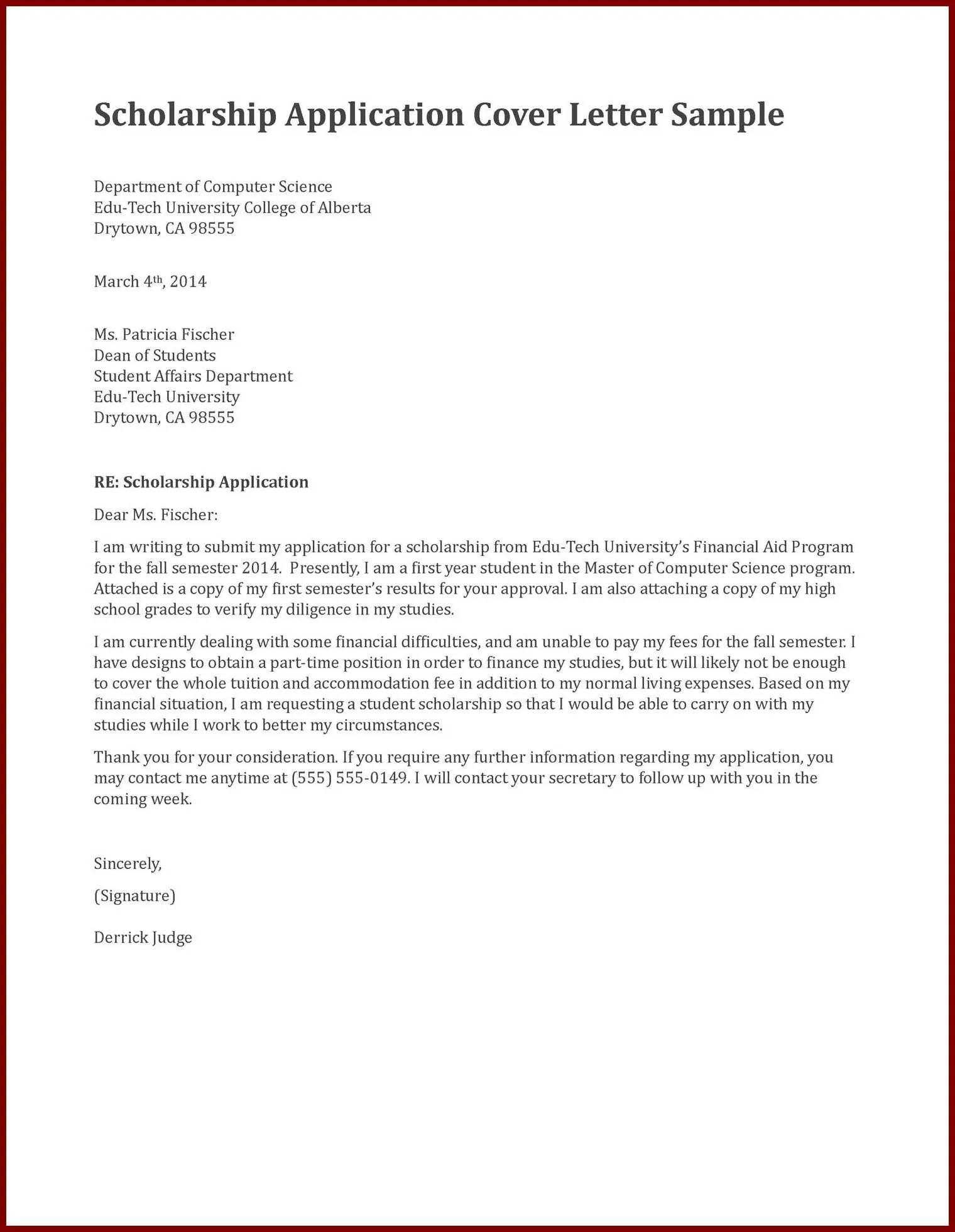
Understanding the Scholarship Cover Letter
A scholarship cover letter is more than just a formality; it’s your personal introduction and a crucial tool in securing financial aid. It provides a space to highlight your qualifications, explain your need, and demonstrate why you are a deserving candidate. It is a formal document, similar to a resume, but with a narrative focus. Your cover letter allows you to connect with the scholarship committee on a personal level, showcasing your personality, aspirations, and how the scholarship aligns with your goals. Unlike a resume, which lists facts, a cover letter provides context and demonstrates your passion and suitability for the opportunity. Crafting a well-written cover letter can significantly increase your chances of success and can serve to differentiate you from other applicants. Furthermore, a strong cover letter can make you stand out, increasing the likelihood of being selected.
The Importance of a Scholarship Cover Letter
The scholarship cover letter provides the scholarship committee with valuable context that a resume or application form cannot convey. It showcases your personality, ambitions, and how the scholarship will assist you in reaching your educational and career goals. The letter allows you to express your genuine interest in the scholarship, while also demonstrating your understanding of the scholarship’s requirements and the values it promotes. A well-written cover letter can significantly improve your chances of selection by allowing you to explain any gaps in your application, such as low grades or significant life events. Additionally, it highlights your soft skills, such as your ability to communicate effectively, which are highly valued by scholarship providers. In essence, the cover letter is your opportunity to make a memorable first impression and persuade the selection committee that you’re the perfect fit for their scholarship.
Key Elements of a Powerful Cover Letter

A powerful scholarship cover letter includes several key elements to captivate the reader and make your application stand out. The structure should be clear and concise, and the language should be professional and engaging. Begin by addressing the committee or specific person if possible. Then, immediately state the scholarship you are applying for. Throughout the letter, emphasize your most relevant qualifications, accomplishments, and experiences, providing specific examples to support your claims. Demonstrate your financial need and how the scholarship will impact your academic journey. Clearly outline your future aspirations and how the scholarship aligns with your goals. Conclude by expressing gratitude and reiterating your enthusiasm for the opportunity, emphasizing your suitability. Maintain a positive and enthusiastic tone, and ensure that your cover letter reflects your unique personality and commitment to academic excellence. Remember to proofread your letter meticulously before submission.
Your Contact Information
Providing accurate and up-to-date contact information is essential in your scholarship cover letter. This ensures that the scholarship committee can easily reach you if they require further information or wish to notify you of their decision. At the top of your letter, clearly list your full name, address, phone number, and email address. Using a professional email address is essential. This allows the committee to contact you efficiently, allowing you to follow up on your application and receive updates. Ensure your contact details are easy to read and placed prominently. Double-check your information for accuracy before submitting your application to avoid any communication delays. A minor error, such as a missing digit in your phone number, can prevent you from being contacted. Ensuring this detail is correct guarantees that you are easily accessible.
Applicant’s Contact Details
Your applicant contact details should be at the very top of your cover letter, typically left-aligned. Include your full name, street address, city, state, and zip code. Following this, include your phone number, and professional email address. A professional email address is very important; avoid using nicknames or informal language. Use a standard font size like 11 or 12 points. Ensure your contact information is concise and easy to read, enabling the scholarship committee to quickly find the necessary contact details. This clarity ensures that the committee can easily reach you if they need to follow up. Make sure all information is accurate to avoid any potential communication issues.
Scholarship Details

Begin your cover letter by clearly stating the specific scholarship you are applying for, including the name of the scholarship and, if applicable, the organization providing it. If the scholarship has a reference number, include this as well. This immediately informs the committee of the scholarship you are targeting, helping them quickly identify your application and understand your intent. It’s also a great opportunity to show that you paid close attention to the application requirements. Additionally, by explicitly stating the scholarship name, you ensure your cover letter is tailored to the specific opportunity. Be sure to mention where you found out about the scholarship, such as from a university website, a guidance counselor, or another source. This helps to show your initiative and organizational skills.
The Application Period
While not always necessary to mention the application period explicitly, including this detail can be strategic, especially if you are submitting the letter close to the deadline. This can also be useful if you have a specific reason for applying at the last moment. It is important to refer to the scholarship guidelines when providing details about application timelines. If the guidelines do not specify a particular period, it’s generally safe to omit this section. If your application is late, you should not mention the application period, or you might not be considered. Always ensure you adhere to the scholarship’s requirements regarding deadlines. Pay close attention to any instructions about how to submit your application, as late or incomplete submissions will typically not be considered. Therefore, confirming details about the submission period is essential.
The Purpose of Your Letter
The main purpose of your cover letter is to introduce yourself to the scholarship committee and persuade them why you are a worthy candidate. State your interest in the scholarship clearly and concisely. Explain why you are applying and how the scholarship aligns with your academic and career goals. Outline your relevant qualifications, achievements, and experiences, providing specific examples to support your claims. Emphasize your financial need and how the scholarship will help you achieve your academic aspirations. Demonstrate your understanding of the scholarship’s requirements and the values it promotes. By making your application stand out, you are more likely to receive a favorable response. Furthermore, demonstrating that you are a strong candidate for the scholarship can substantially help.
Writing a Compelling Opening

Your opening paragraph should immediately grab the reader’s attention. Start by stating your name and the specific scholarship you are applying for. Briefly express your interest in the scholarship and mention where you found out about it. To make it engaging, start with an anecdote or a personal statement that reflects your motivation or experiences. This sets the tone for your letter. Consider adding a strong statement of purpose and highlight your most impressive achievement. The opening is your chance to make a memorable first impression, and should establish your connection to the scholarship. By immediately conveying your enthusiasm and commitment, you set yourself apart from other applicants. This initial impact can encourage the committee to read your cover letter further.
Expressing Your Interest
Conveying your genuine interest is vital. Clearly articulate why you’re interested in this scholarship. Highlight what aspects of the scholarship appeal to you, such as its values, goals, or the opportunities it provides. If you know the organization or individuals behind the scholarship, mention what interests you about their work. Show your understanding of the scholarship’s purpose, aligning your goals with their mission. Express your enthusiasm for the chance to succeed and your commitment to the scholarship. This creates an emotional connection, making your letter more compelling. Expressing your interest can make a big difference in how the committee perceives your application. Furthermore, it shows that you have a clear understanding of the scholarship goals.
Highlighting Your Qualifications
Focus on your qualifications, emphasizing those most relevant to the scholarship criteria. Showcase your academic achievements, such as your GPA, honors, and awards. Highlight any skills or experiences that align with the scholarship’s requirements. If the scholarship focuses on leadership, mention any leadership roles. Similarly, showcase experience with community service. Use quantifiable achievements to illustrate your impact. For instance, mention the number of projects you led or the amount of funds you raised. By providing specific examples, you add weight to your claims. The committee will appreciate your ability to articulate your achievements. Highlighting your qualifications is one of the best ways to make yourself an appealing candidate. Furthermore, this is an excellent way to demonstrate that you are a good fit for the scholarship.
Showcasing Academic Achievements

Your cover letter is the perfect place to showcase your academic accomplishments. Provide details about your GPA, especially if it’s high. Mention any honors, awards, or academic recognitions you have received. Include relevant coursework or projects that demonstrate your skills and knowledge. If you have been on the Dean’s List, or won any academic competitions, be sure to include them. Provide context to your achievements. Explain what makes them noteworthy. Showcase your achievements and demonstrate your academic excellence. This provides a solid foundation for the committee’s evaluation. Academic achievements are a key indicator of your potential. Emphasizing these shows your dedication to education and scholarship eligibility.
Detailing Relevant Skills and Experience
Detailing your relevant skills and experience is essential for a strong cover letter. Highlight skills that align with the scholarship’s requirements. Mention specific skills such as leadership, communication, teamwork, problem-solving, and technical proficiency. Outline relevant experiences, such as internships, volunteer work, or extracurricular activities. Provide concrete examples of how you’ve utilized these skills. Describe the projects you have worked on and your specific contributions. If you have work experience, highlight your responsibilities and accomplishments. For example, if you are applying for a business-related scholarship, showcase your analytical and organizational skills. If the scholarship emphasizes community service, describe your involvement in related activities. Detailing your relevant skills and experience helps to highlight how you are a good fit for the scholarship and is very important.
Quantifying Accomplishments
To quantify your accomplishments, use specific numbers, data, and statistics to demonstrate your impact and achievements. Instead of saying you improved sales, state the exact percentage increase. When describing your volunteer hours, provide the total number of hours served. Use quantifiable results to substantiate your achievements. Quantifying your accomplishments adds a layer of credibility to your claims. For instance, if you led a fundraising campaign, state the amount of money raised. By providing concrete data, you make your accomplishments more impressive. This method helps the selection committee to see your achievements. Furthermore, it provides a precise idea of your accomplishments.
Demonstrating Your Financial Need

Demonstrating financial need can be a critical factor for many scholarships. Explain your financial situation in a clear, honest, and concise manner. Describe the costs associated with your education, such as tuition, fees, books, and living expenses. Explain how the scholarship will reduce your financial burden. Mention any other sources of funding you have applied for or received. The financial need should be described in a way that shows how the scholarship will help you continue your studies. If your family is unable to support you, state that. Show how the scholarship will allow you to fully focus on your studies. You should always check whether the scholarship requires any specific information about your financial situation. Demonstrating financial need can show that you are a deserving candidate and that the scholarship will have a significant impact on your educational journey.
Explaining Your Circumstances
If you have any unique circumstances that have affected your academic journey, use your cover letter to explain them. Explain any challenges or hardships you have overcome, such as personal or family issues, health problems, or financial difficulties. Explain how these circumstances have impacted your studies and what steps you have taken to overcome them. Briefly describe your achievements despite your situation, highlighting your resilience and determination. Be genuine in your explanation and focus on how you have grown from these experiences. Explaining your circumstances is essential for the selection committee. It can provide a fuller understanding of your situation. When presenting your background, always show your capacity to grow and remain strong, demonstrating the skills necessary to be a great candidate.
Presenting Your Goals and Aspirations
Your cover letter is an excellent opportunity to present your goals and aspirations. Clearly state your academic and career goals and show how the scholarship aligns with them. Describe your long-term aspirations and the steps you plan to take to achieve them. Explain how the scholarship will help you reach your goals. Connect your interests to the scholarship provider’s mission. If you are interested in medical research, explain how you intend to contribute to breakthroughs. If you intend to become a teacher, explain your passion. Sharing your goals can increase your chances of success. This will help the selection committee understand your vision. Furthermore, it shows the value of the scholarship in your life.
Expressing Your Future Plans

Detailing your future plans is critical. Describe your specific career goals and how you intend to contribute to your field. Explain what you plan to study and why that subject is important to you. Show how your education will help you to make a difference in society. Explain how the scholarship will help you achieve your ambitions. Make sure your future plans align with the scholarship provider’s values. Demonstrating your vision can leave a lasting impression. If you plan to start a business, detail your long-term vision and how this scholarship can help you achieve your dreams. Expressing your future plans shows that you have long-term goals, and it gives the committee a sense of your aspirations.
Including a Strong Closing
Concluding your cover letter effectively is essential. Reiterate your interest in the scholarship and express your gratitude to the scholarship committee. Thank them for their time and consideration. Summarize your key qualifications and the value you bring to the opportunity. Close by encouraging the committee to contact you if they need more information. Proofread your letter one last time to ensure there are no errors. Use a professional closing, such as “Sincerely” or “Respectfully.” Remember to sign the letter. A strong closing reinforces your enthusiasm and shows your professionalism. Furthermore, a good closing helps the committee remember you positively. It’s the final opportunity to leave a lasting positive impression.
Reiterating Interest
Reiterating your interest in the scholarship is crucial in your closing paragraph. Restate your enthusiasm for the opportunity and why you are a strong candidate. Reinforce the most significant reasons why you are a good fit for the scholarship. Remind the committee about your aspirations and how the scholarship aligns with them. Show that you are serious about the opportunity. This reaffirms your commitment to receiving the scholarship. Emphasizing your interest leaves a lasting positive impression. It reminds the committee of your enthusiasm. It can increase your chances of getting noticed and selected.
Offering Gratitude

Expressing gratitude is a crucial component of your closing. Thank the scholarship committee for their time and consideration. Show appreciation for the opportunity to apply and for their dedication to helping students. Express your gratitude clearly and sincerely. Offer a specific thank you to the committee for considering your application. This shows respect and appreciation for their work. Expressing gratitude can help to solidify your good impression. It shows your professionalism and appreciation. This final touch can help to secure your scholarship.
Proofreading and Editing Your Letter
Proofreading and editing are very important. Before you submit your cover letter, proofread it carefully to identify and correct any errors in grammar, spelling, punctuation, and word choice. Check for clarity, flow, and overall coherence. If possible, ask someone else to review your letter to catch any mistakes you might have missed. A second pair of eyes can be very helpful. Use a spell checker and grammar checker, but don’t rely on them completely. Pay attention to your use of language, ensuring your tone is professional and enthusiastic. Making sure your cover letter is perfect before submitting increases your chances of success. Thorough proofreading will present you as a polished and professional applicant. Furthermore, it will ensure that your application is taken seriously.
Ensuring Accuracy
Ensuring the accuracy of your cover letter is very important. Double-check all information, including your name, address, phone number, and email address. Verify that the scholarship name, organization, and any other details are correct. Confirm all dates and figures. Accuracy demonstrates attention to detail and professionalism. A small error can affect the committee’s opinion. Ensure that any quantifiable achievements or data you include are correct. Verify that the information you provide aligns with your resume and application materials. Ensure that your cover letter is free of any typos or grammatical errors. Ensuring accuracy can increase your chances of success. Furthermore, this shows that you are reliable.
Formatting Your Cover Letter
Formatting your cover letter properly is essential. Use a standard business letter format, including your contact information, the date, and the scholarship committee’s contact information. Keep your letter concise, ideally one page, with clear paragraphs and logical organization. Use a professional font, such as Times New Roman, Arial, or Calibri, with a font size between 10 and 12 points. Ensure proper spacing between paragraphs and sections. Use a simple, clean layout that is easy to read and visually appealing. Formatting can make a good first impression. It also demonstrates your attention to detail and professionalism. The correct format can make your application stand out. Furthermore, it allows the committee to quickly find the information they need.
Font and Style
Selecting a professional font and style is critical for your cover letter. Choose a standard font, such as Times New Roman, Arial, or Calibri. Use a font size between 10 and 12 points. Ensure that the font is easy to read and visually appealing. Stick to a single font throughout the entire letter for consistency. Avoid using overly fancy or decorative fonts. Use consistent spacing and alignment. A professional font and style shows attention to detail. It presents your application in a positive light. It also reflects your professionalism. The correct formatting makes a favorable first impression.
Length and Structure
The length and structure of your cover letter are very important. Aim for a one-page cover letter to keep it concise and focused. Structure your letter with a clear opening, body, and closing. Use concise paragraphs with clear headings and subheadings for easy readability. Divide your letter into logical sections, such as your contact information, introduction, qualifications, financial need, goals, and closing. Prioritize the information. The structure shows your organizational skills and professionalism. Furthermore, it helps the scholarship committee navigate the content. Proper formatting will help you succeed in the scholarship.