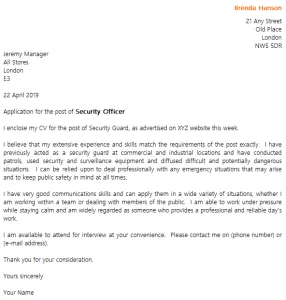
Crafting Your Security Guard Cover Letter
A well-written cover letter is your first opportunity to make a strong impression on a potential employer. For entry-level security guard positions, where experience may be limited, the cover letter becomes even more critical. It’s your chance to showcase your personality, skills, and enthusiasm for the role. This guide offers five essential tips to help you craft a compelling cover letter that captures the attention of hiring managers and increases your chances of landing an interview. Remember that your cover letter is not just a formality, it’s a marketing document that sells your abilities and suitability for the job. Focus on highlighting your strengths, tailoring your letter to each job application, and demonstrating your genuine interest in the security guard field. By following these tips, you can create a cover letter that effectively communicates your value and helps you stand out from other applicants.
Highlighting Your Skills
Even if you’re new to the security industry, you likely possess transferable skills that are valuable for the role. In your cover letter, emphasize these skills. Focus on qualities like attention to detail, the ability to follow instructions, communication skills (both written and verbal), problem-solving abilities, and a strong sense of responsibility. If you have experience in customer service, conflict resolution, or emergency response (even from volunteer work or personal situations), be sure to mention it. These experiences demonstrate your ability to handle difficult situations and interact effectively with the public. Quantify your skills whenever possible. For example, instead of saying “I am good at following instructions”, try “I have consistently followed complex instructions in previous roles, ensuring accurate completion of tasks”. Use specific examples to illustrate your abilities. This is essential for making your skills stand out.
Detailing Relevant Experience

While you might not have direct security guard experience, highlight any experience that demonstrates your suitability for the role. This could include experience in law enforcement, military service, customer service, retail, or any position where you were responsible for monitoring, observing, or protecting people or property. Describe your responsibilities in these roles and explain how they align with the requirements of a security guard. For instance, if you worked in retail, you could mention your experience in loss prevention, monitoring surveillance cameras, or dealing with difficult customers. If you have volunteered for a neighborhood watch or participated in any safety-related activities, include these as well. Remember to provide specific examples and quantify your achievements whenever possible. For example, instead of saying “I monitored the store”, try “I monitored the store’s security cameras, identifying and reporting 10 incidents of shoplifting that resulted in a decrease of 5% in lost merchandise”. This adds weight to your claim.
Showcasing Your Personality
Security guard positions require individuals who are reliable, trustworthy, and possess a strong work ethic. Your cover letter is an excellent opportunity to showcase these personality traits. Use a professional but approachable tone. Convey your enthusiasm for the role and demonstrate your commitment to maintaining a safe environment. Avoid sounding overly formal or generic. Instead, let your personality shine through. Briefly mention what attracts you to the security field and what motivates you to pursue a career in this area. This could be a genuine desire to help people, protect property, or contribute to the community’s safety. Share any relevant personal anecdotes or experiences that illustrate your strong character. For example, you could mention a time when you remained calm under pressure or took initiative to resolve a difficult situation. Show, don’t just tell. Illustrate your personality through specific examples rather than simply listing adjectives like “honest” or “reliable”. These traits are better proven through action.
Formatting and Structure
The formatting and structure of your cover letter are crucial. A well-organized and easy-to-read letter makes a positive impression. Use a standard business letter format with a clear and concise layout. Start with your contact information, followed by the date, the employer’s contact information, and a professional salutation (e.g., “Dear Mr./Ms./Mx. [Last Name]”). The body of your letter should be divided into clear paragraphs, each focusing on a specific aspect of your qualifications. Keep your paragraphs brief and to the point. Avoid using long, complex sentences that can be difficult to follow. Use a professional font like Times New Roman, Arial, or Calibri, and ensure that your font size is easy to read (typically 11 or 12 points). Proofread your letter carefully for any grammatical errors or typos. A polished and professional cover letter demonstrates attention to detail and a commitment to excellence, both of which are important qualities for a security guard.
Contact Information and Closing

Ensure that your contact information is accurate and up-to-date. Include your full name, phone number, and a professional-looking email address. Double-check that your phone number is working and that your voicemail greeting is appropriate. At the end of your cover letter, express your interest in an interview and thank the hiring manager for their time and consideration. Use a professional closing, such as “Sincerely” or “Best regards”. Reiterate your contact information one last time, just below the closing. This makes it easy for the employer to reach you. Remember to tailor the closing to the specific job and the company you are applying to. Personalize your closing by mentioning something specific about the company or the position if possible. Consider adding a sentence expressing your availability for an interview. Your aim is to make it as simple as possible for the employer to contact you. A well-crafted closing leaves a positive final impression.
Why This Matters
In the competitive job market for entry-level security guard positions, a standout cover letter can significantly increase your chances of getting an interview. It’s not just about listing your qualifications; it’s about presenting yourself in a compelling way. The cover letter provides a personalized introduction, unlike the objective nature of a resume. By highlighting your skills, experiences, and personality, you can demonstrate your value and suitability for the role. It allows you to address the specific requirements of the job and explain how your background aligns with those needs. A well-written cover letter also showcases your communication skills, attention to detail, and professionalism, all of which are crucial for a security guard. For entry-level applicants, a strong cover letter can bridge the gap of limited experience and allow you to stand out from other candidates. By investing time and effort into crafting a compelling cover letter, you make a statement that you are serious about the job and willing to go the extra mile. The extra mile could be the difference between success and failure.
First Impressions
Your cover letter is often the first impression a potential employer has of you. Make it count. This initial impression shapes their perception of your qualifications, skills, and suitability for the position. A well-written, professional cover letter immediately conveys your attention to detail, communication skills, and commitment to the role. It’s an opportunity to showcase your personality and enthusiasm. In contrast, a poorly written cover letter with grammatical errors or typos can create a negative impression, suggesting a lack of professionalism and attention to detail. First impressions are tough to reverse. Ensure that your cover letter is polished and error-free. Start strong with a compelling opening paragraph that grabs the reader’s attention. Clearly state the position you’re applying for and how you learned about the opportunity. Show that you understand the company and the role by mentioning specific requirements or responsibilities mentioned in the job description. Leave the reader with a positive and memorable first impression.
Standing Out

In a competitive job market, it’s essential to differentiate yourself from other applicants. Your cover letter is a prime opportunity to stand out. Tailor your letter to each specific job application. Research the company and the role, and address the specific requirements mentioned in the job description. Go beyond simply listing your skills and experience. Use specific examples and anecdotes to illustrate your abilities and highlight your achievements. Quantify your accomplishments whenever possible. For example, instead of saying “I improved customer service”, try “I improved customer service scores by 15% through implementing new training protocols”. Use action verbs to describe your skills and experience. This makes your letter more dynamic and engaging. Showcase your personality and enthusiasm for the role. Let your passion for the security field shine through. By demonstrating your unique qualities, tailoring your letter, and using specific examples, you can create a cover letter that helps you stand out from the crowd and increases your chances of getting an interview.
Avoid Common Mistakes
Several common mistakes can undermine your cover letter and hurt your chances of getting an interview. Avoid generic cover letters that are not tailored to the specific job or company. Avoid grammatical errors, typos, and spelling mistakes. Proofread your letter carefully before submitting it. Don’t simply restate your resume; use the cover letter to provide more context and expand on your qualifications. Avoid using jargon or overly complex language. Keep your writing clear, concise, and easy to understand. Don’t exceed the recommended length of one page. Respect the reader’s time. Avoid exaggerating your skills or experience. Be honest and accurate in your portrayal of your qualifications. Refrain from including irrelevant information that doesn’t pertain to the security guard position. Don’t be negative or critical of previous employers. Stay positive and focus on your strengths and potential. By avoiding these common mistakes, you can create a cover letter that presents you in the best possible light and increases your chances of success.
Tailoring Your Cover Letter
Tailoring your cover letter to each job application is crucial for success. Generic cover letters often fail to capture the attention of hiring managers. The more specific you are, the better. Start by carefully reviewing the job description. Identify the key requirements, skills, and qualifications that the employer is seeking. Research the company and learn about its mission, values, and culture. Address the specific requirements of the job in your cover letter. Explain how your skills and experience align with those requirements. Use keywords and phrases from the job description to show that you understand the role and are a good fit. Demonstrate your knowledge of the company by mentioning specific projects, initiatives, or values that resonate with you. Customize your letter to reflect the company’s culture. This might involve adjusting your tone, style, or language. Personalize your letter by addressing the hiring manager by name if possible. By tailoring your cover letter to each job application, you demonstrate your genuine interest in the role and increase your chances of getting an interview. It shows a proactive approach to the job search.
Research the Company

Before you start writing your cover letter, take the time to research the company. Understanding the company’s mission, values, and culture will help you tailor your letter and demonstrate your genuine interest in the role. Visit the company’s website to learn about its products, services, and history. Read news articles, press releases, and social media posts to gain insights into the company’s recent activities and achievements. Identify the company’s values and core principles. Use this information to align your cover letter with the company’s culture. Highlight the company’s specific projects or initiatives that resonate with you. This shows that you have done your homework and are genuinely interested in the company. Personalize your cover letter by mentioning something specific about the company that you admire or find appealing. Addressing the hiring manager by name is a great way to demonstrate that you have researched the company, and this is often found on the company’s website. A well-researched cover letter makes a strong impression and increases your chances of getting an interview.
Address the Specific Requirements
The job description is your guide to writing a successful cover letter. Carefully review the job description and identify the key requirements, skills, and qualifications the employer is seeking. Use the job description as a roadmap, ensuring that your cover letter addresses each of these requirements. Highlight the specific skills and experiences that align with the job description. Explain how your background makes you a good fit for the role. Use keywords and phrases from the job description in your cover letter. This helps your application get past applicant tracking systems (ATS) and demonstrates to the hiring manager that you understand the role and are a good fit. Provide specific examples of how you have demonstrated the required skills in previous roles. Quantify your achievements whenever possible. For example, instead of saying “I have good communication skills”, try “I successfully resolved customer issues, resulting in a 90% customer satisfaction rate”. By directly addressing the specific requirements of the job, you demonstrate that you are a qualified candidate and increase your chances of getting an interview.
Use Action Verbs
Action verbs are powerful tools for making your cover letter more dynamic and engaging. They help to bring your skills and experiences to life, showing employers what you have accomplished rather than just telling them. Start your sentences with strong action verbs to describe your responsibilities and achievements. Instead of using passive phrases, use action verbs that demonstrate your skills and abilities. Examples include managed, supervised, monitored, observed, patrolled, secured, enforced, and responded. Be specific and choose action verbs that accurately reflect your accomplishments. Avoid using generic verbs that don’t convey a clear picture of what you did. Instead of saying “Responsible for security”, use more specific verbs like “Patrolled premises to ensure security” or “Monitored surveillance equipment”. Use action verbs to describe your achievements and quantify your results whenever possible. For instance, instead of saying “Improved customer service”, try “Improved customer service scores by 15% through implementing new training protocols”. Action verbs make your cover letter more impactful and help you stand out from other applicants.
Proofreading and Editing

Proofreading and editing are essential steps in crafting a professional cover letter. A polished and error-free letter demonstrates your attention to detail, communication skills, and commitment to excellence. Before submitting your cover letter, take the time to carefully proofread it for any grammatical errors, typos, and spelling mistakes. Read your letter aloud to catch any awkward phrasing or sentence structure. Ask a friend, family member, or career counselor to review your cover letter for feedback. Fresh eyes can often spot errors that you might have missed. Ensure that your cover letter is formatted correctly and follows a standard business letter format. Use a professional font, consistent margins, and clear spacing. Pay attention to the details. Check your contact information to make sure it’s accurate and up-to-date. Double-check the employer’s contact information to ensure that you have the correct name, title, and address. Use spell-check and grammar-check tools. However, don’t rely solely on these tools. They may not catch all errors. A well-proofread and edited cover letter makes a positive impression and increases your chances of getting an interview.