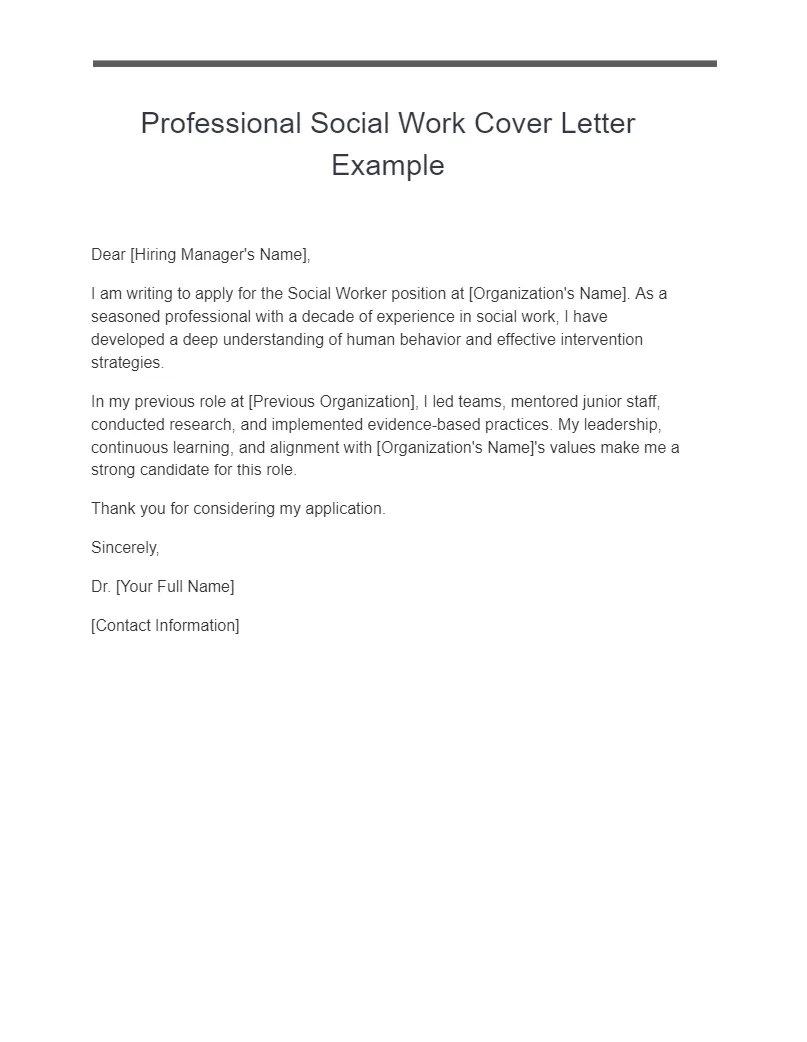
Crafting a Stellar Social Worker Cover Letter
A well-crafted cover letter is your first opportunity to make a strong impression on potential employers in the competitive field of social work. This guide provides comprehensive instructions, examples, and tips to help you create a compelling cover letter that highlights your skills, experience, and passion for helping others. A cover letter is more than just a formality; it is a critical tool that can significantly increase your chances of landing an interview.
Understanding the Purpose of a Cover Letter
The primary purpose of a cover letter is to introduce yourself to the hiring manager, express your interest in the specific position, and showcase how your qualifications align with the job requirements. Think of it as your personal sales pitch. It’s your chance to go beyond your resume and tell a story, demonstrating your personality and enthusiasm for the role. It allows you to explain any gaps in your resume, highlight relevant experiences, and articulate your career goals.
Highlighting Your Skills and Experience

Your cover letter should spotlight your key skills and experiences that make you a strong candidate. Focus on skills that are relevant to the job description, such as empathy, communication, crisis intervention, case management, and advocacy. Provide concrete examples of how you have successfully utilized these skills in previous roles or volunteer experiences. Quantify your achievements whenever possible. For instance, mention the number of clients you’ve assisted, programs you’ve implemented, or improvements you’ve made.
Why Cover Letters Matter in Social Work
In the social work field, where compassion and strong interpersonal skills are crucial, a cover letter can provide invaluable insights into your personality, values, and communication style. Employers in social work seek candidates who are not only qualified but also possess the right temperament and dedication to the profession. Your cover letter provides the space to showcase your passion for social justice, your commitment to ethical practice, and your understanding of the challenges faced by the population you aim to serve.
Essential Elements of a Social Worker Cover Letter
Contact Information and Date

At the top of your cover letter, include your full name, address, phone number, and professional email address. Directly below this, add the date. Ensure your contact information is current and professional. This enables employers to reach you promptly and easily. Consider using a simple, professional font for your contact details.
Professional Salutation
Address your cover letter to a specific person whenever possible. Research the hiring manager’s name and use ‘Dear Mr./Ms./Mx. [Last Name]’. If you cannot find a specific name, use a general greeting like ‘Dear Hiring Manager’. Avoid generic greetings such as ‘To Whom It May Concern’, as they can make your letter appear less personalized and less likely to capture the reader’s attention.
Opening Paragraph
Your opening paragraph should immediately capture the reader’s interest. State the specific position you are applying for and where you saw the job posting. Briefly express your enthusiasm for the opportunity and highlight your key qualifications that align with the job requirements. Make it clear why you are the ideal candidate and what you bring to the table.
Body Paragraphs

The body paragraphs are where you expand on your qualifications, experience, and skills. Use these paragraphs to demonstrate your understanding of the organization’s mission and how your values align with theirs. Provide specific examples that illustrate your abilities and achievements. Explain how you have successfully addressed challenges, collaborated with teams, and achieved positive outcomes in previous roles.
Demonstrating Relevant Skills
Showcase skills directly related to the job description. If the job requires crisis intervention skills, provide an example of how you handled a crisis situation. If it involves case management, explain how you managed a caseload and the positive results you achieved. Use action verbs like ‘managed’, ‘coordinated’, ‘counseled’, ‘advocated’, and ‘facilitated’ to describe your actions and accomplishments. Tailor your skills to the specific requirements of the role.
Quantifying Your Achievements
Whenever possible, quantify your achievements to make a strong impression. Instead of saying, ‘I improved client outcomes,’ say, ‘I improved client outcomes by 15% through the implementation of a new intervention strategy.’ Numbers add credibility to your claims and demonstrate your ability to achieve results. They show you’re not just describing your experience, but also highlighting the positive impacts you’ve made.
Addressing the Employer’s Needs

Show the employer that you understand their needs and challenges. Research the organization and identify their key priorities. Explain how your skills and experience can contribute to their success. For example, if the organization emphasizes community outreach, highlight your experience in community engagement and your ability to build relationships with diverse populations.
Closing Paragraph
In your closing paragraph, reiterate your interest in the position and summarize your key qualifications. Express your confidence in your ability to contribute to the organization’s mission. Thank the hiring manager for their time and consideration. Be sure to include a call to action, such as ‘I am eager to discuss my qualifications further in an interview’ or ‘I look forward to hearing from you soon.’
Formal Closing and Signature
Use a professional closing such as ‘Sincerely’, ‘Best regards’, or ‘Respectfully’. Leave space for your signature, and type your full name below the closing. If you’re submitting an electronic application, you can insert a scanned image of your signature or simply type your name. Ensure your closing is professional and appropriate for the context.
Formatting Your Cover Letter for Readability

Formatting can significantly impact the readability and visual appeal of your cover letter. Ensure your document is easy to read and visually appealing to the hiring manager. A well-formatted cover letter demonstrates your attention to detail and professionalism.
Font and Font Size
Use a professional and easy-to-read font such as Times New Roman, Arial, or Calibri. Choose a font size between 11 and 12 points for the body text. This size is generally easy to read on screen and in print. Ensure your font is consistent throughout the document.
Margins and Spacing
Set margins to one inch on all sides. Use single spacing within paragraphs and double spacing between paragraphs. This creates enough white space to make the text less cluttered and easier on the eyes. Properly formatted margins and spacing help the reader to focus on your content without getting distracted by the layout.
Proofreading and Editing

Thoroughly proofread and edit your cover letter before submitting it. Check for any typos, grammatical errors, and punctuation mistakes. These errors can undermine your credibility and make you appear unprofessional. It can be helpful to have a friend or family member review your cover letter to catch any errors you may have missed.
Tailoring Your Cover Letter to the Job
Customizing your cover letter for each job application is essential. This shows that you have taken the time to understand the specific requirements of the role and the needs of the organization. A generic cover letter is unlikely to impress hiring managers. Demonstrate that you understand the job and the organization’s mission.
Researching the Organization
Before writing your cover letter, research the organization. Visit their website, review their mission statement, and learn about their programs and services. This will help you tailor your letter to the specific needs and values of the organization. Showing that you understand their mission will demonstrate your genuine interest.
Matching Skills to Job Requirements
Carefully review the job description and identify the key skills and qualifications that the employer is seeking. Highlight your relevant skills and experiences that match these requirements. Provide specific examples to illustrate how you have successfully utilized these skills in the past. Tailoring your letter to align with the job description increases your chances of being selected for an interview.
Using Keywords from the Job Description
Incorporate keywords from the job description into your cover letter. This can help your application get noticed by applicant tracking systems (ATS) used by many organizations. However, avoid keyword stuffing, which can make your letter sound unnatural. Use the keywords naturally and strategically to showcase your qualifications and demonstrate your understanding of the job requirements.
Social Worker Cover Letter Examples
Reviewing examples of successful social worker cover letters can provide valuable guidance and inspiration. These examples demonstrate how to effectively present your skills, experience, and qualifications. Each example is tailored to specific roles, ensuring you can find a template that resonates with your background and the roles you are applying for. Adapt the examples to match your specific situation and the job requirements.
Example 1 Recent Graduate
A recent graduate should highlight their academic achievements, internships, and volunteer experiences. They should emphasize any coursework or projects that are relevant to the job description. They might mention their knowledge of social work theories, ethical principles, and practice methods. The tone of the letter should show enthusiasm and a desire to learn and grow in the profession.
Example 2 Experienced Social Worker
An experienced social worker should focus on their years of practice and significant achievements. They should emphasize the skills and experience they have gained over time, such as case management, crisis intervention, and program development. They should quantify their achievements whenever possible, such as the number of clients served or the success of a particular program. The tone of the letter should convey professionalism and expertise.
Example 3 Social Worker in a Specific Setting
A social worker applying for a position in a specific setting, such as a hospital, school, or mental health clinic, should tailor their letter to the unique requirements of that setting. They should highlight any experience or training they have in that particular field. For instance, a social worker applying for a school position might emphasize their experience working with children and families. The tone of the letter should be focused and relevant to the setting.
Common Mistakes to Avoid
Avoiding common mistakes is crucial for creating a cover letter that stands out. These mistakes can significantly reduce your chances of getting an interview. Review these mistakes and ensure that your cover letter is free of them.
Generic Cover Letters
Using a generic cover letter that is not tailored to the specific job or organization is a common mistake. Generic letters often fail to capture the hiring manager’s attention. Tailor each cover letter to the specific job and the organization’s mission, values, and requirements. Show the employer that you understand their needs.
Typos and Grammatical Errors
Typos and grammatical errors can undermine your professionalism and credibility. Always proofread your cover letter carefully before submitting it. Have a friend or family member review it to catch any errors you may have missed. Proofreading is a vital step in the process of creating a polished cover letter.
Lack of Enthusiasm
A cover letter that lacks enthusiasm and passion can fail to impress the hiring manager. Express your genuine interest in the position and the organization. Highlight your enthusiasm for social work and your commitment to helping others. Show that you are excited about the opportunity to contribute to their mission.
Final Tips for a Successful Application
Beyond the content and formatting, here are a few additional tips for a successful application. These tips can further improve your chances of being selected for an interview and securing your desired social work role.
Customize each cover letter for the specific job and organization. Proofread carefully for any errors. Demonstrate your enthusiasm for the role and organization. Include a call to action. By following these guidelines, you can create a compelling cover letter that highlights your qualifications, demonstrates your passion, and helps you land your dream job in social work.