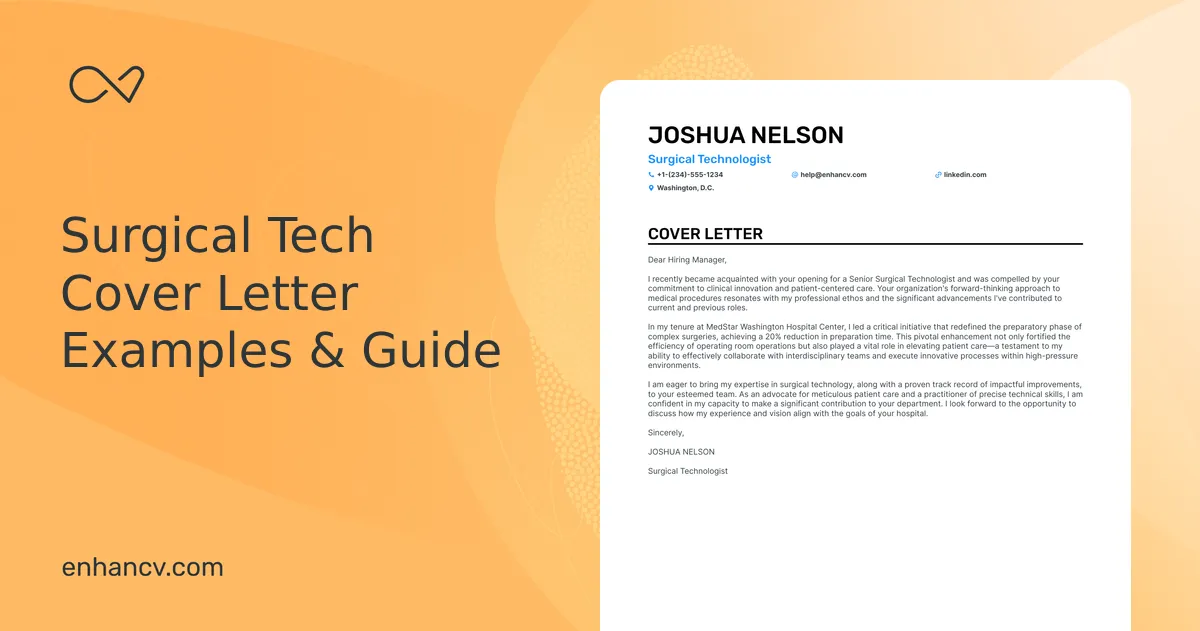
Landing your first surgical tech position without prior experience can feel daunting. However, a well-crafted cover letter is your secret weapon. This guide provides comprehensive advice on how to write a compelling surgical tech cover letter that highlights your potential, even without direct work experience. We will explore strategies for showcasing transferable skills, emphasizing your enthusiasm, and structuring your letter effectively to maximize your chances of getting hired. By following these steps, you can confidently present yourself as a strong candidate and take the first step towards a rewarding career in the operating room. Remember, the goal is to demonstrate your eagerness to learn, your understanding of the profession, and your ability to contribute to a surgical team.
Crafting Your Surgical Tech Cover Letter
The cover letter is your first impression. It’s your chance to introduce yourself and make a strong case for why you’re the right fit for the role. Even without experience, you can demonstrate your value by focusing on your strengths and tailoring your letter to the specific requirements of the job and the facility. A well-written cover letter acts as a bridge, connecting your aspirations with the employer’s needs. It should be concise, engaging, and reflective of your personality and professional goals.
Highlighting Transferable Skills
Transferable skills are the skills you’ve gained in previous experiences that can be applied to a surgical tech role. Think about experiences outside of healthcare, such as customer service, volunteer work, or academic projects, where you’ve demonstrated skills relevant to the position. These could include communication, teamwork, problem-solving, attention to detail, and the ability to follow instructions precisely. Highlighting these skills is crucial when you lack direct surgical tech experience.
Identifying Relevant Skills

Identify specific skills that align with the job description. Does the job require someone who can manage stress? Are they looking for someone with strong organizational skills? Make a list of skills mentioned in the job posting and then assess where you’ve demonstrated those skills in past roles or activities. Focus on skills like critical thinking, time management, adaptability, and the ability to remain calm under pressure, which are all critical in an operating room environment.
Emphasizing Soft Skills
Soft skills such as communication, empathy, and teamwork are very important in surgical settings. In your cover letter, provide specific examples of how you’ve used these skills in past situations. This makes your claims more credible and memorable. For instance, if you have experience as a team member in a project or activity, describe how you communicated with your team, resolved conflicts, and contributed to the project’s success. This shows the hiring manager that you possess the interpersonal skills necessary for the role.
Showcasing Your Enthusiasm
Your enthusiasm is a powerful asset, especially when you lack experience. Show your passion for surgical technology and express your excitement about the opportunity. This can involve describing what drew you to the field, why you are interested in this particular facility, and how you see yourself contributing to the team. Enthusiasm signals your willingness to learn, adapt, and grow, which are valuable traits for any entry-level position.
Researching the Facility

Research the facility where you’re applying. Understand their mission, values, and any recent achievements. Mentioning these details in your cover letter shows that you’re genuinely interested in the organization and have taken the time to learn about them. This will set you apart from other candidates and demonstrate your proactive approach to your job search. Tailor your cover letter to reflect the facility’s values and culture.
Tailoring Your Letter
Always tailor your cover letter to each specific job application. Generic letters don’t make a strong impression. Read the job description carefully and customize your letter to address the employer’s needs and expectations. This involves using keywords from the job posting, highlighting relevant skills, and demonstrating how your qualifications align with the position’s requirements. Make sure the content of your letter directly addresses the specific needs and preferences of the potential employer.
Addressing the Lack of Experience
It’s important to acknowledge your lack of experience but do so in a positive and proactive manner. Instead of dwelling on what you haven’t done, focus on what you can bring to the table and what you’re eager to learn. Frame your lack of experience as an opportunity for growth and a fresh perspective, highlighting your enthusiasm and willingness to learn new skills. By focusing on your potential, you can impress hiring managers and present yourself as a valuable candidate.
Focusing on Education and Certifications

Your education and any certifications you have are crucial when you lack direct experience. Highlight your educational background, including the name of your program, any specializations, and the skills you acquired. Mention any relevant coursework, such as anatomy, physiology, or medical terminology, which demonstrates your foundational knowledge. Certifications, such as a Certified Surgical Technician (CST) credential, are also essential and should be prominently displayed in your cover letter.
Mentioning Relevant Coursework
Specifically mention coursework that relates to surgical technology. This could include courses on sterile processing, surgical instrumentation, or pharmacology. Describe the key concepts you learned and any projects or assignments that showcase your understanding of surgical procedures. This detailed information demonstrates a level of preparedness and understanding that can compensate for the lack of experience.
Listing Certifications and Licenses
Make sure to include all certifications and licenses you possess, such as a CST. List these prominently and clearly, including the issuing organization and the date of certification or licensure. If you are pursuing any certifications, mention this as well, indicating the expected completion date. This highlights your commitment to the field and your dedication to meeting professional standards.
Leveraging Volunteer or Shadowing Experience

Even without direct surgical tech experience, volunteer or shadowing experience can significantly strengthen your cover letter. These experiences show that you are serious about pursuing a career in surgical technology and that you have taken the initiative to learn more about the profession. Detail any experiences in the operating room or related settings.
Describing Shadowing Responsibilities
If you’ve shadowed a surgical tech, detail your responsibilities and the tasks you observed or assisted with. Even if it was only observation, mention specific surgical procedures you were able to witness, any interaction you had with the surgical team, and any tasks you were permitted to perform. Highlight what you learned about sterile techniques, surgical instruments, and the overall workflow of the operating room. These details will prove your commitment to the field.
Highlighting Volunteer Roles
If you’ve volunteered in a hospital or healthcare setting, describe your role and responsibilities. Even if the role was not directly related to surgical technology, it still demonstrates your commitment to the healthcare field. Emphasize any experiences that involved patient interaction, teamwork, or following protocols, as these skills are transferable to the operating room. Include any specific tasks or duties you performed and how they relate to the surgical tech field.
Structuring Your Cover Letter Effectively

A well-structured cover letter is easy to read and highlights the key information the hiring manager needs to see. It should follow a standard format and be concise and organized. The structure ensures that you present a professional image, and your most important qualifications are easy to find. A clear and logical structure helps demonstrate your communication skills and attention to detail.
Formatting Your Letter
Use a professional format, such as a standard business letter format. Include your contact information, the date, and the recipient’s information. Use a clear, easy-to-read font, such as Times New Roman or Arial, and use a font size between 10 and 12 points. Ensure consistent formatting throughout the document. Use headings, bullet points, and short paragraphs to make your letter easy to scan and read.
Writing a Strong Opening
Start with a strong opening that grabs the reader’s attention. State the position you are applying for and where you saw the job posting. Briefly mention why you are interested in the role and the facility. Consider including a brief statement that highlights your enthusiasm for surgical technology. Your introduction is your opportunity to make a good first impression and entice the reader to continue. Always personalize the introduction.
Creating a Compelling Body

The body of your cover letter should highlight your skills, experience, and qualifications. Use the job description as a guide and address the employer’s needs. Provide specific examples to support your claims. Use the STAR method (Situation, Task, Action, Result) to describe your experiences and accomplishments. Focus on how you can contribute to the team and demonstrate your eagerness to learn and adapt. Show how you can add value to the team.
Concluding with Confidence
End with a confident closing that reiterates your interest in the position and facility. Thank the hiring manager for their time and consideration. State your availability for an interview and provide your contact information. Review your letter to ensure it is free of errors and that all information is current and accurate. Your closing should be positive, and it should encourage the hiring manager to contact you.
Proofreading and Editing
Proofreading and editing are essential steps in ensuring your cover letter is professional and polished. Errors in your cover letter can reflect badly on you. Therefore, it’s essential to dedicate time to this process. This is your chance to make sure you’re presenting yourself in the best possible way. Always ask someone else to review your cover letter.
Checking for Grammatical Errors

Carefully check your cover letter for grammatical errors, spelling mistakes, and punctuation errors. These errors can undermine your credibility and make a negative impression. Use spell-check and grammar-check tools, but don’t rely on them completely. Read your letter aloud to catch any awkward phrasing or unclear sentences. Ask a friend, family member, or career counselor to review your letter for any errors you might have missed.
Ensuring Clarity and Conciseness
Ensure that your cover letter is clear, concise, and easy to understand. Avoid using overly complex language or jargon. Use short, clear sentences and paragraphs. Each sentence must communicate your point effectively. Review your letter to ensure that your message is clear and that you are effectively conveying your skills and qualifications. Make sure your letter is well-organized.
In conclusion, while having no experience can pose challenges, it is not an insurmountable barrier to securing a surgical tech position. By focusing on your transferable skills, education, and enthusiasm, you can craft a compelling cover letter that showcases your potential and makes you a competitive candidate. Remember to tailor your letter to each job, highlight your strengths, and proofread carefully. Follow these steps, and you will be well on your way to a successful career in the exciting field of surgical technology. Good luck!