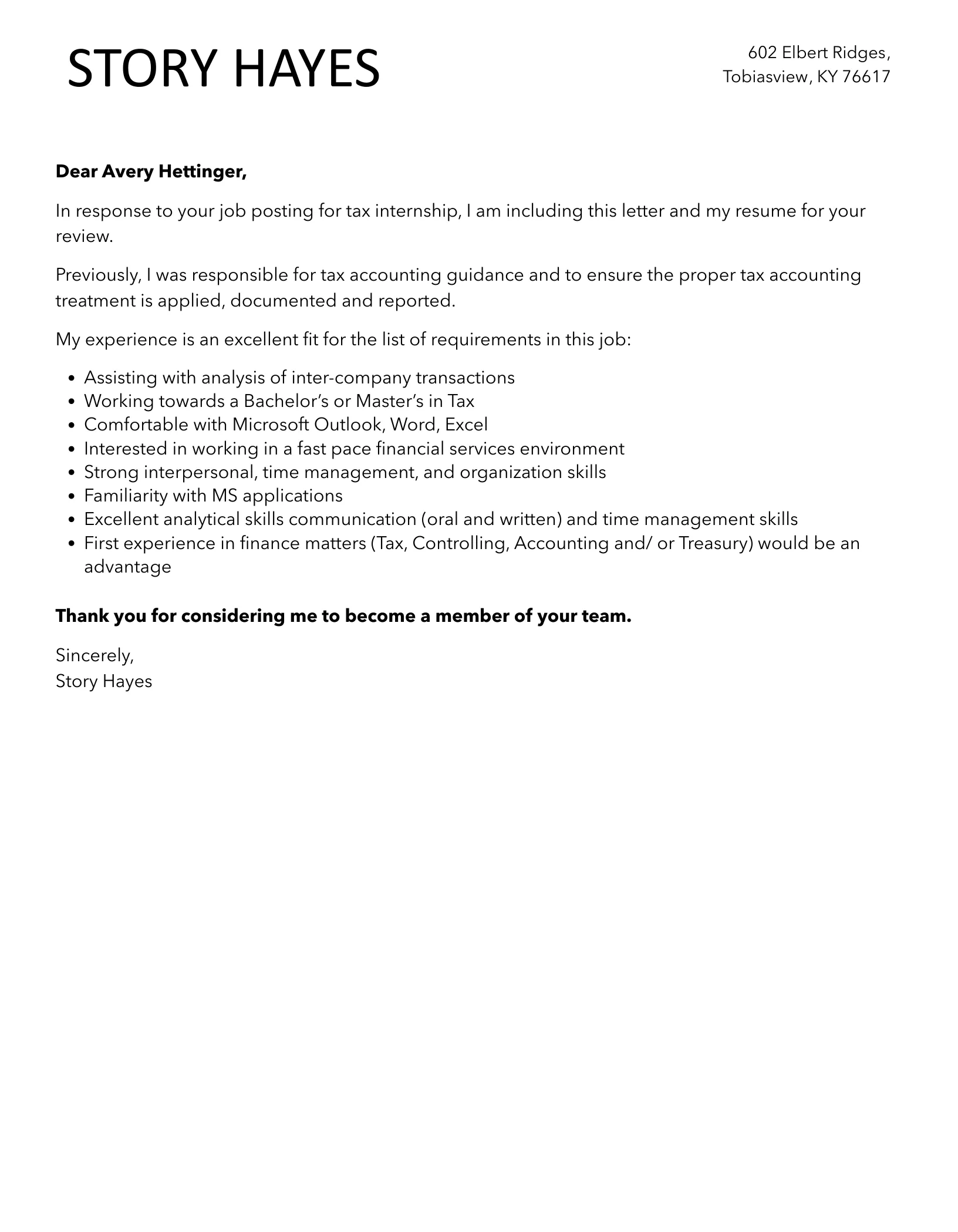
Understanding the Tax Internship Cover Letter
A well-crafted cover letter is your first introduction to a potential employer, setting the stage for a successful tax internship application. It’s more than just a formality; it’s your opportunity to showcase your personality, highlight your relevant skills, and express your genuine interest in the position and the company. Unlike your resume, which provides a factual overview of your qualifications, the cover letter allows you to tell your story and explain why you’re the ideal candidate. It’s where you connect your experiences with the specific requirements of the internship and demonstrate how your skills align with the company’s needs. Understanding the purpose of a cover letter is the first step in crafting a compelling one that captures the attention of recruiters.
Why a Cover Letter Matters for Tax Internships
In a competitive job market, a cover letter provides a crucial edge. It allows you to differentiate yourself from other applicants by providing context to your resume. It’s your chance to explain why you’re passionate about tax and how your specific experiences align with the internship. A strong cover letter demonstrates your communication skills, attention to detail, and genuine interest in the company and the role. It also enables you to address any potential gaps in your experience or qualifications, offering explanations and highlighting alternative strengths. Essentially, it transforms a list of qualifications into a compelling narrative that showcases your potential and suitability for the tax internship.
Highlighting Relevant Skills and Experiences

The core of your cover letter should focus on your relevant skills and experiences. This section is where you connect the dots between your qualifications and the requirements of the tax internship. Instead of simply listing your skills, provide concrete examples of how you’ve applied them in the past. Use the STAR method (Situation, Task, Action, Result) to illustrate your accomplishments. For instance, describe a time you used your analytical skills to solve a tax-related problem, emphasizing the positive outcome. Tailor this section to the specific requirements mentioned in the job description, ensuring your skills and experiences align with the company’s expectations. Make it easy for the reader to understand why you’re a good fit for the role.
Key Skills to Showcase
Identify the key skills most relevant to tax internships. These typically include strong analytical and problem-solving abilities, attention to detail, proficiency in relevant software (e.g., Excel, tax preparation software), and excellent communication and organizational skills. Highlight your ability to work independently and as part of a team. Mention any experience with tax regulations, accounting principles, or financial analysis. Quantify your achievements whenever possible, such as by stating the number of returns you assisted with or the percentage of accuracy you maintained. Tailor your skill set to the specific requirements of the internship, making sure to address any specific software or knowledge requested by the employer.
Relevant Experiences and Projects
Detail any relevant experiences, such as internships, part-time jobs, volunteer work, or academic projects. Emphasize the tasks you performed, the skills you utilized, and the results you achieved. For example, if you volunteered with a tax preparation program, describe your responsibilities, the number of returns you prepared, and any positive feedback you received. If you completed a relevant academic project, explain the project’s objectives, your role, and the key findings. Showcase any experiences that demonstrate your understanding of tax principles, your ability to work with data, or your communication skills. By connecting your experiences with the internship requirements, you demonstrate your suitability for the role.
Structuring Your Tax Internship Cover Letter

The structure of your cover letter is crucial for readability and impact. A well-organized letter ensures your key qualifications are easily accessible and makes a positive impression on the recruiter. Start with a professional header, followed by a formal salutation. Then, craft a compelling opening paragraph, followed by body paragraphs that highlight your skills and experiences. Conclude with a strong closing paragraph and a professional sign-off. A logical structure makes your letter easy to read and allows the reader to quickly grasp your key qualifications.
Header and Contact Information
Begin your cover letter with a professional header that includes your name, address, phone number, and email address. Ensure your email address is professional and appropriate. Include the date and the recipient’s name, title, and company address. Proper formatting and attention to detail in the header demonstrate your professionalism and attention to detail, which are crucial for tax roles. Make sure all information is accurate and up-to-date, so the recruiter can easily contact you.
The Salutation
Address the recipient by name whenever possible. Research the company to find the name of the hiring manager or the person responsible for reviewing applications. If you are unable to find a specific name, use a professional salutation, such as ‘Dear Hiring Manager’ or ‘Dear [Company Name] Recruiting Team.’ Avoid generic salutations such as ‘To Whom It May Concern.’ Personalizing the salutation shows that you have taken the time to research the company and the role, adding a personal touch to your application.
Crafting the Opening Paragraph
Your opening paragraph should immediately grab the reader’s attention. State the specific position you’re applying for and where you found the job posting. Briefly mention your key qualifications or a compelling reason for your interest in the internship or the company. Make a strong first impression by expressing your enthusiasm for the opportunity. Consider including a brief statement about your understanding of the company’s mission or your admiration for their work. Keep the opening concise and impactful, making the reader want to learn more about you.
Body Paragraphs Showcasing Your Value
Use the body paragraphs to highlight your relevant skills, experiences, and accomplishments. Focus on what you can offer the employer and how your qualifications align with the internship requirements. Provide specific examples of your skills in action, using the STAR method. Tailor the content to the job description, emphasizing the skills and experiences the employer values most. Break up the text into well-structured paragraphs, making it easy for the reader to follow your narrative. Each paragraph should serve a specific purpose, highlighting a particular skill, experience, or accomplishment. Maintain a professional and enthusiastic tone throughout.
Closing the Letter
Your closing paragraph should reiterate your interest in the internship and express your enthusiasm for the opportunity. Summarize your key qualifications and reiterate your suitability for the role. Thank the reader for their time and consideration. Include a call to action, such as expressing your availability for an interview or stating your willingness to discuss your application further. End with a professional closing, such as ‘Sincerely’ or ‘Best regards,’ followed by your full name. Ensure your closing paragraph leaves a lasting positive impression.
Essential Elements to Include

Several key elements are essential to a successful tax internship cover letter. Express your enthusiasm for the position and the company, demonstrate your knowledge of the company, and highlight your career goals. By addressing these elements, you demonstrate your genuine interest and increase your chances of securing an interview.
Expressing Your Enthusiasm
Showcase your enthusiasm for the tax internship throughout your cover letter. Let your passion for tax and accounting shine through your writing. Mention what excites you about the specific role and the company. Convey your eagerness to learn, grow, and contribute to the team. Use enthusiastic language, but maintain a professional tone. Demonstrating genuine enthusiasm makes you a more appealing candidate and shows that you are motivated and dedicated. Your enthusiasm can set you apart from candidates who may be less passionate.
Demonstrating Your Knowledge of the Company
Research the company thoroughly before writing your cover letter. Demonstrate your understanding of their values, mission, and the services they provide. Mention specific projects, clients, or initiatives that resonate with you. Explain why you are drawn to this particular company and why you want to be a part of their team. Mention any positive reviews, awards, or recognition the company has received. Tailor your letter to the company’s specific needs, highlighting your awareness of their work and your genuine interest in being a part of their organization. Showcasing your knowledge demonstrates that you have taken the time to learn about the company, indicating a strong interest in the position.
Highlighting Your Career Goals

Briefly mention your career goals and how the tax internship aligns with them. Explain what you hope to achieve through this experience and how it will help you advance your career aspirations. Demonstrate your desire to learn and grow in the field of tax. Highlight your long-term goals and your commitment to the profession. Showing your career goals helps the employer understand your motivations and how the internship can benefit both you and the company. This demonstrates that you are not just looking for a job, but rather building a career in the field of tax.
Common Mistakes to Avoid
Avoid these common mistakes to maximize the impact of your cover letter. Poor grammar and spelling errors can undermine your credibility. A generic and unenthusiastic tone can fail to capture the reader’s attention. Failing to tailor your letter to the specific job and company demonstrates a lack of interest. By avoiding these pitfalls, you increase your chances of making a positive impression.
Grammar and Spelling Errors
Grammar and spelling errors can damage your credibility and make a negative impression. Always proofread your cover letter carefully before submitting it. Use a grammar and spell checker. If possible, have someone else review your letter for errors. Ensure your writing is clear, concise, and error-free. Errors demonstrate a lack of attention to detail and can make you appear unprofessional. Correct grammar and spelling are essential for a professional cover letter.
Generic and Unenthusiastic Tone

A generic and unenthusiastic tone can fail to engage the reader. Avoid using generic phrases and clichés. Show your genuine interest in the position and the company. Use enthusiastic language and let your personality shine through. Personalize your letter to demonstrate your unique qualifications and your excitement for the opportunity. A genuine and enthusiastic tone will capture the reader’s attention and make your letter more memorable.
Failing to Tailor the Letter
Avoid using a generic cover letter for multiple applications. Tailor each letter to the specific requirements of the job and the company. Research the company and understand their needs. Highlight the skills and experiences that are most relevant to the role. Failing to tailor the letter demonstrates a lack of interest in the specific opportunity. Customize each letter to the company and role, showcasing your genuine interest and your suitability for the position.
Formatting and Presentation
The formatting and presentation of your cover letter are as important as the content. Choosing the right font and size, using proper white space, and proofreading carefully can enhance readability and make a positive impression.
Choosing the Right Font and Size

Choose a professional and easy-to-read font, such as Times New Roman, Arial, or Calibri. Use a font size between 11 and 12 points for the body of your letter. Ensure the font is consistent throughout the document. A well-chosen font and size enhance readability and make your cover letter more visually appealing. Avoid using overly decorative or difficult-to-read fonts.
Proper Use of White Space
Use white space effectively to improve readability. Use one-inch margins on all sides of the page. Double-space between paragraphs. Avoid overcrowding the page. Adequate white space makes your letter easier to read and more visually appealing. Use a clear layout to organize your thoughts and make your cover letter more accessible to the reader.
Proofreading and Editing
Proofread your cover letter carefully to eliminate any errors in grammar, spelling, punctuation, and formatting. Read your letter multiple times, looking for any mistakes. Have someone else review your letter to provide a fresh perspective. Proofreading is essential to ensure your cover letter is polished and professional. A well-proofread letter demonstrates your attention to detail and your commitment to excellence, increasing your chances of a positive outcome.