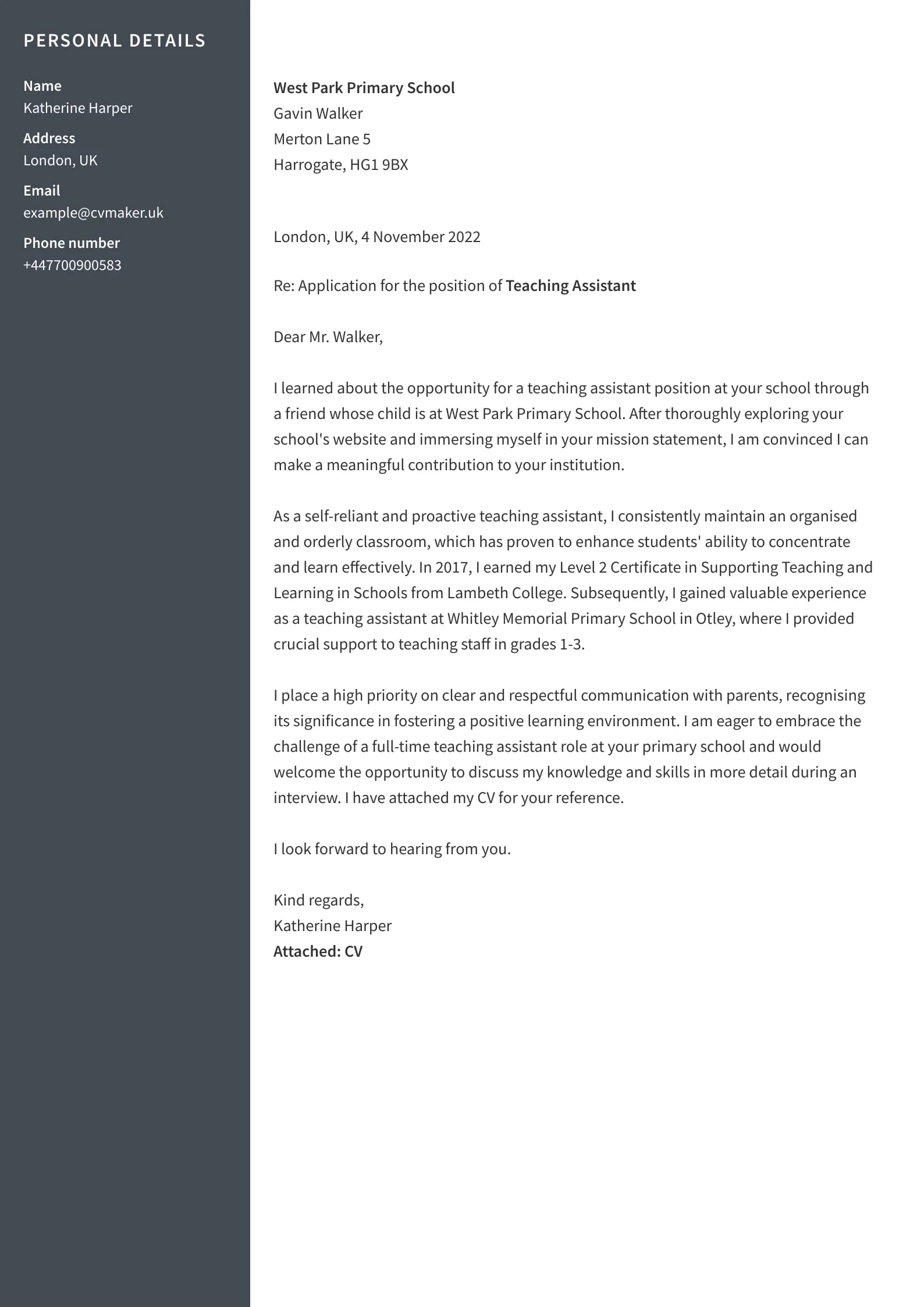
Why You Need a Stellar Teacher Assistant Cover Letter
A well-crafted teacher assistant cover letter is your golden ticket to landing the job. In a competitive field, where numerous candidates vie for the same positions, your cover letter is your first and often only chance to make a strong impression. It’s more than just a formality; it’s a crucial tool for showcasing your personality, passion, and qualifications beyond what your resume can convey. It allows you to explain gaps in your experience, highlight specific skills relevant to the role, and demonstrate your genuine interest in the school and its students. A compelling cover letter can transform a passive application into an active conversation, increasing your chances of securing an interview. Neglecting this vital step could mean missing out on opportunities, as a generic or poorly written cover letter might be immediately dismissed. Therefore, investing time and effort in creating a standout cover letter is essential to setting yourself apart from other applicants and taking the first step towards your dream teaching assistant role.
Highlight Your Qualifications
Your cover letter should immediately spotlight your key qualifications. Think of this as the hook that grabs the reader’s attention. Start by mentioning any relevant certifications, degrees, or training you possess. Are you certified in early childhood education? Do you have a degree in education or a related field? Explicitly state these credentials early on. Beyond formal qualifications, consider any specialized training you’ve received, such as in special education or specific teaching methodologies. Briefly explain how these qualifications align with the job requirements. For example, if the job description emphasizes experience with a particular age group, make sure to highlight your qualifications and experience that directly relate to working with those students. By clearly and concisely stating your qualifications upfront, you establish credibility and make it easier for the hiring manager to see you as a suitable candidate from the outset.
Emphasize Relevant Experience

Your previous experiences are crucial in demonstrating your suitability for the role of a teacher assistant. Instead of just listing job titles, delve into the specifics of each role. Describe your responsibilities and accomplishments in previous teaching or childcare positions. Use the STAR method (Situation, Task, Action, Result) to illustrate your successes. For instance, if you’ve managed a classroom activity, describe the situation, your specific task, the actions you took, and the positive outcomes. Quantify your achievements whenever possible. Did you improve student engagement by a certain percentage? Did you implement a new system that streamlined classroom management? Concrete examples will make your claims more impactful. Focus on experiences that are most relevant to the target job, tailoring your descriptions to match the job description’s requirements. This demonstrates that you understand the needs of the role and can effectively meet them.
Previous experience working with children
Detailing your previous experiences with children is critical, as it showcases your ability to connect with young people. Include any volunteer work, internships, or paid positions where you’ve worked with children. This could involve tutoring, mentoring, or assisting in recreational programs. Mention the age groups of children you worked with and the types of activities you facilitated. Briefly describe the skills you utilized, such as communication, patience, and creativity. If you have specific accomplishments, such as helping a child overcome a learning challenge or fostering a positive classroom environment, be sure to highlight them. Quantify your achievements by mentioning how you improved student engagement or participation. This section should prove your genuine ability to interact with children, making you a more attractive candidate for a teacher assistant role.
Experience with classroom management
Classroom management experience is a significant asset in a teacher assistant role. If you have managed classrooms, even in a limited capacity, highlight these experiences. Describe your strategies for maintaining order, managing student behavior, and creating a positive learning environment. Mention any specific techniques you employed, such as using visual aids, implementing reward systems, or addressing disruptive behaviors. If you’ve worked with teachers in managing a classroom, explain your collaborative approach and the contributions you made to improve classroom flow and student engagement. Focus on how your experience contributes to your ability to support the teacher and create a conducive learning environment. The hiring manager will want to see that you understand the importance of classroom control and can contribute positively to the educational setting.
Showcase Your Skills

Your cover letter should highlight a blend of hard and soft skills that are essential for a successful teacher assistant. Focus on skills that specifically align with the job description and the needs of the students. This can include communication, organizational abilities, patience, creativity, and the ability to work as part of a team. Illustrate your skills with specific examples from your experience. For instance, if you are proficient in communication, describe a situation where you successfully explained a complex concept to a student or communicated with parents effectively. If you are organized, provide an example of how you managed classroom materials or assisted in lesson planning. Emphasize how your skills will help you support teachers and students in a classroom setting. By showcasing relevant skills, you will convince the hiring manager of your potential value as a teacher assistant.
Communication skills
Excellent communication skills are essential for teacher assistants. Highlight your ability to communicate effectively with students, teachers, and parents. Describe how you explain concepts in a clear and understandable manner to students. Mention any experience you have with different communication styles, such as adapting your communication based on a student’s age or learning style. If you’ve had to communicate with parents, showcase your ability to discuss student progress and address any concerns. For instance, you can give examples of how you facilitated effective communication between teachers and parents, especially concerning students’ achievements or behavioral issues. Strong communication skills ensure clarity, understanding, and support within the classroom environment, making you an invaluable asset.
Organizational abilities
Demonstrating your organizational abilities in a cover letter is crucial for showing your efficiency and attention to detail. Provide examples of how you managed classroom materials, prepared lesson resources, or maintained student records in previous roles. Highlight any systems or methods you used to streamline classroom processes, such as creating a filing system or organizing learning stations. Mention your experience with scheduling, planning, or coordinating activities, particularly if these have contributed to a more organized learning environment. Emphasize that you understand the importance of being organized to support teachers and students in the classroom. Showing that you can manage tasks effectively and create a structured environment makes you a more reliable candidate for a teaching assistant position.
Demonstrate Enthusiasm

Expressing your enthusiasm for the role and the school is essential. Your cover letter should showcase your passion for education and your genuine interest in working with students. Mention what specifically attracts you to the position and the school. Research the school’s mission, values, and programs, and explain how they align with your own goals and aspirations. Show you understand what makes the school unique. If the school has a particular focus, such as arts integration or special education, highlight your experience and interest in that area. Briefly discuss how your skills and experience will contribute to the school’s success. By showing genuine interest, you demonstrate to the hiring manager that you are committed and invested in the role and are likely to be a proactive and engaged employee.
Tailor to the Specific Job
Customize your cover letter to each specific job application. It’s a sign of your attention to detail and genuine interest in the position. Carefully read the job description and identify the key requirements, skills, and experiences that the employer is looking for. Adjust your cover letter to emphasize how your qualifications align with these specific needs. Use keywords from the job description to demonstrate that you understand what the employer is looking for. If the job description mentions a particular skill, such as experience with a specific software or teaching method, make sure to include it in your cover letter. Research the school and its culture. Personalize your cover letter by referencing specific programs, values, or initiatives that resonate with you. Demonstrate to the employer that you have put thought into your application, making you a more attractive candidate for the role.
Proofread and Perfect Your Cover Letter
Before submitting your cover letter, proofread it meticulously for errors in grammar, spelling, and punctuation. A cover letter filled with mistakes can undermine your credibility and make you appear unprofessional. Read through your letter multiple times, and consider having a friend or colleague review it as well. Ensure that your cover letter is concise, well-organized, and easy to read. Use clear and professional language, avoiding slang or overly casual phrases. Verify that all your contact information is correct and up to date. Check that your cover letter is properly formatted and presented, as a clean, well-structured document reflects your attention to detail. Proofreading and perfecting your cover letter are crucial steps, as they can significantly impact the impression you make on the hiring manager.