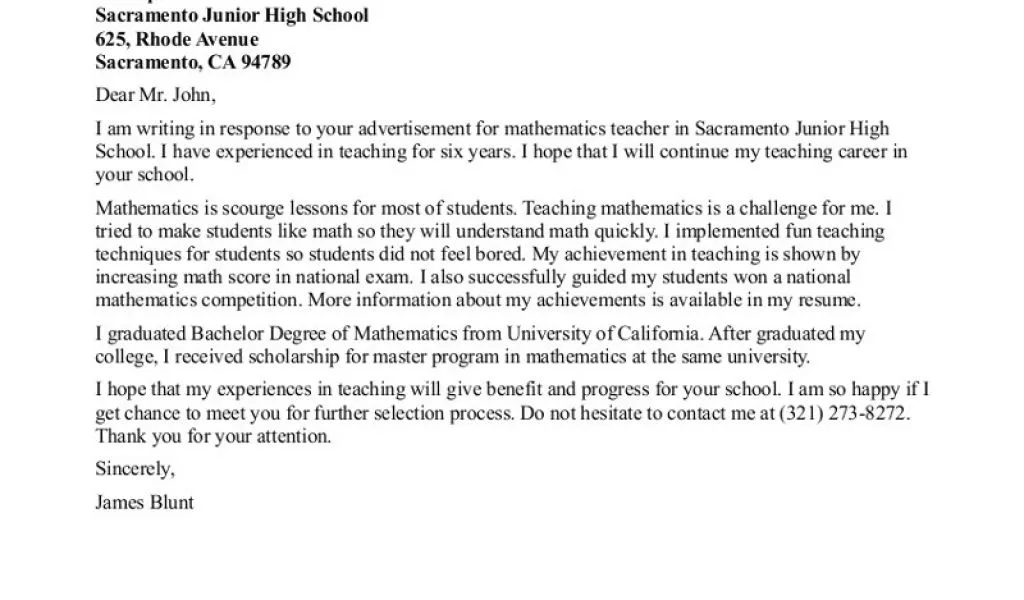
What is a Teacher Cover Letter
A teacher cover letter is a crucial document that accompanies your resume when applying for a teaching position. It serves as your introduction to the hiring committee, offering you a chance to highlight your qualifications, experiences, and passion for teaching. Unlike a resume, which provides a factual overview of your background, a cover letter allows you to showcase your personality, teaching philosophy, and enthusiasm for the specific role. It’s your opportunity to make a strong first impression and persuade the reader that you are the ideal candidate for the job. Writing a well-crafted cover letter can significantly increase your chances of securing an interview and ultimately landing the teaching position you desire.
Why a Cover Letter is Important
In the competitive field of education, a cover letter is not just a formality; it’s a necessity. It offers a personalized approach that a resume alone cannot achieve. A cover letter allows you to connect with the hiring manager on a personal level, demonstrating your genuine interest in the school or district and the specific teaching position. It provides a space to elaborate on your skills and experiences, providing context and illustrating how your qualifications align with the school’s needs and values. Furthermore, it allows you to showcase your writing skills, communication abilities, and attention to detail, all of which are essential for effective teaching. A compelling cover letter can set you apart from other applicants, highlighting your unique strengths and enthusiasm.
Key Elements of a Strong Teacher Cover Letter

A strong teacher cover letter comprises several key elements that work together to present you as a highly qualified and enthusiastic candidate. Each section plays a vital role in conveying your suitability for the position and making a lasting impression. Understanding these elements and how to incorporate them effectively is crucial for creating a cover letter that grabs the reader’s attention and encourages them to learn more about you.
Header Information
The header of your cover letter should include essential information to ensure the recipient knows who you are and how to contact you. It’s the first thing the reader sees, setting the tone for the rest of the document. Accuracy and professionalism in this section are paramount, as they reflect your attention to detail and organizational skills, which are crucial for a teacher. Always use a clear and easily readable font for this section, ensuring all information is correctly formatted.
Your Name and Contact Information
Begin with your full name, clearly and prominently displayed at the top. Following your name, include your phone number and a professional email address. Double-check that the contact information is accurate and up-to-date to ensure the hiring manager can easily reach you. It is best practice to use a professional-sounding email address (e.g., firstname.lastname@email.com) rather than a casual or outdated one. Using a professional email address shows that you take your job search seriously.
Date

Below your contact information, include the current date. This helps the recipient know when the cover letter was written. The date typically follows the contact information but can be placed elsewhere depending on the formatting style of your cover letter.
Recipient Information
Include the name of the hiring manager or the person to whom you are addressing the letter, along with their title and the school’s or district’s address. If you can’t find a specific name, use a general greeting such as ‘Dear Hiring Committee’ or ‘Dear [Principal’s Name]’. Researching the school’s website or contacting the school can help you find the appropriate contact information. Addressing the letter to a specific person shows that you have taken the initiative to find out more about the hiring process and increases your chances of making a positive impression.
Opening Paragraph
The opening paragraph is your first chance to capture the reader’s attention and make them want to read more. It should be concise, engaging, and clearly state the purpose of your letter. A strong opening paragraph sets the tone for the rest of the cover letter and encourages the hiring manager to continue reading, so it’s essential to make it count. Be direct and enthusiastic, expressing your interest in the teaching position and the school. Be sure to use strong action verbs and demonstrate your excitement for the opportunity.
Grab the Reader’s Attention

Start with a hook. This could be a brief anecdote, a statement about your passion for education, or a compelling reason why you are interested in the specific school or district. Make it personal and relevant to the position. Research the school’s mission, values, or recent accomplishments and mention them to show your genuine interest. Avoid generic opening lines that could apply to any job and strive to make your introduction unique and memorable.
State Your Purpose
Clearly state the position you are applying for. Mention the specific grade level or subject you are interested in teaching, if applicable. Briefly mention where you saw the job posting (e.g., school website, job board). This ensures that the hiring manager immediately knows what you are applying for. The purpose should be concise and easy to understand. It should leave no doubt about what you are applying for and what you hope to achieve.
Body Paragraphs
The body paragraphs are where you elaborate on your qualifications, experiences, and skills. They should provide specific examples that demonstrate your ability to excel in the teaching role. This section of the cover letter is the core of your message, and it must convince the reader that you are the perfect fit for the position. Be sure to use action verbs, focus on your achievements, and show how your skills align with the school’s needs and the job description. Remember to keep each paragraph focused and avoid unnecessary information.
Highlight Your Qualifications

Mention your relevant educational qualifications, such as your degree, certifications, and any specialized training you have. Emphasize qualifications that are directly related to the position and the specific requirements listed in the job description. Mention any licenses or endorsements required for the teaching position. Include any honors or awards that highlight your academic achievements. Providing this information gives the reader context and helps them quickly assess your suitability for the position.
Emphasize Relevant Experience
Detail your teaching experience, including the grade levels and subjects you have taught. Describe your role in any teaching positions you have held. Quantify your accomplishments whenever possible (e.g., increased student test scores by a certain percentage). Use specific examples of your teaching practices and how you have positively impacted students. Emphasize experience that is most relevant to the position. Ensure your examples demonstrate your teaching methodology and any unique skills you have. This will help set you apart.
Showcase Your Skills
Highlight key skills that make you an effective teacher, such as classroom management, lesson planning, curriculum development, and communication skills. Provide examples of how you have used these skills in the classroom. Mention any technology skills or experience using educational software or online learning platforms. Tailor your skills to match the job description and the school’s needs. Mention any specific tools or methodologies you’re familiar with. Show the value of your skills by detailing how they contribute to student success.
Closing Paragraph

The closing paragraph should summarize your interest in the position, express gratitude for the opportunity, and include a call to action. This is your last chance to make an impression, so it should be concise and impactful. This final section should reinforce your enthusiasm for the position and encourage the hiring manager to take the next step in the hiring process. You should close your letter on a positive note.
Reiterate Your Interest
Briefly restate your interest in the teaching position and the school. Reiterate your enthusiasm for the opportunity. Summarize why you are a good fit for the role and how your skills and experience align with the job requirements. This ensures that the reader remembers your key strengths and the value you can bring to the school.
Express Gratitude
Thank the hiring manager for their time and consideration. Express your appreciation for reviewing your application and the opportunity to be considered for the position. A simple ‘Thank you’ is a polite and professional way to conclude your letter. It shows you are grateful for the time and effort they are investing in reviewing your application.
Call to Action

Include a clear call to action, such as stating that you are available for an interview. Provide your contact information again to make it easy for the hiring manager to reach you. Express your willingness to discuss your qualifications further and answer any questions they may have. Encourage them to contact you to schedule an interview. This proactive approach can increase the likelihood of getting a response.
Formatting and Style
The formatting and style of your teacher cover letter are critical for creating a professional and polished document. Attention to detail in these areas shows the hiring manager that you are organized and take pride in your work, which are essential qualities for a teacher. Consistency and clarity are key when formatting your cover letter. Ensure your letter looks neat and easy to read, and it aligns with professional writing standards.
Professionalism and Tone
Maintain a professional tone throughout the cover letter. Use clear, concise language. Avoid slang, jargon, and overly casual expressions. Demonstrate enthusiasm without being overly effusive. Proofread your cover letter carefully to ensure there are no spelling or grammatical errors. Use active voice and positive language to convey your qualifications and excitement for the role. Focus on showing, not telling, by providing specific examples that illustrate your skills and experience. Be mindful of your word choice to maintain professionalism throughout the letter.
Length and Font
Keep your cover letter concise, ideally no more than one page. Use a standard, readable font, such as Times New Roman, Arial, or Calibri, in a 10-12 point size. Use appropriate margins (1 inch on all sides). Ensure that your font is easy to read and professional-looking. Avoid using unusual or decorative fonts, as they can be distracting. Maintain consistent formatting throughout the entire document. Stick to a single font and size for the main body of your letter.
Proofreading and Editing
Proofread your cover letter meticulously before submitting it. Check for spelling errors, grammatical errors, and punctuation mistakes. Read your cover letter aloud to catch any awkward phrasing or inconsistencies. Have someone else review your cover letter for a fresh perspective. Errors can undermine your credibility. Proofreading is a necessary step in the application process. Check all the details and ensure everything is correct. A well-proofread letter shows that you pay attention to detail and are committed to producing high-quality work.
Examples and Templates
Utilizing examples and templates can be helpful when writing your cover letter, especially if you are new to the process. However, it is important to adapt these resources to fit your specific situation and avoid using them as a direct copy-and-paste solution. By adapting the examples and templates, you can create a unique cover letter that showcases your individual skills and experience. Tailoring the content to match the specific requirements of the job and the values of the school or district is crucial for making a strong impression.
Where to Find Examples
Numerous resources offer teacher cover letter examples and templates. Search online job sites and career websites for samples tailored to the teaching profession. You can find templates on websites such as Indeed, LinkedIn, and various career advice platforms. Look for examples that match the specific teaching position you are applying for. Review examples for various grade levels, subjects, and teaching philosophies. Adapt the samples to best represent your experiences. You can find many samples to help you.
Adapting Templates
Do not simply copy and paste a template. Adapt the template to reflect your unique qualifications and experiences. Personalize the content by adding your own details. Tailor your cover letter to the specific job description and the school’s mission and values. Use the template as a guide to organize your thoughts and structure your letter. Revise the language to reflect your writing style. This is how to use a template to your advantage to create your unique cover letter. The key is to use the template as a starting point for your unique story.