Why a Teacher Cover Letter Matters
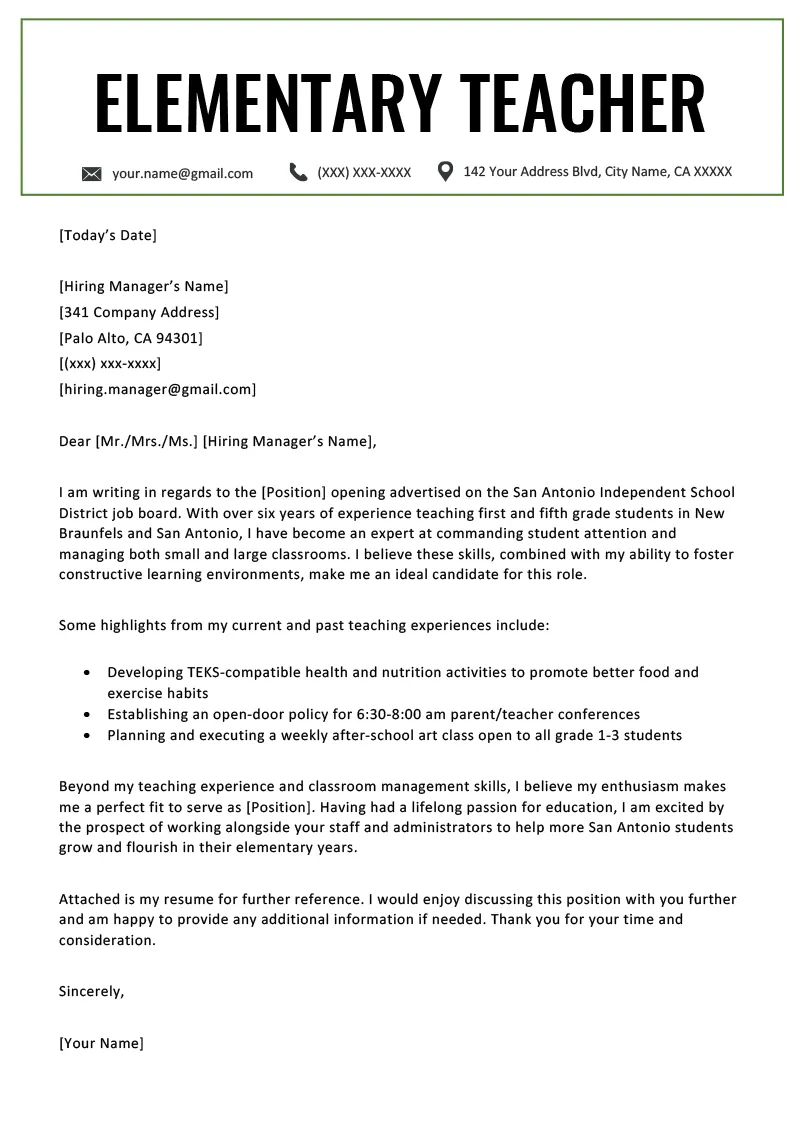
A well-crafted teacher cover letter is your first opportunity to make a positive impression on a potential employer. It serves as more than just a formality; it’s a vital tool that allows you to highlight your skills, experience, and passion for teaching in a way that a resume alone cannot. In a competitive job market, a strong cover letter can set you apart from other applicants and significantly increase your chances of landing an interview. Think of it as your personal introduction, providing context to your resume and demonstrating your genuine interest in the specific teaching position.
Key Components of a Teacher Cover Letter
A successful teacher cover letter comprises several key elements, each playing a crucial role in showcasing your qualifications and suitability for the role. Understanding these components and how to integrate them effectively is essential for creating a compelling document that captures the attention of hiring managers. The structure should be logical, easy to read, and tailored to the specific requirements of the job and the school’s culture.
Heading and Contact Information

Your cover letter should start with your contact information in the heading. Include your full name, address, phone number, and email address. This makes it easy for the hiring manager to reach you. Ensure your email address is professional. Also, format it neatly and consistently with your resume.
Date
Immediately below your contact information, include the date the cover letter is written. This helps establish the recency of your application and provides a reference point for the employer.
Recipient’s Information
Address the letter to the hiring manager or principal, if their name is known. If not, use a general salutation like ‘Dear Hiring Committee’. This demonstrates your attention to detail and your effort to personalize the application. Research the school’s website or LinkedIn to find the correct name, when possible.
Salutation

Use a professional salutation, such as ‘Dear Mr./Ms./Mx. [Last Name]’ or ‘Dear Hiring Committee’. Avoid generic greetings like ‘To Whom It May Concern’ if you can find the recipient’s name. This personalization makes your letter feel more welcoming and shows that you have taken the time to tailor your application.
The Opening Paragraph
The opening paragraph should immediately grab the reader’s attention. State the specific position you’re applying for and where you saw the job posting. Briefly mention your key qualifications or a compelling reason why you’re a good fit for the role. This sets the stage and encourages the reader to continue reading.
Highlight Your Qualifications
This is where you highlight your skills and qualifications. Instead of simply listing them, explain how they make you a great teacher. Mention your relevant certifications, degrees, and any specialized training. Focus on the qualifications that align with the job requirements, providing specific examples to support your claims. Explain how your skills and experiences can benefit the school and its students. It’s vital to show, don’t just tell. Demonstrate your understanding of educational best practices and how you implement them in the classroom.
Emphasize Relevant Experience

Provide detailed examples of your teaching experience, including the grade levels and subjects you’ve taught. Describe your teaching methods, classroom management techniques, and any special projects you’ve led. If you are an experienced educator, focus on your achievements and accomplishments. If you are a new teacher, highlight your student teaching experiences, internships, and any volunteer work. Use the STAR method (Situation, Task, Action, Result) to describe your experiences and demonstrate your impact.
Showcase Your Teaching Philosophy
Express your teaching philosophy, which demonstrates your approach to education and your values as an educator. Discuss your beliefs about student learning, classroom environment, and your commitment to fostering a positive and inclusive learning experience. Mention your understanding of diverse learning styles and your ability to adapt your teaching to meet the needs of all students. Your philosophy should align with the school’s mission and values.
Quantify Achievements
Whenever possible, quantify your achievements. Instead of saying you improved student test scores, provide specific data, such as ‘increased student scores by 15%’. Use numbers and statistics to demonstrate the impact of your teaching. This provides concrete evidence of your abilities and the results you can achieve.
Address Specific Requirements

Carefully review the job description and address the specific requirements mentioned. Highlight how your skills, experience, and qualifications align with the needs of the position. Use keywords from the job description to show that you have understood the requirements and that you are a good fit for the role. This shows that you have carefully considered the position and are ready to meet the demands of the job.
Express Enthusiasm and Interest
Convey your enthusiasm for the position and your interest in the school. Mention what attracts you to the school’s mission, values, or programs. Show that you have done your research and that you are genuinely excited about the opportunity to contribute to the school’s community. Your passion for teaching should shine through in your writing.
The Closing Paragraph
Summarize your key qualifications and reiterate your interest in the position. Reiterate your enthusiasm for the opportunity and express your confidence in your ability to contribute to the school. This is your final chance to leave a lasting impression on the hiring manager and solidify your application.
Call to Action

Include a call to action, such as requesting an interview. Make it clear that you are eager to discuss your qualifications further and that you are available for an interview at their convenience. Ensure your contact information is readily available for their response. It’s crucial to make it as easy as possible for the hiring manager to contact you.
Formal Closing
Use a professional closing, such as ‘Sincerely’ or ‘Respectfully’. Maintain a formal tone throughout the cover letter. This reinforces your professionalism and attention to detail. Be consistent with the tone and style of your writing from start to finish.
Sign-off
Leave space for your signature if you are submitting a hard copy of your cover letter. If submitting electronically, type your full name below the closing. This shows respect and attention to detail.
Formatting Your Cover Letter

Formatting your cover letter is essential for making it visually appealing and easy to read. Proper formatting ensures that your letter presents a professional image and that your qualifications are easily accessible to the reader. Consistent formatting enhances readability and highlights your attention to detail.
Font and Font Size
Choose a professional and legible font, such as Times New Roman, Arial, or Calibri. Use a font size between 10 and 12 points. This ensures your letter is easy to read without being too small or too large. Maintain consistency in font and size throughout your letter.
Margins and Spacing
Set your margins to 1 inch on all sides. Use single-spacing within paragraphs and double-spacing between paragraphs. This creates a clean and organized appearance. Proper spacing prevents the letter from looking cluttered and makes it easier to scan. Consider using a template to ensure proper formatting.
Proofreading and Editing
Proofread and edit your cover letter carefully for any errors in grammar, spelling, and punctuation. Errors can undermine your credibility and make a negative impression. Read your letter aloud to catch any awkward phrasing or grammatical errors. Have a friend or colleague review it as a fresh set of eyes can often catch mistakes you might miss.
Tips for Tailoring Your Cover Letter
Tailoring your cover letter to each specific teaching position is crucial. A generic cover letter will not make a strong impression. Customizing your letter demonstrates your genuine interest in the specific opportunity and your understanding of the school’s needs and values. Personalization sets you apart and increases your chances of being considered for an interview. Show that you have invested time in understanding the role and the school.
Research the School or District
Research the school or district to gain insight into its mission, values, and culture. Visit the school’s website, read its mission statement, and learn about any special programs or initiatives. This will help you align your cover letter with the school’s goals and demonstrate your understanding of their specific needs. Showing that you are informed about the school demonstrates your commitment and initiative.
Use Keywords from the Job Description
Carefully review the job description and identify the key skills, qualifications, and requirements. Incorporate these keywords into your cover letter to demonstrate that you possess the necessary skills and experience. This helps your application get noticed by Applicant Tracking Systems (ATS) and shows that you are a strong match for the role. Focus on matching the language of the job posting.
Show, Don’t Just Tell
Instead of simply listing your skills and qualifications, provide specific examples of how you have demonstrated those skills in the classroom. Use the STAR method to describe your experiences and quantify your achievements whenever possible. This makes your cover letter more compelling and helps the hiring manager understand the value you bring to the school. Provide evidence to support your claims.
Common Mistakes to Avoid
Avoiding common mistakes is essential for creating a cover letter that makes a positive impression. Errors in your cover letter can damage your credibility and reduce your chances of securing an interview. Review your cover letter carefully and proofread it multiple times before submitting it. Attention to detail is paramount.
Generic Cover Letters
Avoid using a generic cover letter that you send to every school or district. Tailor your letter to each specific position, highlighting the skills and experiences that are most relevant to the job. Hiring managers can easily identify generic letters, and they will likely discard them. Personalization demonstrates your genuine interest in the opportunity.
Typos and Grammatical Errors
Typos and grammatical errors can make a negative impression on hiring managers. Proofread your cover letter carefully and have a friend or colleague review it for any errors. Errors indicate a lack of attention to detail. A polished, error-free cover letter reflects your professionalism and competence.
Focusing Solely on Yourself
While highlighting your qualifications is important, avoid making your cover letter entirely about yourself. Focus on how your skills and experiences can benefit the school and its students. Demonstrate your understanding of the school’s needs and how you can contribute to its mission. Show the employer how you can solve their problems.
Ignoring the School’s Culture
Research the school’s culture and values, and tailor your cover letter to align with them. If the school emphasizes innovation, for example, highlight your innovative teaching methods. Demonstrating that you understand and appreciate the school’s culture shows that you are a good fit for the community. Demonstrate that you have an understanding of their needs and expectations.
Final Review Checklist
Before submitting your cover letter, review it one last time using a checklist. This will help ensure that you have addressed all the key elements and that your letter is polished and professional. This final review will help you avoid common mistakes and increase your chances of getting an interview. Review the entire document for content, format, and presentation.
- Ensure your contact information is accurate and up-to-date.
- Confirm you have addressed the letter to the correct person.
- Verify that you have stated the specific position you are applying for.
- Check for typos, grammatical errors, and proper punctuation.
- Make sure your qualifications and experience are clearly highlighted.
- Confirm that you have included specific examples of your achievements.
- Ensure that you have tailored your letter to the specific job requirements.
- Check that your teaching philosophy is clearly articulated.
- Verify that you have expressed your enthusiasm for the position and the school.
- Confirm that you have included a call to action and your contact information.
- Review your formatting to ensure that it is neat and professional.
- Have a friend or colleague review your letter for feedback.