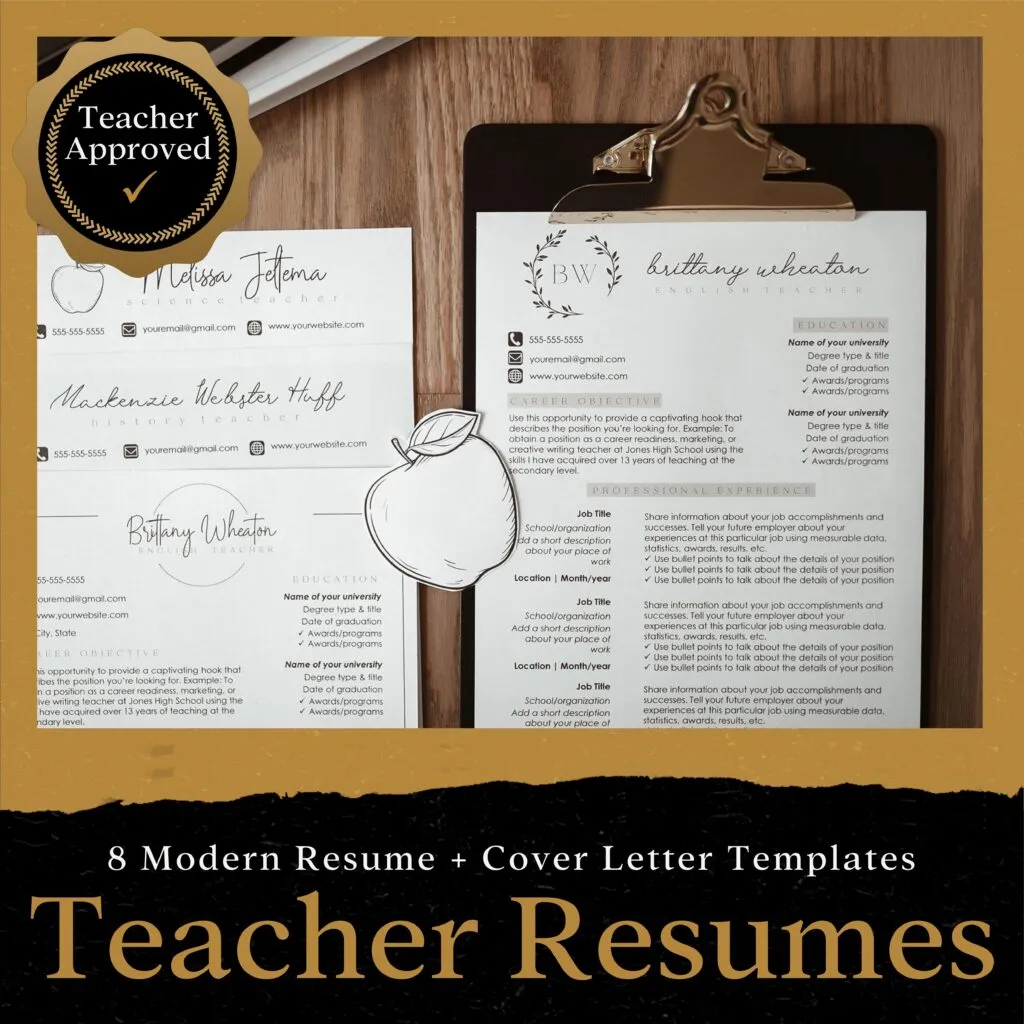
Why a Teacher Cover Letter Matters
In the competitive world of education, a well-crafted cover letter is more than just a formality; it’s your first opportunity to make a lasting impression on a potential employer. A cover letter serves as a crucial introduction, allowing you to showcase your personality, passion for teaching, and specific qualifications beyond what is listed on your resume. It provides a platform to explain why you are the perfect fit for the school, elaborating on how your skills and experiences align with their specific needs and values. The cover letter also offers a chance to demonstrate your written communication skills, which are essential in any teaching role, from communicating with parents to preparing lesson plans. Remember, a strong cover letter makes you stand out from other candidates, increasing your chances of landing an interview and ultimately securing your dream teaching position. Therefore, it is crucial to invest time and effort in creating a compelling and personalized cover letter that truly reflects your dedication to education and commitment to student success.
Highlighting Your Teaching Skills
When crafting your teacher cover letter, focus on highlighting your most relevant teaching skills. Begin by identifying the key skills the school values, often found in the job description. These may include classroom management, lesson planning, curriculum development, differentiated instruction, and assessment strategies. Then, provide specific examples of how you have utilized these skills in previous roles. For instance, instead of simply stating “I have strong classroom management skills,” describe how you have successfully created a positive and productive learning environment through specific techniques, such as establishing clear expectations, implementing positive reinforcement strategies, or proactively addressing behavioral challenges. When you describe your experience, try to use action verbs to showcase your accomplishments. Consider your ability to incorporate technology in the classroom. Illustrate your ability to adapt to different learning styles. By clearly articulating your skills and providing concrete examples, you effectively demonstrate your ability to make a positive impact on student learning and contribute to the school’s overall success.
Detailing Your Classroom Experience

Your classroom experience is the cornerstone of your teacher cover letter. Provide detailed descriptions of your previous teaching roles, including the grade levels and subjects you taught. Be sure to quantify your accomplishments whenever possible. Instead of stating, “I improved student test scores,” say, “I increased student test scores by 15% in the areas of reading and writing.” Describe the methods you have used to create engaging and effective lessons, such as project-based learning, group activities, or technology integration. Highlight any special programs you were involved with or initiatives you spearheaded. Emphasize any experience with diverse student populations, highlighting how you adapted your teaching methods to meet the needs of all learners. Mention your ability to collaborate with colleagues, parents, and administrators. Be sure to showcase any awards, recognition, or positive feedback you have received from students, parents, or supervisors. Always remember to tailor your description to align with the specific requirements and values of the school you are applying to, highlighting the aspects of your experience that best demonstrate your suitability for the role.
Showcasing Your Educational Background
In your cover letter, clearly state your educational background, including the name of your college or university, the degrees you have earned (e.g., Bachelor of Education, Master of Arts in Teaching), and the year of graduation. Mention any honors or academic achievements. Highlight any relevant coursework or specializations that align with the school’s needs, such as a focus on special education, early childhood development, or a particular subject area. Briefly describe your student teaching experience, including the grade levels and subjects you taught. Detail any teaching-related projects or research you completed during your studies. If you are a recent graduate, emphasize any internships, practicums, or volunteer experiences that have prepared you for a teaching role. When discussing your education, demonstrate that you are committed to continuous professional development by mentioning any relevant workshops, courses, or seminars you have attended. By providing a comprehensive overview of your educational background, you can establish credibility and assure the hiring committee that you possess the necessary knowledge and skills to be an effective teacher.
Mentioning Relevant Certifications and Licenses
Clearly state all relevant certifications and licenses in your teacher cover letter. This is essential to demonstrate that you meet the legal requirements to teach in the state and the school district. Mention your teaching license, including the specific subjects and grade levels you are certified to teach. Provide the license number, if required by the application. If you have any additional certifications, such as a special education endorsement or a specific subject certification, include them as well. Also, mention any certifications related to educational technology, such as Google Certified Educator, or any certifications in areas like first aid or CPR. If you are in the process of obtaining a certification or license, be sure to mention the expected completion date. By explicitly detailing your certifications and licenses, you immediately assure the hiring committee that you meet the basic requirements for the position, setting a foundation for your application and demonstrating your commitment to the profession.
Tailoring the Cover Letter to the School

One of the most important tips for writing a successful teacher cover letter is to tailor it specifically to the school to which you are applying. Before you begin writing, research the school’s mission, values, programs, and any specific needs. Demonstrate that you understand their goals and how your qualifications align with their vision. Review the job description carefully and identify the key requirements and desired qualifications. Use specific examples to show how your skills and experiences match these requirements. Mention the school’s name, its unique programs, or any specific initiatives that resonate with you. Express your genuine interest in working at the school, explaining why you are drawn to their environment and what you can contribute to their community. Make sure to address the hiring manager by name, if possible. Show that you have taken the time to learn about the school and are truly interested in the opportunity. By customizing your letter, you show the hiring committee that you are genuinely invested in the position and are not simply sending a generic application.
Keywords in Your Teacher Cover Letter
Incorporating relevant keywords in your teacher cover letter can significantly improve its visibility. Review the job description and identify the most important keywords and phrases related to the skills, qualifications, and experiences the school is looking for. Naturally integrate these keywords into your cover letter. Use them in your opening and closing paragraphs, and throughout the body of your letter, to highlight your relevant skills and experiences. However, avoid keyword stuffing, which can make your letter sound unnatural and detract from your message. The best cover letters seamlessly incorporate keywords while still maintaining a professional and engaging tone. In addition to keywords, consider using action verbs to describe your accomplishments, as these can also catch the hiring manager’s attention. Ensure that the keywords you use are relevant to the specific position and align with the school’s values. By strategically incorporating relevant keywords, you can increase your chances of getting your cover letter noticed and securing an interview.
Formatting Your Cover Letter for Teachers
The formatting of your teacher cover letter is just as important as the content. Your cover letter should be easy to read and visually appealing. Use a professional font, such as Times New Roman, Arial, or Calibri, and ensure the font size is between 10 and 12 points. Use standard margins (1 inch on all sides). The letter should be single-spaced, with a double space between paragraphs. Clearly structure your letter with a header, which includes your name, contact information, and the date, followed by the recipient’s name, title, and address. Use clear and concise language, and keep your paragraphs short and to the point. Avoid overly long sentences. Use bullet points or numbered lists to highlight key skills, accomplishments, or qualifications. Proofread your cover letter carefully for any grammatical errors, spelling mistakes, or typos. Maintain a professional and consistent tone throughout your cover letter. Proper formatting makes your cover letter more readable and professional, allowing the hiring manager to quickly grasp your key qualifications.
Proofreading and Editing Your Cover Letter

Before submitting your teacher cover letter, meticulous proofreading and editing are essential. Spelling and grammatical errors can create a negative impression and undermine your credibility. Read your cover letter multiple times, paying close attention to detail. Use a spell checker and grammar checker, but do not rely solely on these tools; they can sometimes miss errors. Have a trusted friend, mentor, or career counselor review your cover letter for any errors or areas for improvement. Check for clarity, conciseness, and the overall flow of your writing. Ensure your cover letter aligns with the job description and that your skills and experiences are clearly presented. Verify all names, titles, and contact information. Consider the overall tone of your letter. Ensure it is professional and enthusiastic. Always check for consistency in formatting. Proofreading and editing will make your cover letter polished, error-free, and professional. This increases your chances of making a positive impression on the hiring committee and being selected for an interview.
The Importance of a Strong Closing in Your Cover Letter
The closing paragraph of your teacher cover letter is a final opportunity to make a positive impression. It should summarize your interest in the position, reiterate your key qualifications, and clearly state your desire for an interview. Express your enthusiasm for the opportunity and your confidence in your ability to contribute to the school’s success. Include a call to action, such as, “I am eager to learn more about this opportunity and discuss how my skills and experience can benefit your students,” or “I am available for an interview at your earliest convenience.” Provide your contact information, including your phone number and email address, to make it easy for the hiring manager to reach you. Thank the reader for their time and consideration. Avoid generic phrases. Instead, personalize your closing paragraph to reflect your genuine interest in the specific school and position. By ending your cover letter on a strong, positive, and enthusiastic note, you leave a lasting impression and increase your chances of securing an interview.