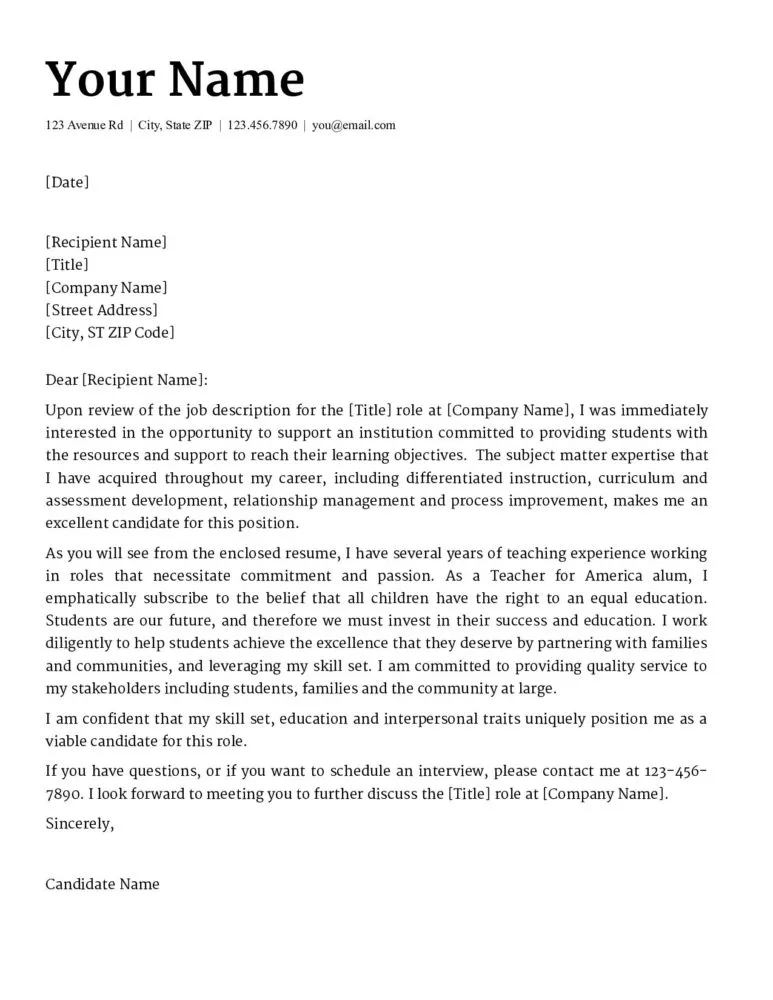
Understanding the Importance of a Teacher Cover Letter
A well-crafted cover letter is your first opportunity to make a positive impression on a potential employer. For a teacher, the cover letter serves as a critical introduction, providing a space to showcase your qualifications, experience, and passion for education beyond what is presented in your resume. It’s not merely a formality; it’s a crucial marketing tool. It demonstrates your written communication skills, personality, and commitment to the teaching profession. A compelling cover letter can significantly increase your chances of securing an interview and ultimately landing the teacher job of your dreams. In a competitive job market, a standout cover letter can be the deciding factor that sets you apart from other qualified candidates.
Key Components of a Compelling Teacher Cover Letter
A compelling teacher cover letter goes beyond simply restating your resume; it tells a story and highlights why you are the perfect fit for the specific role and school. This involves several key components, from a professional header to a strong closing. Each section plays a vital role in crafting a persuasive narrative that captures the hiring manager’s attention. These components, when thoughtfully combined, will significantly enhance your application and increase your prospects of obtaining an interview. Remember, the goal is to make a lasting impression that showcases your unique qualities and dedication to education.
Header and Contact Information

Begin your cover letter with a professional header that includes your full name, address, phone number, and email address. This information should be clearly formatted and easy to find. Your contact information should also match the information on your resume, ensuring consistency and professionalism. It’s essential to use a professional email address; avoid using nicknames or unprofessional language. Consider using a simple, clean font for the header to maintain readability and a polished look. This initial section sets the tone for your entire letter, so accuracy and neatness are crucial for making a positive first impression. This section also allows the hiring manager to easily contact you.
Addressing the Hiring Manager
Whenever possible, address your cover letter to a specific person, such as the hiring manager or the principal of the school. This demonstrates that you have taken the time to research the school and pay attention to detail. Finding out the name of the hiring manager shows initiative and shows that you care. If you cannot find a specific name, using a formal greeting like “Dear Hiring Committee” or “Dear [School Name] Principal” is acceptable. Avoid generic greetings like “To Whom It May Concern,” as they can make your letter seem impersonal. A personalized greeting shows that you are genuinely interested in the position and have taken the time to tailor your application.
Opening Paragraph Making a Strong First Impression
Your opening paragraph is your first chance to grab the reader’s attention. Start with a strong statement that immediately communicates your enthusiasm for the position and the school. Briefly mention where you found the job posting and the position you are applying for. Highlight one or two of your most relevant skills or experiences to create an immediate connection with the reader. You want to show that you are passionate about teaching and genuinely interested in the school. Make your opening paragraph compelling and informative. Consider using an anecdote that demonstrates your passion for teaching or a specific achievement that showcases your abilities. The goal is to set a positive tone and encourage the hiring manager to continue reading.
Highlighting Your Teaching Experience

Detail your teaching experience in a way that is relevant to the job description. Mention your previous roles, including the school name, grade level, and subjects taught. Provide specific examples of your accomplishments and the impact you made on student learning. Quantify your achievements whenever possible, such as the percentage increase in student test scores or the number of students who participated in a specific project. Use action verbs to describe your responsibilities and achievements, such as “developed,” “implemented,” “managed,” and “assessed.” Showcase any experience with diverse student populations or specific teaching methodologies that align with the school’s values. Make sure your experiences are recent and relevant.
Showcasing Your Skills and Qualifications
Identify and highlight the skills and qualifications that make you a strong candidate. Review the job description and tailor your letter to match the specific requirements. Emphasize your skills in classroom management, lesson planning, curriculum development, and student assessment. Mention any special skills, such as proficiency in educational technology, experience with specific software, or knowledge of special education practices. Provide concrete examples to demonstrate these skills in action. Consider including examples of how you have differentiated instruction to meet the diverse needs of students. Use keywords from the job description to show that you have carefully considered the position’s requirements and are a good match.
Mentioning Relevant Certifications and Training
If you have relevant certifications or training, make sure to mention them prominently in your cover letter. List your teaching certifications, including the subject areas and grade levels you are certified to teach. Include any specialized training you have completed, such as professional development workshops, courses, or certifications related to educational practices or technologies. Be specific about the certifications, including the name of the certification and the issuing organization. Also, include any ongoing professional development activities you are participating in, such as advanced degree programs or workshops, to show that you are dedicated to continuous learning and professional growth. This demonstrates your commitment to providing high-quality education.
Emphasizing Your Passion for Teaching

Express your passion for teaching and your commitment to student success throughout your cover letter. Discuss what inspires you about teaching and what motivates you to create a positive learning environment. Share your philosophy of education, briefly explaining your approach to teaching and how you connect with students. Use words that convey enthusiasm and dedication. You can share a brief story or anecdote that illustrates your passion for teaching and demonstrates your commitment to student success. Highlight any experiences that have shaped your teaching philosophy and your dedication to creating a supportive and engaging classroom. Emphasize your ability to build relationships with students, parents, and colleagues.
Demonstrating Your Knowledge of the School
Show that you have researched the school and understand its mission, values, and culture. Mention specific programs, initiatives, or aspects of the school that appeal to you. Tailor your letter to demonstrate your interest in the school and show that you are not just sending out a generic application. Visit the school’s website and review its mission statement, values, and any recent news or announcements. If possible, mention specific teachers, programs, or events that align with your teaching philosophy or interests. This demonstrates that you are genuinely interested in joining their community and are a good fit for their culture. Show that you are committed to supporting the school’s goals and contributing to its success.
Closing the Cover Letter
In your closing paragraph, restate your interest in the position and express your gratitude for the reader’s time and consideration. Summarize your key qualifications and reiterate why you are a strong candidate. Include a call to action, such as stating that you are available for an interview and providing your contact information again. Thank the hiring manager for their time and consideration. Reiterate your enthusiasm for the position and the opportunity to contribute to the school’s mission. Make sure the closing is professional, concise, and leaves a positive final impression. Ensure your contact information is easily accessible.
Expressing Enthusiasm and Availability

Make it clear that you are enthusiastic about the opportunity and eager to learn more about the position. Express your availability for an interview and specify how the hiring manager can reach you. Be prompt and responsive in your communications and prepared to provide any additional information or references the school may require. Indicate your availability for a phone interview or an in-person meeting. Provide your phone number and email address again to ensure easy contact. Reiterate your enthusiasm and excitement about the possibility of joining the school’s team.
Proofreading and Editing Your Cover Letter
Before submitting your cover letter, carefully proofread and edit it for any errors in grammar, spelling, or punctuation. Errors can undermine your credibility and make a negative impression. Have a friend, colleague, or mentor review your letter for feedback and suggestions. Ensure that the formatting is consistent and professional. Use a spell checker and grammar checker, but don’t rely on them entirely; they may not catch all errors. Read your letter aloud to catch any awkward phrasing or sentences. Make sure your tone is appropriate and reflects your professionalism. Proofread carefully to make sure you are putting your best foot forward.
Common Mistakes to Avoid in Your Cover Letter
Avoid common mistakes such as generic language, typos, and overly long paragraphs. Do not simply restate your resume; provide additional details and context. Refrain from using jargon or overly complex language that could be difficult for the reader to understand. Ensure your cover letter is tailored to the specific job and school, not a generic template. Avoid including irrelevant information or details that do not relate to the position. Proofread your cover letter carefully to ensure that it is free from errors and presents you in the best possible light. Be mindful of formatting and overall appearance to ensure it is neat and professional. Do not include salary expectations.