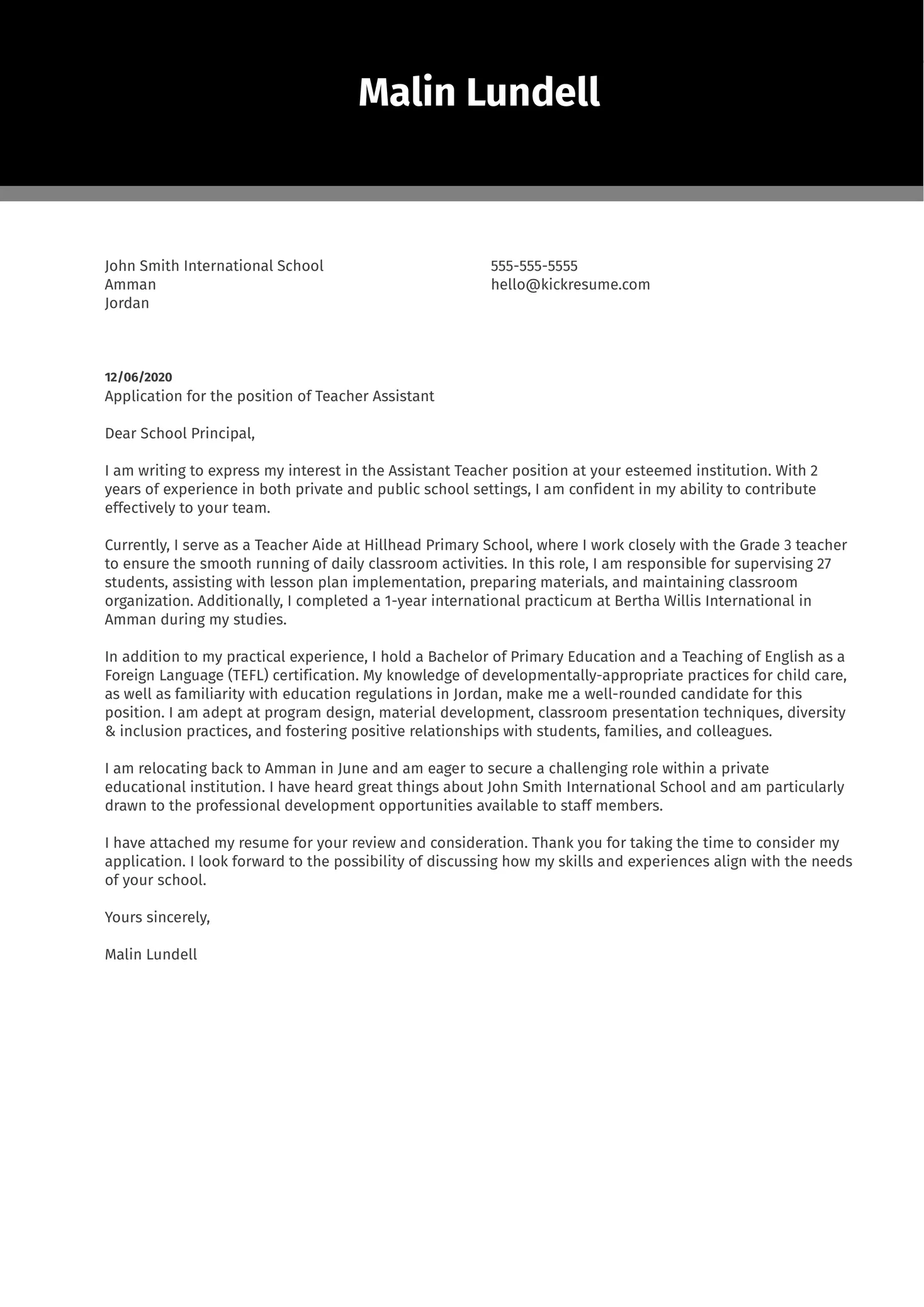
Understanding the Teaching Assistant Role
A Teaching Assistant (TA) plays a vital role in the educational ecosystem. They support educators in various ways, from assisting with lesson preparation to providing direct support to students. The specific responsibilities of a TA can vary based on the institution, the grade level, and the subject matter. Understanding the multifaceted nature of the role is crucial for crafting a compelling cover letter that highlights your relevant skills and experiences. TAs often bridge the gap between teachers and students, offering individualized attention and support that enhances the learning experience for all involved. They are valuable members of the educational community.
Key Responsibilities of a Teaching Assistant
The responsibilities of a teaching assistant are diverse and essential for supporting both the teacher and the students. TAs often assist with preparing instructional materials, such as handouts, presentations, and assessments. They may also grade assignments, provide feedback to students, and maintain classroom organization. Additionally, many TAs work directly with students, offering one-on-one or small group tutoring, helping them with coursework, answering questions, and providing encouragement. They assist in supervising students during class activities, field trips, or extracurricular events. The duties also involve managing classroom resources, such as equipment and supplies. They may also communicate with parents or guardians regarding student progress and behavior.
Skills and Qualifications for Teaching Assistant

The skills and qualifications needed to be a successful teaching assistant are varied, encompassing both hard and soft skills. Excellent communication skills, both written and verbal, are crucial for interacting with students, teachers, and parents. Strong organizational skills are essential for managing tasks, materials, and student records effectively. Patience and empathy are vital for working with students of all abilities and backgrounds. A solid understanding of the subject matter you will be assisting with is often required, especially at higher education levels. Relevant experience, such as previous work with children or volunteering in educational settings, is highly valued. Educational qualifications can vary, but a high school diploma is typically the minimum requirement. A bachelor’s degree or relevant certifications are often preferred, depending on the specific role and institution.
Crafting Your Cover Letter Step by Step
A well-crafted cover letter is your opportunity to introduce yourself to a potential employer and highlight why you are the perfect candidate for the teaching assistant position. It is not simply a repetition of your resume, but a chance to elaborate on your experiences, showcase your personality, and express your genuine interest in the role. The cover letter should be tailored to the specific job description, demonstrating your understanding of the school’s needs and your ability to meet them. Take time to carefully write your cover letter, ensuring it is free of errors, well-organized, and compelling. This meticulous approach can significantly increase your chances of landing an interview and ultimately, the job.
Header and Contact Information
Begin your cover letter with a professional header that includes your name, address, phone number, and email address. This should be aligned to the left or centered at the top of the document. Below your contact information, include the date and the recipient’s contact information, such as the name of the hiring manager, their title, and the school’s address. Use a formal and easy-to-read font, such as Times New Roman or Arial, and ensure that the formatting is consistent throughout the letter. This section is about presenting your professional identity clearly and accurately. Remember to proofread carefully to ensure all contact details are correct, as any errors can hinder communication and reduce your chances of consideration.
Greeting and Introduction

Start your cover letter with a professional greeting, such as “Dear Mr./Ms./Mx. [Last Name],” if you know the hiring manager’s name. If you are unsure of the name, use a general greeting like “Dear Hiring Manager.” The introduction is crucial as it sets the tone for the rest of the letter. In the first paragraph, clearly state the position you are applying for and how you learned about the opportunity. Briefly mention your most relevant qualification or experience that makes you an ideal candidate. Your goal is to immediately capture the reader’s attention and make them want to learn more about you.
Body Paragraph 1: Expressing Interest
In your first body paragraph, express your genuine interest in the teaching assistant position and the school or institution. Explain what specifically attracts you to the role, whether it’s the opportunity to work with children, support educators, or contribute to a positive learning environment. Demonstrate that you have researched the school and understand its mission or values. Show enthusiasm and a strong desire to contribute to the school’s success. A personalized approach, showing you understand the specific context and goals of the institution, can significantly increase your chances of making a positive impression. Avoid generic statements, instead focus on expressing a genuine interest in the specific school or institution.
Body Paragraph 2: Highlighting Skills and Experience
In the second body paragraph, provide specific examples of your skills and experiences that align with the job requirements. Refer to the job description and highlight the qualifications that the employer is seeking. Instead of simply listing your skills, provide brief anecdotes or scenarios that demonstrate how you have used those skills in the past. For instance, if the job requires strong communication skills, describe a situation where you effectively communicated with students, parents, or teachers. This paragraph should act as proof of your claims and create a vivid image of your abilities. Focus on experiences that have prepared you to excel as a teaching assistant, such as tutoring, mentoring, or volunteer work in educational settings.
Body Paragraph 3: Demonstrating Passion and Enthusiasm

The third body paragraph is where you demonstrate your passion and enthusiasm for education and the teaching assistant role. Explain what motivates you to work with students and support educators. Discuss your educational philosophy or any specific teaching methodologies that resonate with you. Show how you are committed to creating a positive and engaging learning environment. This is your opportunity to express your personal values and demonstrate your commitment to helping students succeed. Share a story or an example that illustrates your dedication to education and your enthusiasm for assisting teachers. Expressing your passion will make your application stand out.
Closing Paragraph and Call to Action
Conclude your cover letter with a strong closing paragraph and a clear call to action. Reiterate your interest in the position and express your enthusiasm for the opportunity. Thank the hiring manager for their time and consideration. Include a polite request for an interview, and mention that you look forward to discussing your qualifications further. Provide your contact information once again, making it easy for the employer to reach you. Use a professional closing, such as “Sincerely” or “Best regards,” followed by your full name. This closing paragraph confirms your readiness for the next step in the hiring process.
Formatting and Proofreading Your Cover Letter
The format and presentation of your cover letter are just as important as the content. A well-formatted and error-free letter reflects your attention to detail and professionalism. Ensure that your cover letter is easy to read, organized, and visually appealing. Paying attention to these elements demonstrates your respect for the hiring manager and your commitment to excellence. Proper formatting and diligent proofreading significantly increase your chances of being viewed positively.
Importance of Proper Formatting

Use a standard font like Times New Roman, Arial, or Calibri in a readable size (11 or 12 points). Maintain consistent spacing between paragraphs and use a professional layout. The letter should be single-spaced with a space between each paragraph. Align the text to the left and avoid using excessive formatting, such as bolding or underlining, unless necessary for emphasis. The overall appearance should be clean and easy on the eyes. A well-formatted cover letter is easier for the hiring manager to read, which can make the best impression possible. Proper formatting shows you are organized.
Proofreading for Errors
Thorough proofreading is essential to eliminate any typos, grammatical errors, or inconsistencies. Read your cover letter multiple times, checking for spelling, punctuation, and grammar. Use a spell-checker and grammar-checker, but also read the document aloud to catch any errors you might miss. Have a friend or family member proofread your cover letter as a second pair of eyes can catch mistakes you might overlook. Ensuring that your cover letter is free of errors demonstrates your attention to detail and professionalism, which is especially important when applying for a teaching position. A polished cover letter reflects well on your written communication skills.
Tailoring Your Cover Letter
Tailoring your cover letter to each specific job application is crucial for showcasing your suitability for the position. Customizing your letter demonstrates that you have carefully considered the requirements of the role and the needs of the school or institution. Generic cover letters that are not tailored to the specific job description often come across as impersonal, and these are usually less successful. Investing time in research and customization shows you are truly interested in the opportunity and willing to go the extra mile.
Researching the Specific School or Institution

Before you start writing your cover letter, research the school or institution where you are applying. Visit their website, read about their mission, values, and educational approach. Identify the specific programs they offer and any unique aspects of their culture. Understanding the school’s background will help you tailor your cover letter to highlight how your skills and experiences align with their needs and goals. This research will also allow you to make specific references to the school, showing your genuine interest and demonstrating your commitment to their mission. Show the recruiter that you are interested in their school.
Customizing Your Letter to the Job Description
Carefully review the job description and identify the key skills, qualifications, and experiences that the employer is seeking. Customize your cover letter to address each of these requirements specifically. Use the same keywords and phrases used in the job description, but do not simply copy and paste. Instead, use these keywords naturally within the context of your own experiences and qualifications. Highlight how your previous experiences and skills meet the needs of the position. This demonstrates that you are a good fit for the role and that you understand what the employer is looking for. Customization makes your application relevant and compelling.
Examples of Strong Teaching Assistant Cover Letters
Reviewing examples of well-written cover letters can provide valuable insights and inspiration when crafting your own. Pay attention to the structure, tone, and content of the examples and how they effectively showcase the applicant’s skills and experiences. Use the examples as a guide, but be sure to personalize your own cover letter to reflect your unique qualifications and experiences. Consider what aspects of your background and skills are most relevant to the specific job and highlight those accordingly. Remember to adapt the examples to your specific situation.
Example 1 Highlighting Experience

This example focuses on an applicant’s extensive experience working with children and supporting educators. The cover letter emphasizes specific achievements, such as improving student grades, implementing successful tutoring strategies, or assisting with classroom management. Include specific examples of how your experience has prepared you for the TA position. Showcasing your successes will make your cover letter stand out from the competition. A well-written experience-focused cover letter can be highly effective for a teaching assistant position.
Example 2 Emphasizing Skills
This example highlights the applicant’s key skills, such as communication, organization, and problem-solving. The letter provides concrete examples of how these skills were used in previous experiences. The focus should be on practical application and demonstrating how the skills will benefit the school and students. Showing that you possess the required skills can greatly enhance the impact of your cover letter. By emphasizing your skills and providing concrete examples, you can create a compelling case for your candidacy.
Example 3 Showcasing Passion
This example stresses the applicant’s passion for education and commitment to student success. This cover letter will demonstrate a genuine enthusiasm for the teaching assistant role. The letter shows examples of how the applicant has gone above and beyond to support students or contribute to a positive learning environment. Including examples to show your passion will show your potential. Highlighting your enthusiasm will make your cover letter more engaging and memorable for the hiring manager. The key is to communicate what drives you to contribute to student success.
Common Mistakes to Avoid
Certain mistakes can significantly diminish the effectiveness of your cover letter. Be mindful of these common pitfalls and take steps to avoid them. By addressing these potential issues, you can ensure that your cover letter showcases your best qualities and increases your chances of landing an interview.
Generic Letters
One of the most common mistakes is sending a generic cover letter that is not tailored to the specific job or school. These letters often sound impersonal and fail to demonstrate a genuine interest in the opportunity. Taking the time to customize your cover letter to each application is essential. Research the school, read the job description, and highlight how your skills and experiences align with their needs. A customized cover letter demonstrates your commitment to the role and will make a better impression on the hiring manager.
Typos and Grammatical Errors
Typos and grammatical errors can be very damaging to your cover letter, as they reflect negatively on your attention to detail and professionalism. Always proofread your cover letter carefully. Use spell-check and grammar-check, but don’t rely on these tools alone. Read the letter aloud to catch any errors you might miss. Have someone else review your cover letter as a second pair of eyes can often spot mistakes that you have overlooked. Ensure that your writing is clear, concise, and free of errors. A well-written, error-free cover letter demonstrates your commitment to excellence.
Lack of Specific Examples
Another common mistake is failing to provide specific examples to support your claims. Instead of simply listing your skills and experiences, provide brief anecdotes or scenarios that illustrate how you have used those skills in the past. For instance, if you claim to have strong communication skills, describe a time when you effectively communicated with a student or parent. Adding details will prove your claims. Concrete examples make your cover letter more persuasive and help the hiring manager understand your abilities. A well-written cover letter will show your skills with clear examples.
Conclusion
Writing a compelling teaching assistant cover letter is essential for showcasing your qualifications, demonstrating your passion for education, and securing an interview. By understanding the role of a TA, crafting a well-structured letter, tailoring your application, and avoiding common mistakes, you can significantly increase your chances of success. Remember to highlight your skills, experiences, and enthusiasm, and always proofread carefully. With a polished and professional cover letter, you will be well on your way to landing your dream teaching assistant position. Good luck with your job search!