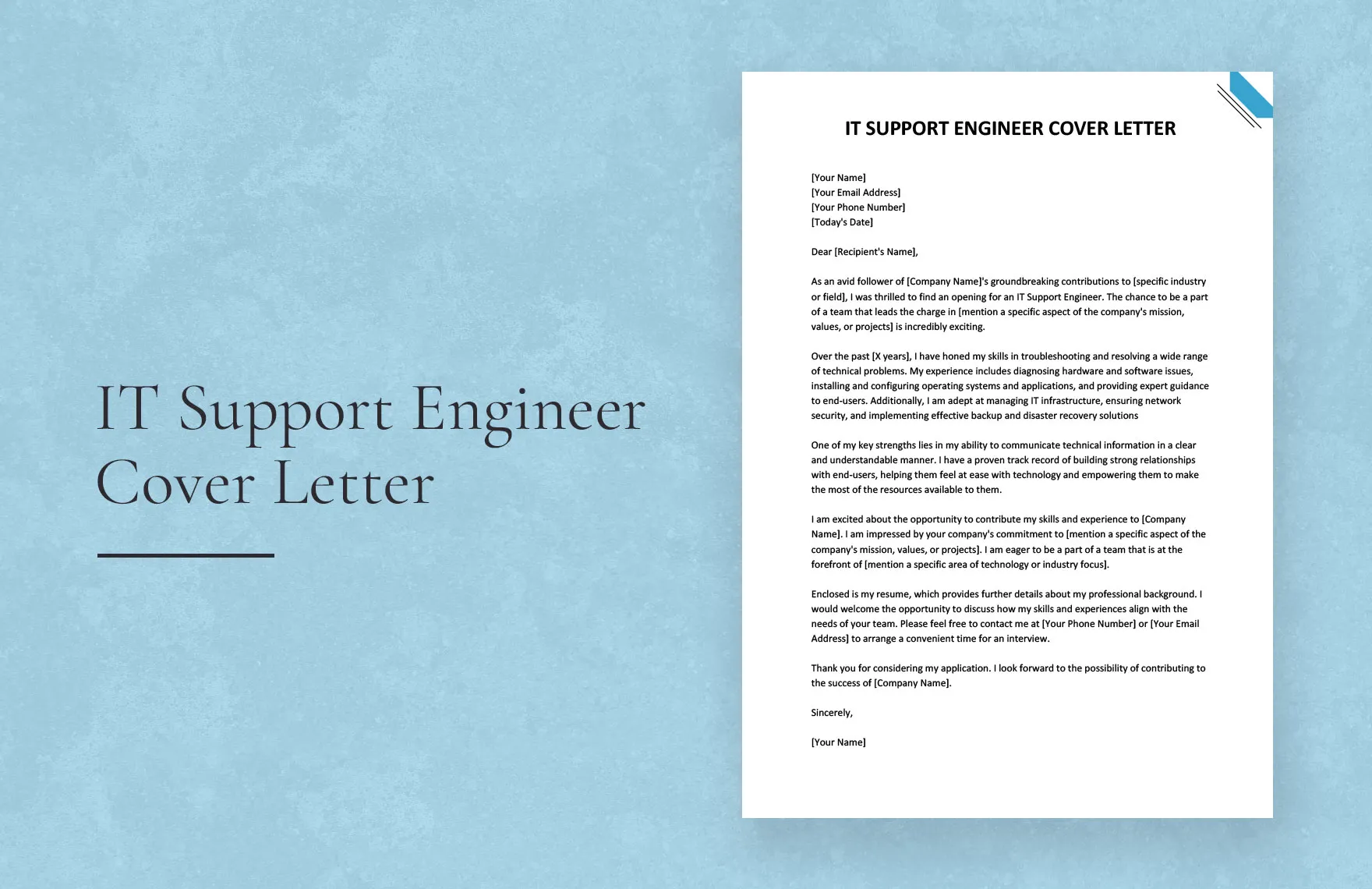
Why a Tech Support Cover Letter Matters
In the competitive world of technical support, a well-crafted cover letter is your first opportunity to make a strong impression. It’s more than just a formality; it’s a crucial tool that can significantly influence whether you’re invited for an interview or your application ends up in the rejection pile. A cover letter provides a space to showcase your personality, elaborate on your skills, and demonstrate your genuine interest in the role and the company. It allows you to tell a story that your resume, in its concise format, cannot. By thoughtfully constructing your cover letter, you increase your chances of securing an interview and ultimately, landing your dream job in technical support. Many candidates underestimate the importance of a cover letter, viewing it as a mere formality. However, in a field where attention to detail and effective communication are paramount, a well-written cover letter can set you apart from other applicants, especially when applying for a technical support engineer position.
The Importance of a Strong Cover Letter
A strong cover letter goes beyond simply restating your resume; it provides an opportunity to tailor your application to the specific requirements of the job. It highlights your most relevant skills, experiences, and achievements in a way that captures the attention of the hiring manager. A well-written cover letter serves as a preview of your communication skills and professional demeanor. It should be free of grammatical errors and typos. It also showcases your personality and passion for the role. By demonstrating your enthusiasm and highlighting your unique qualifications, you can create a memorable first impression and increase your chances of getting hired. Remember, a generic cover letter can send the message that you lack attention to detail or are not genuinely interested in the position. Invest the time and effort into creating a strong cover letter that reflects your qualifications and your eagerness to contribute to the company. A strong cover letter also addresses potential concerns the employer might have based on your resume. If there are gaps in your employment history, or if you’re transitioning to a new field, the cover letter is the place to provide context and reassure the employer that you’re the right fit for the role.
Showcasing Your Value

Your cover letter is where you truly showcase your value proposition to a potential employer. This is your chance to demonstrate why you’re the best candidate for the technical support engineer position. Start by identifying the key requirements and qualifications listed in the job description. Then, highlight your relevant skills and experiences, providing specific examples of how you’ve successfully applied them in previous roles. Quantify your achievements whenever possible. Instead of simply stating that you improved customer satisfaction, mention the percentage increase or the specific metrics you used to measure success. This level of detail helps to convince the hiring manager of your ability to deliver results. Tailor your cover letter to the specific company and the role. Research the company’s mission, values, and recent projects, and then incorporate that knowledge into your cover letter. This shows that you are genuinely interested in the opportunity. It also allows you to articulate why you’re a good fit for the company culture. You should also be prepared to explain how your skills can help the company achieve its goals.
Essential Sections of a Tech Support Cover Letter
Structuring your cover letter correctly is essential for making a positive impression. A well-organized cover letter guides the reader through your qualifications and keeps them engaged. The standard structure of a cover letter includes the following elements: contact information, a compelling introduction, a body that highlights your skills and experiences, and a strong closing that expresses your enthusiasm and includes a clear call to action. By following this structure, you create a clear and concise narrative that showcases your suitability for the technical support engineer position. Each section of your cover letter serves a specific purpose. The contact information ensures that the hiring manager knows how to reach you. The introduction grabs their attention and states your purpose for writing. The body provides details about your skills and experiences. The closing reinforces your interest and prompts the hiring manager to take the next step. Mastering the layout of a cover letter is key for securing your dream job.
Your Contact Information
Start your cover letter with your contact information at the top. Include your full name, phone number, email address, and optionally, your LinkedIn profile URL. Ensure that the contact information is accurate and up-to-date, as this is how the hiring manager will reach out to you. Use a professional-looking email address and a voicemail greeting. Make it easy for the hiring manager to connect with you by providing all necessary details. This section establishes your professionalism and ensures that the employer knows how to reach you. Double-check your contact details to ensure accuracy, and make sure your phone number is active and your voicemail is set up and welcoming. The goal is to make it as easy as possible for the hiring manager to contact you. A small error in your contact information could lead to you missing out on an interview opportunity.
The Introduction Paragraph

The introduction paragraph is your first chance to make a strong impression. It should be concise, engaging, and clearly state the purpose of your letter. Begin by mentioning the specific position you’re applying for and where you found the job posting. Briefly introduce yourself, highlighting your most relevant skills or experiences. Express your enthusiasm for the role and the company. A strong opening sentence will immediately grab the hiring manager’s attention. You might start with a compelling statement, a brief summary of your accomplishments, or a quote from the job description that resonates with you. The goal is to hook the reader and make them want to read on. Keep your introduction concise and focused. Avoid lengthy or generic phrases. Instead, get straight to the point and let the hiring manager know why you’re the right candidate. The introduction should also set the tone for the rest of your letter, which includes a demonstration of your written communication skills.
Highlighting Your Skills and Experience
The body of your cover letter is where you dive into your skills and experience in more detail. This section should be tailored to the specific requirements of the job and highlight your most relevant qualifications. Provide specific examples of your achievements, quantifying your accomplishments whenever possible. Instead of just saying you improved customer satisfaction, you might state you improved customer satisfaction scores by 15% by implementing a new troubleshooting process. Use action verbs to describe your responsibilities and achievements, and focus on results-oriented language. The more specific you are, the more compelling your letter will be. This is the place to explain how your skills and experience align with the job requirements, and why you are the best candidate for the role. The key is to demonstrate how you can bring value to the company. You can break this section down into several paragraphs. Group related skills and experiences together, and support your claims with concrete examples.
Technical Skills to Showcase
As a technical support engineer, you need to showcase a strong foundation of technical skills. List the specific technologies, tools, and platforms that you’re proficient with. Include operating systems (Windows, macOS, Linux), networking protocols (TCP/IP, DNS, DHCP), and hardware troubleshooting skills. Highlight any experience with remote desktop tools, ticketing systems, and knowledge base software. Don’t just list the skills; explain how you’ve used them to solve problems and achieve results. For example, you can mention your experience in resolving complex network issues by using specific diagnostic tools or your success in implementing a new ticketing system that improved response times. Ensure you tailor your skills section to match the job description. Prioritize the skills that the employer is looking for and use keywords from the job posting to optimize your cover letter for applicant tracking systems. You can also demonstrate your ability to learn new technologies. This is an indication that you can keep up with rapidly changing technology.
Soft Skills to Highlight

While technical skills are important, soft skills are equally critical for success in a technical support role. Highlight your ability to communicate effectively, both verbally and in writing. Mention your experience in explaining technical concepts to non-technical users in a clear and concise manner. Showcase your problem-solving skills by describing how you analyze problems, identify root causes, and develop effective solutions. Detail your ability to work in a team environment, collaborate with colleagues, and provide excellent customer service. Demonstrate your empathy and patience by describing how you handle stressful situations. Include examples of when you went the extra mile to assist customers or resolve complex issues. Your soft skills are the key for proving your ability to work with customers. Soft skills are becoming more and more crucial for providing support to users, and this is why it is important to include them on your cover letter.
Quantifying Your Achievements
Quantifying your achievements is a powerful way to demonstrate your value to a potential employer. Whenever possible, use numbers, percentages, and metrics to illustrate your successes. Instead of saying, “Improved customer satisfaction,” you could say, “Increased customer satisfaction scores by 20% within six months by implementing a new customer feedback system.” Instead of saying, “Reduced resolution times,” you could state, “Reduced average issue resolution time by 15%, resulting in increased customer satisfaction.” Use specific examples to showcase your ability to improve efficiency, solve problems, and deliver results. This will not only grab the attention of the hiring manager, but it will also give a clear picture of your abilities and achievements. Quantification provides concrete evidence of your impact and helps you stand out from other applicants. It allows you to go beyond simply listing your skills. It showcases your actual accomplishments.
Tailoring Your Cover Letter
One of the most common mistakes job seekers make is sending out generic cover letters. Take the time to tailor your cover letter to each specific job application. Research the company and the specific role. Use keywords and phrases from the job description to align your skills and experience with the company’s needs. This shows the hiring manager that you’ve taken the time to understand the role and are genuinely interested in the opportunity. Demonstrate your knowledge of the company’s products, services, or culture, and explain how you see yourself contributing to their success. By showing that you have put thought into your application, you are more likely to make a strong impression. Tailoring your cover letter helps you stand out from the crowd. Generic cover letters may fail to highlight the unique value you bring to the table.
Researching the Company

Before you start writing your cover letter, research the company. Visit their website, read their “About Us” page, and explore their social media profiles. Understand their mission, values, and recent projects. Identify what makes the company unique and how your skills and experience align with their goals. Tailor your cover letter to reflect your understanding of the company’s culture and their needs. You can use this knowledge to explain why you’re a good fit for the role and how you can contribute to their success. This also allows you to use company-specific language and terminology in your cover letter. Showing that you’ve done your homework demonstrates your genuine interest in the company. It also helps the hiring manager see that you understand their business and how you can help them achieve their goals. The more you know about the company, the better you can position yourself as a valuable asset.
Matching Skills to Requirements
Carefully review the job description and identify the key skills and qualifications the employer is seeking. Create a list of these requirements and then match them with your own skills and experiences. Highlight your relevant skills and experiences in your cover letter, providing specific examples of how you’ve used them to solve problems, achieve results, or contribute to the success of a previous employer. Use keywords and phrases from the job description to optimize your cover letter for applicant tracking systems. Make sure to avoid keyword stuffing. Demonstrate how your skills and experiences align with the company’s needs. You should be specific about what you have to offer. Ensure that your cover letter showcases your ability to fulfill the role’s requirements and demonstrates how you can bring value to the company. By doing so, you’re showing that you’ve carefully considered the role and possess the qualifications the employer seeks.
The Closing Paragraph
The closing paragraph of your cover letter is your final opportunity to leave a lasting impression. Express your enthusiasm for the opportunity and reiterate your interest in the role. Summarize your key qualifications and restate your belief that you are a good fit for the company. Clearly state your call to action. Request an interview, and provide your contact information again to make it easy for the hiring manager to get in touch. Thank the hiring manager for their time and consideration, and express your eagerness to discuss your qualifications further. Make your closing paragraph memorable and compelling. Avoid generic phrases and clichés. Instead, express your genuine interest in the role and the company. This final impression is a critical step in the hiring process. It could be the factor that secures you an interview.
Expressing Enthusiasm

Expressing genuine enthusiasm is essential for a compelling closing paragraph. Show the hiring manager that you’re excited about the opportunity and eager to contribute to the company’s success. Avoid generic phrases and clichés. Instead, use specific language to express your interest in the role and the company. You can mention aspects of the job that particularly appeal to you, or reference specific projects or initiatives you’d be excited to be a part of. Your enthusiasm should be reflected in your tone and word choice. A positive, energetic tone will make your closing paragraph more impactful. Demonstrate your excitement for the opportunity. You should also express your understanding of the company’s mission and values. It is important that your enthusiasm feels authentic and genuine. When the hiring manager sees your enthusiasm, they will be more motivated to move you forward in the hiring process.
Call to Action
A clear and concise call to action is an important part of your closing paragraph. Tell the hiring manager what you want them to do next. For example, you can request an interview or ask them to contact you to discuss your qualifications further. Make your call to action specific and straightforward. Don’t leave the hiring manager guessing. Make it easy for them to take the next step. Reiterate your contact information. Include your phone number and email address. This makes it simple for the hiring manager to get in touch with you. Make sure your call to action is professional. Avoid being overly aggressive or demanding. Your call to action is your last chance to guide the hiring manager, so make sure to make it count. It can determine whether or not you’ll get an interview. By clearly stating what you want the hiring manager to do, you increase your chances of moving forward in the hiring process.
Formatting and Proofreading
The formatting and proofreading of your cover letter are as important as the content. A well-formatted cover letter is easy to read and professional in appearance. Proofreading is the process of reviewing your cover letter for errors. A cover letter that is free of errors shows that you pay attention to detail and have a good level of professionalism. A sloppy or unprofessional cover letter can undermine your application. Investing time in formatting and proofreading is essential for making a positive impression. A well-formatted and error-free cover letter demonstrates your attention to detail. This is a critical skill in technical support. By taking the time to format and proofread your cover letter, you increase your chances of securing an interview. It could be the thing that separates you from other candidates.
Formatting Best Practices

Adhering to formatting best practices ensures that your cover letter is professional, easy to read, and visually appealing. Use a clear, readable font, such as Times New Roman, Arial, or Calibri, with a font size between 10 and 12 points. Use consistent formatting throughout the document, including the font, font size, line spacing, and margins. Use single spacing within paragraphs and double spacing between paragraphs. Use 1-inch margins on all sides of the document. Keep your cover letter concise and to the point. Avoid long blocks of text and break up paragraphs into smaller sections. Use bullet points to highlight key skills and achievements. Proofread your cover letter carefully for any formatting errors. Ensure that the document is visually appealing, and easy to read. These practices are a small but significant part of preparing a strong cover letter. Following these formatting guidelines will make your cover letter look professional and ensure that the hiring manager can easily read and understand your message.
Proofreading for Errors
Proofreading your cover letter is essential to avoid making a bad impression. Errors in grammar, spelling, punctuation, or word choice can undermine your credibility and detract from your qualifications. Before submitting your cover letter, carefully proofread it for any errors. Read it slowly and methodically. Check for typos, grammatical errors, and punctuation mistakes. Use a spell checker and grammar checker, but don’t rely on them completely. They may not catch every error. Read your cover letter aloud. This can help you catch errors you might miss when reading silently. Consider having a friend, family member, or career counselor review your cover letter. An extra set of eyes can often spot errors you may have missed. Proofreading shows your attention to detail and commitment to accuracy. Always double-check your cover letter for any mistakes before submitting it.
Common Mistakes to Avoid
Avoiding common mistakes can significantly increase your chances of success. Many applicants make a number of mistakes when writing their cover letters, and knowing what to avoid can help you produce a much stronger cover letter. By paying attention to the common pitfalls, you can ensure that your cover letter presents you in the best possible light and makes a positive impression. Making sure your cover letter stands out from other applicants will require you to keep these mistakes in mind.
Generic Cover Letters
A generic cover letter is one that is not tailored to the specific job or company. It’s a major mistake. Generic cover letters are often a sign that you have not taken the time to understand the job and that you may not be genuinely interested in the opportunity. They often fail to highlight your most relevant skills and experiences. They may also lack the enthusiasm and personality that can make your application stand out. Always customize your cover letter to each job application, and demonstrate your understanding of the company’s needs. Make sure that you show that you’ve taken the time to understand the role. Doing so is the key to demonstrating your genuine interest in the opportunity. Generic cover letters show a lack of attention to detail, which is a critical quality in technical support roles.
Focusing on the Wrong Things
Focusing on the wrong things can make your cover letter less effective. Avoid spending too much time talking about your personal interests or unrelated experiences. Keep the focus on your skills, experiences, and achievements that are relevant to the technical support engineer position. Be sure to include examples of when you solved problems or went the extra mile. Be sure to avoid focusing on what you want from the job. Instead, focus on what you can bring to the company. The best way to make an impression is to show that you are focused on the employer’s needs and how you can contribute to their success. Doing so is more likely to secure you an interview. Make sure you highlight what you bring to the role. Keep the focus on how you can help the company.
How to Stand Out From the Crowd
In a competitive job market, it’s important to make your cover letter stand out from the crowd. To make an impression, highlight your unique skills, experiences, and accomplishments. Demonstrate your passion for technical support and your enthusiasm for the company. Be sure to show that you are familiar with the company. You can also demonstrate your ability to deliver results. Be sure to quantify your achievements. You can also showcase your personality and communication style. It’s important to ensure that you stand out in a positive way. Create a strong first impression by making your cover letter memorable and engaging. To make your cover letter more compelling, you should also show that you’re eager to make a valuable contribution. Do your research on the company and make your cover letter one of a kind.
Including a Portfolio or Examples
If possible, include a portfolio or examples of your work to support your claims. This is an excellent way to showcase your skills and demonstrate your abilities in action. Include links to your projects, code samples, or documentation you’ve created. If you have a personal website or online portfolio, be sure to include the URL. Demonstrate your problem-solving skills with concrete examples. Show your skills by including examples of how you’ve used them. You can include links to your projects, code samples, or documentation. This will demonstrate your expertise and experience. This can significantly enhance your application and provide concrete evidence of your ability to succeed in the role. Make it easy for the hiring manager to evaluate your skills and experience. You can show your past accomplishments. This can include specific examples that demonstrate your ability to solve problems and your familiarity with the tools and technologies used in the technical support role.
Demonstrating Passion
Demonstrating passion is another way to stand out. The best way to showcase your passion for technical support is to convey your enthusiasm in your cover letter. You can highlight your genuine interest in the industry and the specific role. You can discuss any personal projects or initiatives that demonstrate your interest in the field. Show how your skills and experience align with the company’s goals. When you showcase your enthusiasm, you should do it naturally. This can make your cover letter more engaging and memorable. A cover letter that shows that you’re passionate will impress the hiring manager. It demonstrates your genuine interest in the role and the company. Demonstrate your commitment to excellence. Show your genuine interest in the industry.
Final Steps to Ace Your Cover Letter
To write a cover letter that will get you hired, there are a few final steps to take. Start by reviewing the job description to identify the key requirements and qualifications. Tailor your cover letter to each specific job application. Provide specific examples of your skills, experiences, and achievements. Quantify your achievements whenever possible. Carefully proofread your cover letter for errors in grammar, spelling, punctuation, and formatting. Consider having a friend or career counselor review your cover letter. By following these steps, you can create a cover letter that showcases your qualifications and demonstrates your interest in the role. This will increase your chances of securing an interview and landing your dream job. Following these steps will ensure that you stand out from other candidates.