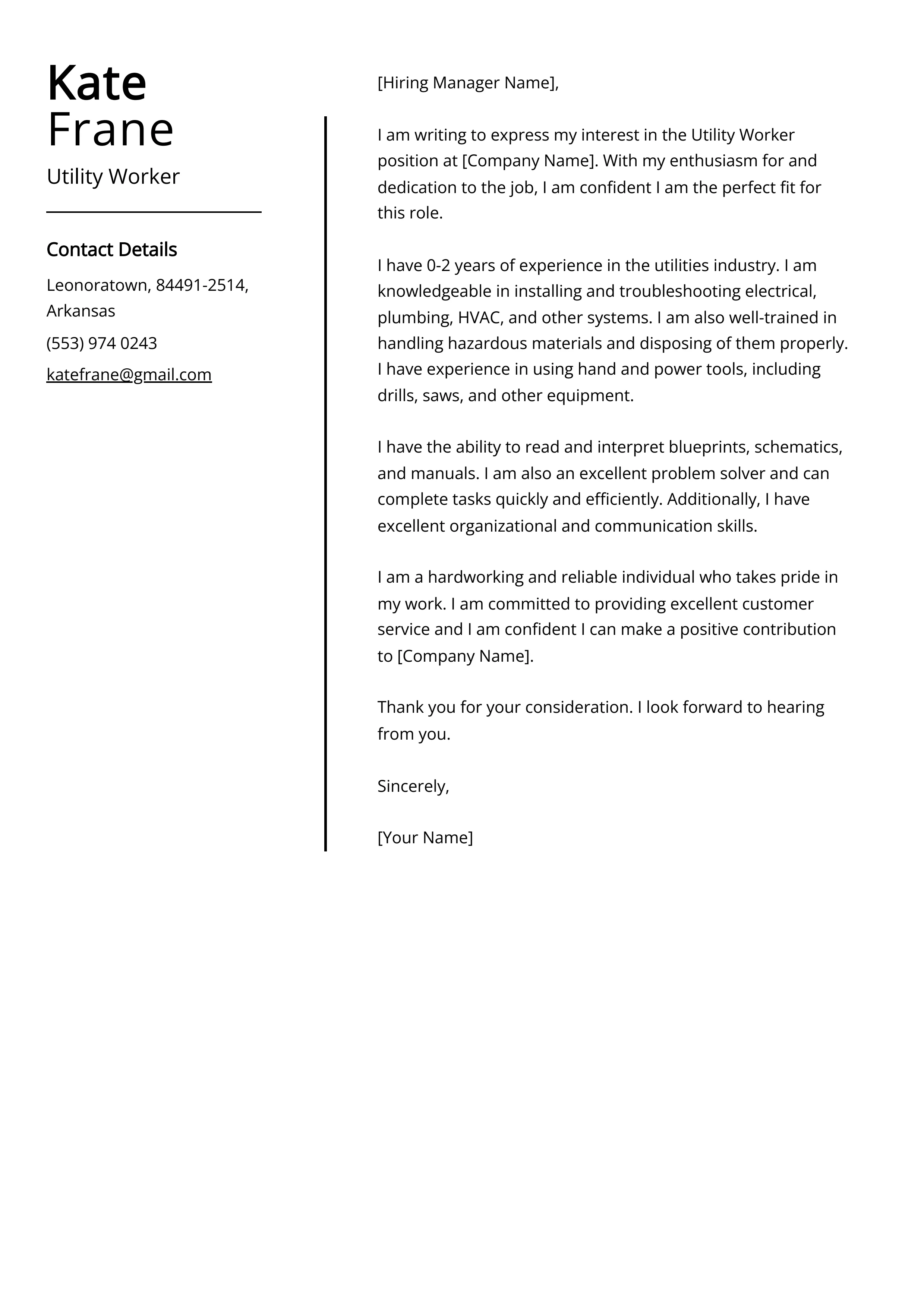
Understanding the Utility Worker Cover Letter
A well-crafted utility worker cover letter is your first impression on a potential employer. It provides an opportunity to introduce yourself, highlight your relevant skills and experience, and demonstrate your enthusiasm for the position. This guide will provide you with the necessary knowledge and tools to create a compelling cover letter that stands out from the competition and increases your chances of landing an interview. Remember, the goal is not just to list your qualifications but to show how you can contribute to the company’s success as a utility worker.
What is a Utility Worker?
A utility worker performs a variety of essential tasks to maintain and repair infrastructure, ensuring the smooth operation of essential services. Their responsibilities can range from maintaining water and sewer systems to repairing electrical lines and gas pipelines. They work in diverse environments, often outdoors, and require a strong understanding of safety protocols and technical skills. This position is crucial for public safety and efficient community function. This role demands physical stamina, technical aptitude, and a commitment to safety.
Key Responsibilities of a Utility Worker

Utility workers are responsible for a wide range of duties. These include inspecting, maintaining, and repairing utility systems such as water, gas, and electricity. They often operate heavy equipment, read meters, and respond to emergencies. Other tasks may include digging trenches, laying pipes, repairing lines, and ensuring compliance with safety regulations. Due to the varied nature of the work, adaptability and problem-solving skills are highly valued in this profession. The work often involves collaboration with other team members to ensure that all operations are efficient and secure.
Why a Cover Letter is Essential
A cover letter complements your resume by offering a narrative that explains your qualifications and career aspirations in detail. It provides a personalized introduction to the hiring manager, showcasing your personality and enthusiasm for the specific utility worker position. A well-written cover letter allows you to emphasize the skills and experience most relevant to the job requirements. It’s your opportunity to demonstrate how you can contribute to the company, highlighting your unique value proposition and increasing your chances of securing an interview. Without one, you risk being perceived as just another applicant.
Formatting Your Utility Worker Cover Letter
Proper formatting ensures your cover letter is easy to read and professional in appearance. A clear layout and concise language enhance readability and make it easier for the hiring manager to quickly assess your qualifications. Use a standard font like Arial or Times New Roman, with a font size between 10 and 12 points. Maintain consistent margins (typically 1 inch on all sides). Keep your cover letter concise, ideally no more than one page. The aim is to provide essential information while remaining easy to read. A well-formatted cover letter reflects professionalism and attention to detail.
Contact Information

At the top of your cover letter, include your full name, address, phone number, and email address. Ensure your email address is professional. This section allows the employer to quickly identify you and contact you if necessary. Double-check all contact information for accuracy to avoid any miscommunication or delays in the hiring process. Presenting this information clearly makes it easy for the hiring manager to reach you.
Date and Recipient Information
Below your contact information, include the date, followed by the hiring manager’s name (if known), their title, and the company’s name and address. If you can’t find the hiring manager’s name, use a general salutation like ‘Dear Hiring Manager’. Addressing the letter to a specific individual demonstrates that you have taken the time to research the company and the role. Proper addressing personalizes the application and shows attention to detail. Correct recipient information shows that you are genuinely interested in the position.
Professional Salutation
Start your cover letter with a professional salutation. Use ‘Dear Mr./Ms./Mx. [Last Name]’ if you know the hiring manager’s name. If the name is unavailable, use ‘Dear Hiring Manager’. Avoid informal greetings. The salutation sets the tone for the entire letter. Ensure you use the correct title (Mr., Ms., or Mx.) for the hiring manager. This small detail conveys respect and professionalism from the outset. Ensure the salutation matches the tone and formality of the company.
Crafting the Perfect Opening

Your opening paragraph should immediately grab the reader’s attention and state the purpose of your letter. Clearly mention the specific utility worker position you are applying for and where you found the job posting. Briefly introduce yourself and express your enthusiasm for the opportunity. The opening should also include a sentence or two highlighting your most relevant skills or experience. A strong opening is critical because it encourages the reader to continue reading, setting the stage for the rest of your letter. It must clearly convey your intent and make the hiring manager interested in you.
Highlighting Your Skills and Experience
This section is the core of your cover letter, where you showcase how your skills and experience align with the job requirements. Use specific examples to demonstrate your abilities. Focus on the skills and experiences most relevant to the utility worker position, such as experience with tools, safety procedures, and problem-solving. Use action verbs to describe your accomplishments and quantify your achievements whenever possible. This section is your chance to convince the employer that you’re the perfect fit, emphasizing your ability to perform the job effectively.
Relevant Skills for Utility Workers
Utility workers need a diverse skill set. Highlight your proficiency in the use of hand and power tools, your ability to read blueprints and technical diagrams, and your knowledge of various utility systems (water, gas, electricity). Emphasize your physical stamina and ability to work outdoors in various weather conditions. Also, emphasize your strong problem-solving skills and your ability to work effectively both independently and as part of a team. Include your experience in performing maintenance and repair tasks, and your commitment to safety regulations and procedures. Ensure all mentioned skills directly relate to the job description.
Work Experience Showcasing Accomplishments

Describe your work experience, focusing on accomplishments rather than just responsibilities. For each previous role, mention your job title, the company name, and the dates of employment. Instead of simply stating your duties, describe what you achieved. Use action verbs to start your sentences and quantify your achievements whenever possible. For example, instead of ‘Performed routine maintenance,’ write ‘Reduced downtime by 15% by implementing a new maintenance schedule.’ The goal is to demonstrate your value to potential employers through specific, measurable accomplishments. These accomplishments must show you have the ability to do more than just the bare minimum.
Quantifying Your Achievements
Quantifying your achievements makes your cover letter more impactful. Provide specific, measurable results that demonstrate the value you brought to previous employers. Use numbers and data to support your claims. For example, if you improved efficiency, state the percentage increase. If you reduced costs, specify the amount. Quantifying your achievements allows the hiring manager to see the tangible benefits of hiring you. This provides objective evidence of your ability to perform the job and is more compelling than vague statements. Quantification provides concrete evidence of your capabilities.
Demonstrating Your Knowledge
This section allows you to showcase your knowledge of utility systems, safety regulations, and any relevant certifications or training you have. Mention any specific systems you are familiar with, such as water, gas, or electricity. Demonstrate your understanding of safety protocols and your commitment to following them. If the job description mentions any specific requirements, make sure to address them explicitly. Highlighting your knowledge shows that you are prepared to perform the job duties effectively and safely, providing a valuable understanding of the industry.
Certifications and Training

List any certifications and training relevant to the utility worker position. This may include certifications in areas like confined space entry, CPR, first aid, or specific equipment operation. Include the name of the certification, the issuing organization, and the date of certification. Certifications demonstrate that you have the necessary qualifications to perform the job duties safely and effectively. This gives employers confidence in your abilities and increases your competitiveness. Be sure to mention any ongoing training you are participating in to show your commitment to continuous learning.
Knowledge of Safety Regulations
Utility work involves inherent risks, so highlighting your knowledge of safety regulations is crucial. Mention your understanding of OSHA standards, local regulations, and company-specific safety protocols. Show your commitment to safe work practices by mentioning your experience in identifying and mitigating hazards. If you have a safety-related certification, be sure to mention it. Demonstrating your safety awareness shows you are responsible and reliable, which is essential for a utility worker. Always mention your understanding of lock out tag out (LOTO) procedures, and the importance of personal protective equipment (PPE).
Expressing Your Enthusiasm and Closing
Your closing paragraph should reiterate your interest in the position and express your enthusiasm for the opportunity. Reiterate your key qualifications and how they align with the company’s needs. Thank the hiring manager for their time and consideration. End with a confident and professional tone, indicating your eagerness for an interview. The closing provides a lasting impression, so make it memorable and leave the hiring manager with a positive impression of you. Make your last words count to maximize your chances of a callback.
Call to Action
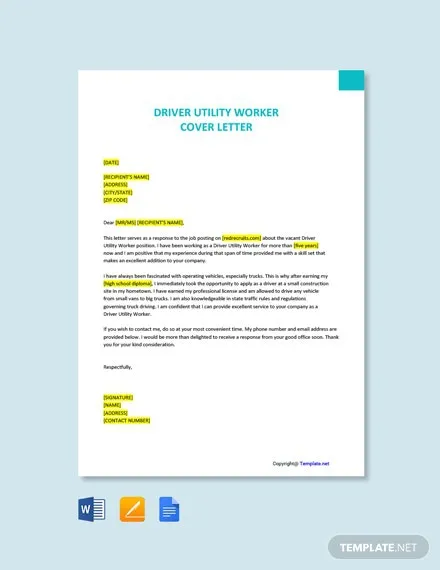
In your closing, include a clear call to action. Express your availability for an interview and state your eagerness to discuss your qualifications further. Include a direct statement, such as, ‘I am available for an interview at your earliest convenience.’ Provide your phone number and email again, making it easy for the hiring manager to contact you. A strong call to action indicates your enthusiasm and proactively moves the application process forward. It encourages the hiring manager to take the next step in the process.
Professional Closing
Conclude your cover letter with a professional closing, such as ‘Sincerely,’ ‘Respectfully,’ or ‘Best regards.’ Always sign your name above your typed name. A professional closing reinforces the impression you made throughout the cover letter, and demonstrates your attention to detail. Make sure the closing matches the tone of the entire letter. Check for errors before sending to ensure your cover letter reflects your professionalism. A professional closing creates a polished and complete package.