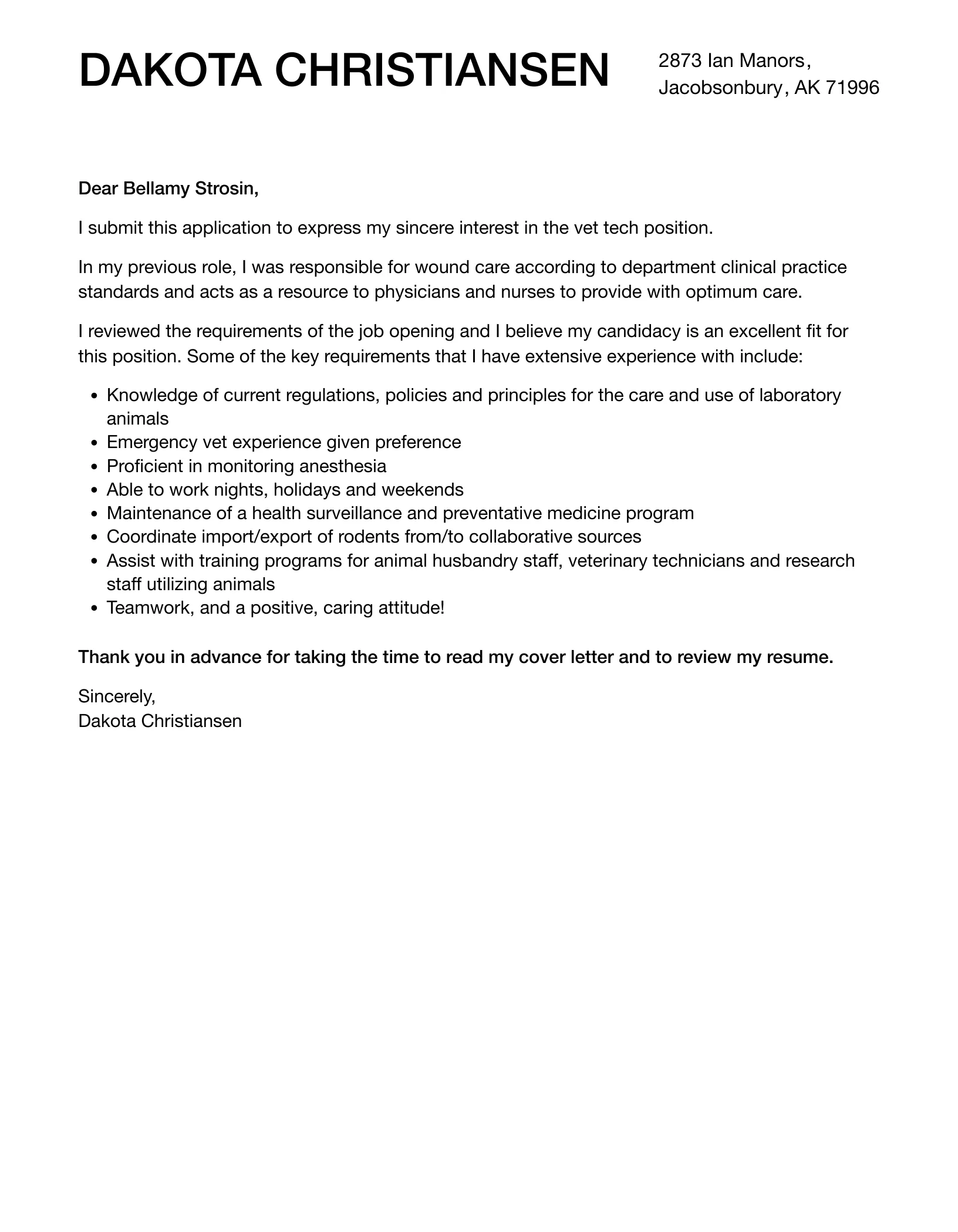
What is a Vet Tech Cover Letter?
A vet tech cover letter is a crucial document that accompanies your resume when applying for veterinary technician positions. It serves as your first introduction to a potential employer, providing a snapshot of your skills, experience, and personality. Unlike a resume, which lists your qualifications, a cover letter allows you to elaborate on your accomplishments, explain your career goals, and demonstrate your enthusiasm for the role and the veterinary field. It’s your opportunity to make a strong first impression and convince the hiring manager that you are the ideal candidate for the job.
Why is a Vet Tech Cover Letter Important?
A well-crafted cover letter can significantly increase your chances of landing an interview. It allows you to go beyond the bullet points of your resume and tell a compelling story about your qualifications and why you’re a great fit for the specific position. In a competitive job market, a cover letter gives you an edge by showcasing your communication skills, attention to detail, and genuine interest in the role. It also demonstrates your professionalism and proactive approach to job searching, making you stand out from other applicants who may only submit a resume. Without a cover letter, your application may seem incomplete or impersonal.
Key Components of a Vet Tech Cover Letter

A strong vet tech cover letter includes several essential components that work together to create a persuasive argument for your candidacy. Each section should be carefully written and tailored to the specific job and clinic. Following the correct format and including all the necessary elements will show the hiring manager that you are professional and serious about the position. Let’s explore what the core elements are.
Contact Information & Salutation
Start with your contact information (name, address, phone number, and email address) at the top of the letter. Follow this with the date and the employer’s contact information (name, title, clinic name, and address). The salutation should be formal, such as “Dear Dr. [Last Name],” or “Dear Hiring Manager,” if you are unsure of the specific person’s name. Ensuring you have the correct contact information is the first step in making sure your application is taken seriously.
How to Address the Hiring Manager
Addressing the hiring manager by name is the most professional approach. Research the clinic to find out the name of the practice manager or the veterinarian in charge. If you can’t find a specific name, “Dear Hiring Manager” is an acceptable alternative. Avoid generic salutations like “To Whom It May Concern,” as they can make your letter feel impersonal. Personalizing the salutation shows that you’ve taken the time to research the clinic and are genuinely interested in the opportunity.
Professional Body Paragraphs

The body of your cover letter is where you highlight your skills, experience, and passion for veterinary medicine. The first paragraph should state the position you’re applying for and how you learned about the opening. The subsequent paragraphs should expand on your relevant qualifications, using specific examples to illustrate your skills and accomplishments. This is your chance to demonstrate your suitability for the role and express your enthusiasm for the opportunity. Be sure to make your writing concise and easy to read.
Highlight Your Skills and Experience
Focus on the skills and experience most relevant to the job description. Provide specific examples of how you’ve used these skills in previous roles or during your veterinary technology training. This could include experience with animal handling, medical record keeping, administering medications, assisting with surgeries, or educating clients. Make sure to mention any specialized skills or certifications, such as those related to anesthesia, dentistry, or laboratory procedures. Tailoring the skills to the job description will highlight your qualifications in an effective way.
Quantify Your Achievements
Whenever possible, quantify your achievements to demonstrate your impact. Instead of saying, “Managed patient records,” say, “Managed and updated over 100 patient records weekly, ensuring accuracy and efficiency.” Quantifying your accomplishments provides concrete evidence of your skills and value to the clinic. Use numbers, percentages, or specific examples to showcase your achievements and make your cover letter more compelling. This kind of data will make your qualifications very clear to the hiring manager.
Showcase Your Passion for Veterinary Medicine

Express your genuine interest in veterinary medicine and the clinic. Mention what excites you about the role, the clinic’s values, or the opportunity to work with animals. Showcasing your passion can make your cover letter stand out from the crowd and demonstrate that you’re not just looking for a job, but a career. Personalize your cover letter by mentioning why you are interested in the specific clinic and what attracts you to their practice. This can go a long way in showing that you are a good fit.
Tailor Your Letter to the Job Description
Carefully review the job description and tailor your cover letter to match its requirements. Identify the key skills and qualifications the employer is seeking and highlight how your experience aligns with them. Use the same keywords and phrases from the job description to make it clear that you have what they’re looking for. Customizing your cover letter for each application demonstrates that you’ve taken the time to understand the specific needs of the clinic and are genuinely interested in the position.
How to Close Your Cover Letter
The closing of your cover letter should reiterate your interest in the position and include a call to action. This is the perfect place to state your desire for an interview and provide your contact information. Here are a few ways to end your letter with the proper tone.
Express Gratitude

Thank the employer for their time and consideration. A brief expression of gratitude shows your professionalism and appreciation for the opportunity. This is also a chance to make sure you’ve left a positive impression. Keep your tone professional and sincere. A well-placed thank you can reinforce the positive sentiments you’ve worked to express throughout the body of your letter.
Include a Call to Action
End your cover letter with a clear call to action, such as, “I am eager to discuss my qualifications in an interview” or “I look forward to hearing from you soon.” Providing a call to action encourages the hiring manager to take the next step and contact you. Make it easy for them to follow up by reiterating your contact information in the closing.
Proofread and Edit Your Cover Letter
Before submitting your cover letter, carefully proofread and edit it for any errors in grammar, spelling, and punctuation. Errors can create a negative impression and undermine your professionalism. Ask a friend or colleague to review your letter as a second pair of eyes can often catch mistakes you might miss. Ensure that your letter is well-formatted, easy to read, and free of typos. This final step is critical for making a positive impression.
Writing a compelling vet tech cover letter is a crucial step in the job application process. By following these guidelines, you can create a cover letter that showcases your skills, experience, and passion for veterinary medicine, increasing your chances of landing an interview and securing your dream job. Good luck!