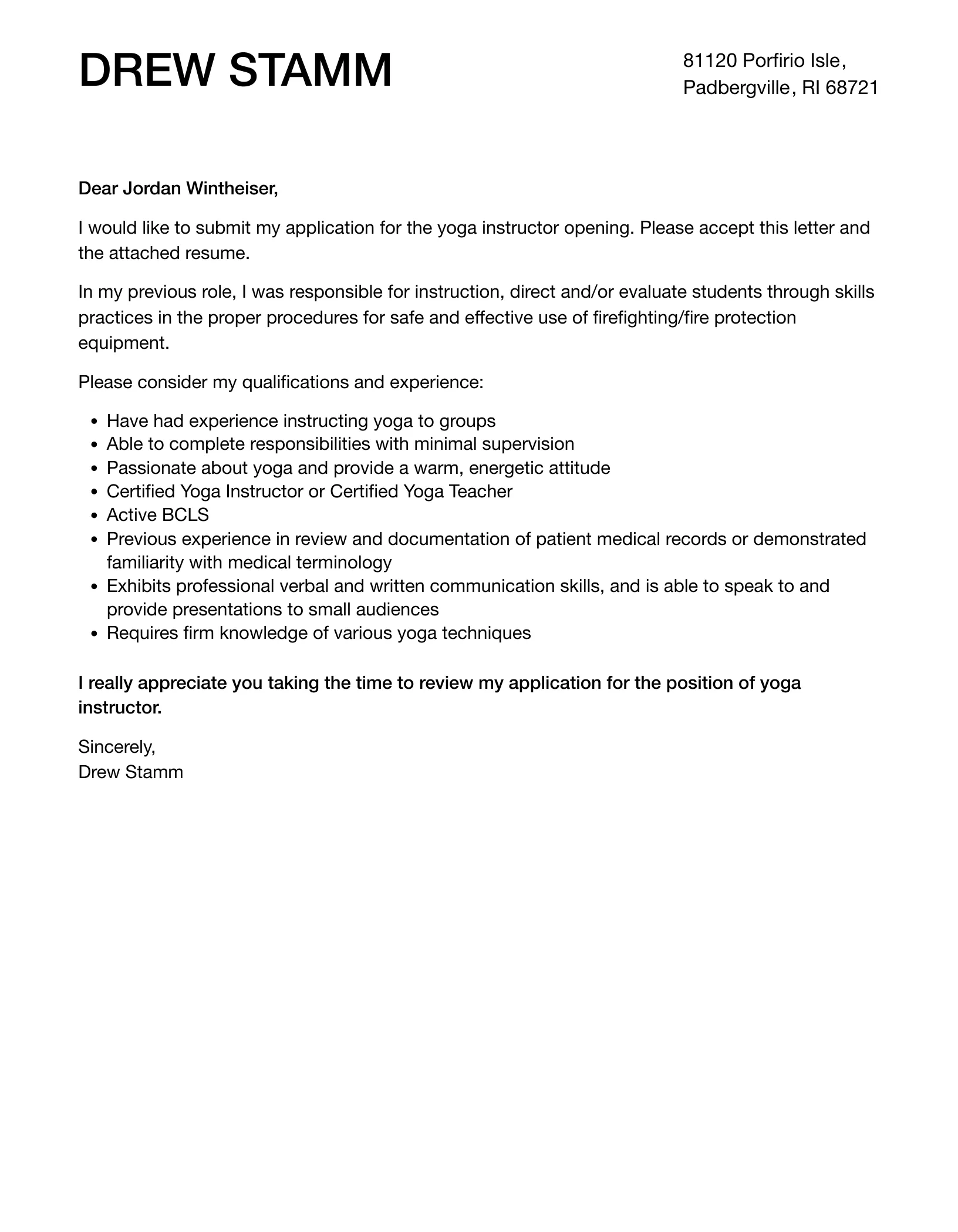
Top 5 Yoga Instructor Cover Letter Tips
Crafting a compelling cover letter is essential when applying for a yoga instructor position. Your cover letter is your first chance to make a positive impression on a potential employer, and it can significantly increase your chances of landing an interview. With the right approach, you can showcase your unique qualifications, passion, and suitability for the role. This guide will provide you with the top 5 tips to help you create a cover letter that grabs attention and sets you apart from other candidates. By following these guidelines, you can highlight your experience, skills, and enthusiasm for yoga, making it easier to secure your dream job.
Highlight Your Yoga Certifications
Your yoga certifications are the foundation of your credibility as an instructor. In your cover letter, clearly state your certifications, including the specific type of yoga you are certified in (e.g., Hatha, Vinyasa, Yin), the certifying organization (e.g., Yoga Alliance), and the number of hours of training you have completed. This information provides immediate validation of your qualifications and expertise. Be specific and detailed. For example, instead of saying ‘Certified Yoga Instructor,’ write, ‘200-hour Registered Yoga Teacher (RYT) with Yoga Alliance, specializing in Vinyasa flow.’ If you have additional certifications, such as prenatal yoga or restorative yoga, make sure to include those as well, as they can significantly broaden your appeal to potential employers.
Showcase Your Teaching Experience

Detail your teaching experience by providing specific examples of where you have taught yoga. This includes the name of the studio, the type of classes you taught, and the duration of your employment. Quantify your achievements whenever possible. For instance, mention the number of students you have taught or the positive feedback you received. Describe the different demographics you’ve taught, such as beginners, advanced practitioners, or specific age groups. If you have experience creating lesson plans, managing class flow, or adapting poses for students with different needs, be sure to highlight these skills. These details show your ability to manage and adapt to different teaching scenarios effectively.
Tailor Your Letter to the Studio
A generic cover letter is unlikely to impress a hiring manager. Take the time to research the yoga studio you are applying to and tailor your letter to align with its specific values, mission, and teaching style. Visit the studio’s website, check out their social media presence, and if possible, attend a class. Demonstrate that you understand the studio’s culture and the type of yoga it offers. In your letter, mention specific classes or workshops that interest you, and explain how your skills and experience align with the studio’s needs. This level of personalization shows that you are genuinely interested in the position and have taken the initiative to understand the studio’s environment. For example, if the studio emphasizes mindfulness, mention your experience with meditation or restorative yoga.
Demonstrate Your Passion for Yoga
Your passion for yoga should shine through in your cover letter. Share your personal journey with yoga and what motivates you to teach. Express your enthusiasm for the practice and your desire to share its benefits with others. Describe your teaching philosophy and how you create a positive and supportive environment for your students. Consider including a brief anecdote about how yoga has impacted your life or a specific student’s experience that has inspired you. This personal touch can create a strong emotional connection with the hiring manager, making you more memorable. Make it clear that you are not just looking for a job, but are genuinely excited about the opportunity to teach and inspire others through yoga.
Emphasize Relevant Skills

Identify the specific skills that the yoga studio is looking for in their job description and tailor your cover letter to highlight those skills. These skills can include your ability to teach various yoga styles, adapt poses for different levels of experience, provide modifications and adjustments, and create a safe and inclusive environment. Other relevant skills may include communication, organization, time management, and customer service. Be specific and provide examples of how you have used these skills in your previous teaching roles. For example, if the studio is looking for someone who can lead workshops, mention any workshops you have facilitated, the topics covered, and the positive outcomes. Demonstrating your skills clearly and concisely will make it easier for the hiring manager to see you as a strong candidate.
By following these top 5 tips, you can create a cover letter that effectively showcases your qualifications, passion, and experience, significantly increasing your chances of landing your dream job as a yoga instructor. Remember to always tailor your cover letter to the specific studio and role, and be sure to proofread carefully before submitting your application. Good luck!